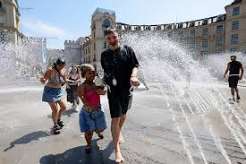
We are watching Europe transform into a case study for what a warming world actually feels like on human skin. On August 13, 2026, health authorities confirmed that the continent is warming at roughly twice the global average rate, a finding that has pushed international public health organizations to issue emergency heatwave response protocols and urban cooling mandates. This is not a distant statistical anomaly. It is a lived emergency, playing out in hospital corridors, cramped apartment buildings, and sunbaked city squares from Lisbon to Warsaw.
A Continent Heating Faster Than the Rest of the Planet
Climate monitoring bodies including the World Meteorological Organization and the European Union’s Copernicus Climate Change Service have repeatedly confirmed the same troubling pattern in recent years, and this latest warning reinforces it with fresh urgency. Europe’s average temperatures have climbed by roughly 2.5 degrees Celsius above preindustrial levels, nearly double the global rate of warming. We find that number difficult to sit with once we consider what it actually means for daily life. A rise measured in tidy decimal points on a chart translates, on the ground, into hospital wards filling with elderly patients suffering heatstroke, into schoolchildren sent home early because classrooms have become unbearable, and into outdoor workers collapsing on job sites that offer no shade.
Researchers tracking these shifts point to a combination of factors unique to the region, including reduced snow and ice cover reflecting less sunlight back into space, shifting jet stream patterns, and the Mediterranean’s role as a heat amplifier. Whatever the precise mechanics, the outcome is consistent. Europe is not simply warming alongside the rest of the world. It is warming ahead of it, offering a preview of conditions that other regions may face in the decades to come.
Voices From the Front Lines of the Heat
We have spoken with public health workers who describe emergency rooms transformed during peak summer weeks, with elderly patients arriving disoriented and dangerously overheated, sometimes hours after symptoms first appeared because they lacked air conditioning or simply did not recognize the warning signs. There is a particular kind of heartbreak in hearing about grandparents who kept windows shut out of habit, unaware that nighttime temperatures no longer offer the relief they once did. These are not isolated tragedies. They represent a pattern that public health officials say is becoming disturbingly routine across the continent.
What the New Emergency Protocols Actually Require
In response to mounting pressure, international public health organizations have moved to formalize heatwave response measures that were previously left to individual countries or cities to design on their own. The new protocols establish a more coordinated, continent wide approach built around several core commitments.
- Standardized early warning systems that trigger public alerts once temperature and humidity thresholds are crossed, giving vulnerable residents advance notice rather than reacting after symptoms appear.
- Urban cooling mandates requiring cities to expand tree canopy coverage, install reflective roofing materials, and open designated cooling centers in neighborhoods with limited access to air conditioning.
We view the emphasis on urban cooling as particularly meaningful because it targets the built environment itself, not just individual behavior. Asking people to simply drink more water or stay indoors ignores the reality that many urban residents, especially in older housing stock, have no meaningful way to escape the heat inside their own homes. Retrofitting cities with shade, greenery, and reflective surfaces addresses the root exposure rather than placing the entire burden of adaptation on individuals who often lack the resources to adapt on their own.
Protecting the Most Vulnerable Populations
Public health guidance consistently identifies certain groups as facing disproportionate risk during extreme heat events, including elderly residents living alone, pregnant women, young children, outdoor laborers, and people with chronic cardiovascular or respiratory conditions. The World Health Organization’s guidance on heatwaves has long stressed that heat related illness is largely preventable when communities have access to timely information, cooling infrastructure, and support systems that check in on isolated residents during dangerous stretches of weather. We think this preventability is the most important detail buried within the broader alarm. Heat deaths are not an inevitable consequence of a warming climate. They are, in large part, a failure of preparedness, and preparedness is something policy can directly influence.
Why This Moment Feels Different From Past Warnings
We have covered heatwave warnings before, and there is a temptation to treat each new alert as simply another entry in a familiar cycle. This one feels different for a specific reason. The response is no longer confined to advisory language urging caution. It has shifted into binding, mandatory frameworks that require concrete infrastructure changes and coordinated emergency planning across borders. That shift from recommendation to requirement suggests that health authorities have concluded, after years of escalating summer emergencies, that voluntary measures alone are no longer sufficient.
There is also a broader psychological dimension worth acknowledging. For many Europeans, extreme heat once felt like an occasional summer inconvenience, something to be endured for a week or two before autumn brought relief. That assumption no longer holds. Heatwaves are arriving earlier, lasting longer, and returning with greater frequency within a single season. Communities are being asked to fundamentally reconsider how they build, schedule, and live, much the way regions prone to hurricanes or earthquakes have long structured their infrastructure and emergency planning around a recurring threat.
What Comes Next for Cities and Communities
We expect the coming months to bring a wave of localized implementation as cities translate these broad mandates into specific projects, from expanded tree planting programs to retrofitted public buildings designed to serve as accessible cooling centers. Success will depend heavily on funding, political will, and whether resources reach the neighborhoods that need them most rather than concentrating in wealthier districts already better equipped to cope.
For now, the message from health authorities is unambiguous. Europe’s warming trajectory is outpacing the rest of the planet, and the systems built for yesterday’s climate are no longer adequate for the summers residents are living through today. We take some encouragement from the fact that governments and health organizations are finally treating this as the emergency it has become, rather than a seasonal inconvenience to be quietly managed. The real test now lies in whether that urgency translates into cooler, safer cities before the next heatwave arrives.