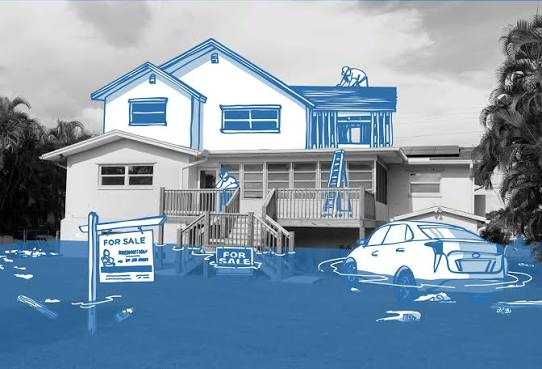
Severe storms, flash floods, coastal flooding, and intense rainfall are forcing a difficult question into the center of housing policy: can homes built for yesterday’s climate withstand the weather communities are experiencing today? Across the Americas and Asia, repeated flooding has increased pressure on governments, housing organizations, engineers, and property owners to strengthen construction practices and rethink how existing homes are renovated. New international guidance is placing greater attention on flood resistant design, resilient infrastructure, sustainable materials, and practical home retrofits that can reduce damage before the next storm arrives.
Extreme Weather Is Changing How Homes Are Designed
Flooding has traditionally been treated as a problem for particular coastal zones, river valleys, and low lying communities. Recent disasters have shown how quickly that assumption can fail. Heavy rainfall can overwhelm drainage systems in cities far from coastlines, while rapidly rising rivers can affect neighborhoods that have never experienced serious flooding in living memory.
For families, the consequences are immediate. Water can enter through doors, windows, foundations, garages, and damaged roofs. Once inside, it can destroy flooring, electrical systems, insulation, furniture, appliances, and personal belongings within hours. The financial loss can continue long after the water disappears because damp walls and hidden moisture can create structural deterioration and mold.
We are therefore seeing a shift from simply rebuilding after disasters toward reducing damage before disasters occur. That means considering flood risk during the design of a house rather than treating resilience as an expensive addition after construction is complete.
New Guidance Focuses on Flood Resistant Building Design
International housing and construction organizations are increasingly encouraging measures that help buildings withstand water exposure and recover more quickly after flooding. The recommendations vary according to local conditions, but the underlying principle is straightforward: homes should be designed around the hazards that are realistically expected in their location.
For new construction, that can involve raising living spaces above expected flood levels, improving site drainage, protecting foundations, using water resistant materials in vulnerable areas, and ensuring that electrical equipment is positioned where floodwater is less likely to reach it.
Building orientation can also matter. The location of entrances, utilities, drainage channels, retaining structures, and outdoor equipment can determine how quickly water reaches a building and how much damage occurs when it does.
Measures That Can Reduce Flood Damage
Homeowners and builders can consider several practical measures when local conditions justify them:
- Raising electrical panels, heating equipment, and other critical systems above likely flood levels
- Using water resistant materials in basements, lower walls, floors, and other vulnerable areas
- Improving drainage around foundations so rainwater moves away from the building
- Installing backflow protection where sewer systems create a risk of contaminated water entering a property
- Using flood resistant doors, barriers, and seals where appropriate
- Protecting foundations against erosion and prolonged water exposure
These measures are not equally appropriate for every property. Flood risk varies according to terrain, drainage, soil, river behavior, coastal exposure, building type, and local construction requirements. Professional assessments remain essential before major structural work is undertaken.
Retrofitting Existing Homes Is Becoming a Major Priority
The largest housing challenge may not be new construction. Millions of homes already exist in areas exposed to flooding, and replacing them is neither financially realistic nor socially desirable for many communities.
That makes sustainable retrofitting increasingly important. A retrofit can range from relatively simple improvements such as sealing vulnerable openings to major structural changes such as raising a building or redesigning drainage around the property.
For homeowners, the most useful approach is often to identify the weakest points first. A property inspection can reveal whether water is likely to enter through the foundation, doors, windows, plumbing connections, roof drainage, or surrounding ground. Fixing those vulnerabilities before a major storm can reduce both physical damage and recovery costs.
Retrofitting can also improve energy efficiency at the same time. Better insulation, efficient windows, improved ventilation, efficient heating and cooling equipment, and renewable energy systems can reduce operating costs while making homes more adaptable to changing weather conditions.
Flood Protection Is Becoming Part of Sustainable Housing
Sustainability is increasingly being viewed as more than energy efficiency. A genuinely resilient home must also be capable of dealing with the physical stresses created by its environment.
A house that uses less electricity but repeatedly suffers severe flood damage may still impose significant environmental and financial costs. Every major reconstruction requires new materials, transportation, labor, energy, and waste disposal.
Extending the useful life of buildings through resilience focused renovations can therefore support both environmental and economic goals. Durable materials and repairable systems can reduce the need for repeated reconstruction after extreme weather.
Governments and construction organizations are also examining how building materials perform when exposed to moisture. Materials that dry quickly, resist water absorption, or can be cleaned and repaired after flooding may be preferable in vulnerable sections of a property.
Urban Drainage Is Just as Important as the House
A flood resistant home cannot solve a citywide drainage problem by itself. When rainfall exceeds the capacity of streets, storm drains, rivers, and retention systems, even well designed buildings can face dangerous conditions.
That is why new approaches to housing resilience increasingly involve the surrounding neighborhood. Cities can reduce flood pressure through wetlands, retention basins, permeable surfaces, improved drainage networks, restored waterways, and carefully planned green spaces.
Permeable surfaces can allow more rainwater to enter the ground instead of immediately flowing into storm drains. Vegetated areas can slow runoff, while properly maintained drainage infrastructure can help move excess water away from populated areas.
The design of roads and public spaces also matters. Streets are often among the first places where intense rainfall accumulates, and their shape can influence where floodwater eventually travels. Urban planning that considers water movement can reduce the amount of pressure placed on individual properties.
Asia Faces Complex Flooding Challenges
Many Asian communities face a combination of rapid urban development, dense populations, monsoon rainfall, river flooding, coastal exposure, and limited drainage capacity. In some locations, new construction has expanded faster than supporting infrastructure.
That creates a difficult situation for local authorities. Building stronger homes is only one part of the solution. Roads, bridges, sewage networks, electrical infrastructure, hospitals, schools, and emergency services must also be able to function during severe weather.
For densely populated cities, the cost of resilience can be substantial. Yet repeated disaster recovery can also consume enormous public resources. This is creating greater interest in prevention, particularly where relatively modest improvements can reduce damage to large numbers of properties.
The Americas Are Also Rethinking Flood Risk
Communities across North, Central, and South America face different forms of flood exposure. Coastal cities can experience storm surge and rising water levels, while inland communities may be threatened by rivers, intense rainfall, or rapidly moving floodwater.
In the United States, flood resilience has become closely connected with building codes, floodplain management, insurance, infrastructure investment, and disaster recovery policy. The Federal Emergency Management Agency’s flood mapping resources provide property owners and communities with information used to evaluate flood exposure and support planning decisions.
Flood maps are not a complete prediction of every future flooding event, but they provide an important starting point. Local authorities and property owners may need additional information about drainage, historical flooding, elevation, rainfall patterns, and site specific conditions when making construction decisions.
Insurance Could Become a Bigger Part of the Housing Conversation
As extreme weather causes larger losses, insurance costs and availability are becoming increasingly relevant to property decisions. A home may appear affordable based on its purchase price and mortgage payment, but the long term cost can look very different when insurance, maintenance, flood protection, and potential repair expenses are included.
Resilience improvements may therefore become financially valuable even when they do not immediately increase a property’s market price. Preventing a flooded electrical system, damaged foundation, or destroyed interior can save substantially more than the original cost of a targeted improvement.
However, homeowners should not assume that every resilience measure will automatically reduce insurance premiums. Insurance rules differ by jurisdiction and provider, and coverage for flooding is often subject to separate requirements. Property owners should confirm coverage details directly with their insurers.
Building Codes May Need to Reflect Local Climate Risks
One of the most difficult policy questions is how quickly building standards should change. Construction codes are designed to protect people and property, but changing them can increase costs for developers, homeowners, and local governments.
If requirements become too weak, communities may continue building homes that are vulnerable to hazards they are likely to encounter. If requirements are introduced without considering affordability, lower income households may face higher construction costs or reduced access to housing.
The challenge is therefore to create standards that are scientifically informed while remaining practical for local communities. This may include different requirements for different levels of flood exposure rather than imposing identical rules everywhere.
Homeowners Can Start With a Risk Assessment
People do not necessarily need to wait for a major renovation to begin improving resilience. A basic property assessment can identify vulnerabilities that may be addressed gradually.
Homeowners can examine how rainwater moves around the property, check whether gutters and drainage systems are functioning correctly, inspect foundations and lower walls for moisture problems, identify the location of electrical equipment, and review whether doors or other openings could allow water to enter.
They should also keep important documents and emergency supplies in locations that are unlikely to be affected by floodwater. Backup power systems, emergency communication plans, and clearly identified evacuation routes can complement structural improvements.
For significant structural modifications, professional advice should be obtained. Local building departments, qualified engineers, architects, and flood risk specialists can help determine which measures are suitable for a particular property.
Resilient Housing Is Becoming a Long Term Investment
The growing focus on flood resistant construction reflects a broader change in how we think about housing. A home is not only a place to live or an asset on a balance sheet. It is also a piece of infrastructure that protects families, supports communities, and connects to public systems such as electricity, water, roads, and emergency services.
When a major storm arrives, that reality becomes painfully visible. A family may watch water rise through a living room while emergency crews struggle to reach an entire neighborhood at once. The value of preparation is measured not only in dollars but in the time saved, possessions protected, and disruption avoided.
The United Nations Office for Disaster Risk Reduction has promoted disaster risk reduction policies that focus on reducing exposure and vulnerability before disasters occur. That approach is increasingly relevant to housing as governments consider how construction standards and urban planning can respond to severe weather risks.
The Future of Housing Will Depend on Preparation
The latest international push for flood resistant housing standards signals a growing recognition that disaster resilience must be incorporated into both new construction and existing homes. The objective is not to make every property immune to every possible disaster. No building standard can provide that guarantee.
The more practical goal is to reduce avoidable damage, improve safety, shorten recovery time, and make communities better prepared for the hazards they actually face.
For governments, that means stronger planning, reliable infrastructure, updated building standards, and accessible information. For builders, it means considering flood exposure during design rather than after construction. For homeowners, it means identifying vulnerabilities and making improvements before the next severe weather event forces an expensive lesson.
Extreme weather may be unpredictable in its timing and intensity, but the consequences of poor preparation are often predictable. The shift toward resilient housing is ultimately about giving families a stronger chance to remain safe, recover faster, and return home after the water recedes.