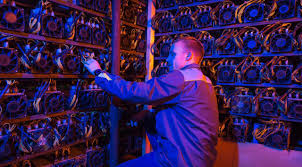
On May 31 2026 Fidelity issued a stark industry warning linking a falling global Bitcoin hash rate to an accelerating redeployment of specialist mining hardware toward high margin artificial intelligence compute. The move is reshaping data center economics network demand and the security assumptions that once underpinned proof of work blockchains. We trace how cold warehouses once humming with mining rigs now pivot to GPU heavy workloads for AI training and consider what the shift means for investors consumers and the stability of digital networks.
What Fidelity reported and why it matters
Fidelity presented data showing a measurable decline in aggregate Bitcoin mining power coinciding with rising lease rates and revenue opportunities in enterprise AI hosting. The firm framed this not as a temporary fluctuation but as a structural reallocation by operators chasing higher margins and steadier contracts from cloud customers. For the cryptocurrency ecosystem the consequence is a less resilient proof of work security model since lower hash rates reduce the cost and complexity of certain attacks. For data center operators and grid planners the change raises new load profiles and cooling demands driven by energy dense GPU clusters.
How miners make the calculation
Operators compare revenue per rack unit and predictability of cash flow. Cryptocurrency mining pays out based on coin issuance and transaction fees which can swing with market prices. By contrast AI hosting offers contracted income from enterprise clients doing model training inference and managed services. GPUs and newer accelerators are both versatile and command strong utilization rates. For many firms the math now favors repurposing assets or selling chassis to buyers focused on AI workloads.
The decision often involves physical constraints. GPU based AI clusters require different cooling regimes denser power feeds and sometimes lower latency networking than ASIC based Bitcoin farms. Facility owners with adaptable infrastructure can convert more quickly. Others face retrofit costs that determine whether they sell equipment or reconfigure space.
Market signals and equipment flows
Secondary markets have tightened for used GPUs and associated interconnects as cloud and enterprise buyers seek capacity without the long lead times of new hardware procurement. Mining focused ASICs have seen varied demand. Some buyers repurpose them for specialized AI inference tasks when architectures align; others are liquidated. Equipment brokers reporting increased cross border flows reflect both opportunistic buyers and companies monetizing stranded assets.
Implications for Bitcoin and network security
Proof of work blockchains rely on cumulative computational effort to secure ledgers against reorganizations and double spends. A falling hash rate does not immediately imply imminent collapse but it raises the bar for designers and custodians. Lower aggregate hash means the economic cost for a coordinated attack falls and that certain consensus parameters may need reexamination. Exchanges custodians and merchants that accept crypto payments must consider heightened operational vigilance during windows of lower network security.
Developers and some network participants may accelerate work on complementary security measures. Those include enhanced multi signature custody solutions timelocked transactions and layer two protocols that alter settlement risk profiles. Governance discussions about difficulty adjustment mechanisms and miner incentives could recur as actors reassess long term security economics.
Short term market reactions
Cryptocurrency markets responded with increased volatility as traders priced in the risk of weaker on chain security and potential contagion effects from large miners offloading assets. At the same time some digital asset firms repositioned to service AI customers while others doubled down on mining by shifting operations to lower cost jurisdictions or vertically integrating power procurement and hosting.
Data center and grid impacts
AI compute workloads alter daily and seasonal demand patterns. Training large models tends to consume continuous high power over extended windows unlike the bursty seasonal loads typical of some mining operations. That creates new planning priorities for utilities and local authorities. Substation upgrades more sophisticated demand response contracts and enhanced cooling systems become immediate capital projects for operators chasing AI business.
Communities near former mining sites experience practical changes. Instead of miners leaving when cryptocurrency prices dip, facility occupancy may stabilize with AI clients that sign multi year contracts. That can preserve jobs and local tax revenues but may increase baseline energy consumption and require investments in grid resilience.
Environmental and regulatory considerations
The narrative that mining is inherently wasteful becomes more nuanced when assets migrate to AI workloads that also consume substantial energy. Both sectors face scrutiny from regulators and environmental advocates who demand transparency about power sources carbon intensity and efficiency metrics. Some jurisdictions may favor contractual arrangements that require renewable procurement or participation in grid balancing programs to mitigate emissions.
Policymakers will need to reconcile economic development incentives with sustainability goals. Incentive structures that once attracted mining operators may need revision if the incoming AI tenants impose different environmental and social footprints.
Financial sector risks and opportunities
For banks and institutional lenders concentration risk in collateralized mining ventures could shift as assets become more fungible across AI and crypto markets. Lenders must reassess asset valuations and stress testing scenarios. At the same time new financing opportunities emerge for firms that provide turnkey AI hosting for enterprises or municipal partnerships to upgrade grid capacity.
Voices from operators and technologists
We spoke with data center managers who described a day to day sensory shift. The constant high pitched hum of ASIC clusters balanced against the broader, deeper thermal footprint of rack after rack of GPU arrays. Operators emphasized ventilation upgrades and rebalancing power feeds to handle denser racks. Engineers noted that AI workloads often demand faster local storage and higher intra rack bandwidth which affects networking strategies and capital allocation.
Miners we interviewed expressed mixed sentiment. Some welcomed the chance to monetize equipment at attractive prices while others lamented an identity shift away from permissionless protocols toward enterprise service provision that requires sales teams and long term contracts.
What investors and users should watch
Key indicators to monitor include global hash rate trajectories GPU secondary market prices lease rates for data center space and reported conversions of former mining facilities. Regulators and market participants will also track power procurement disclosures and new contracts between data centers and enterprise AI customers. For crypto stakeholders on chain metrics such as difficulty adjustments mempool activity and large movement of coins from miner addresses can signal changes in network health.
For enterprises seeking compute capacity the market offers choices but also consolidation risk as a handful of hyperscalers and specialized hosts capture inventory. For communities negotiating with operators the emphasis should be on durable contracts that protect local interests and include clauses on energy sourcing and grid contributions.
Final assessment
Fidelity’s warning spotlights a pragmatic market reallocation driven by economics and capability. The pivot from mining to AI compute reshapes infrastructure demand and forces a reckoning across technology finance and public policy. The shift will have complex effects on Bitcoin security data center planning grid stability and local economies. Managing that transition responsibly requires coordinated disclosure regulatory clarity and investments that account for both economic opportunity and systemic risk.
For readers who want deeper industry data the Uptime Institute and the International Energy Agency publish research on data center trends and energy implications that can help contextualize these shifts.