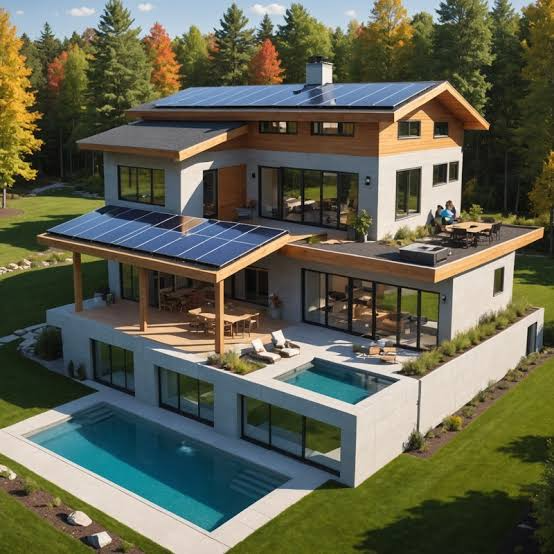
Homeowners are no longer treating insulation as a hidden layer behind the walls. Across markets, it has become one of the clearest signals of a broader shift toward lower energy bills, healthier indoor comfort, and homes that can meet stricter climate rules. New international building standards and rising consumer demand for retrofitting existing properties are pushing smart eco insulation and home energy efficiency upgrades into the center of the housing conversation.
The change is visible in both policy and behavior. Governments are tightening expectations for building performance, while families are asking a more practical question of their own: how do we make the house warmer in winter, cooler in summer, and cheaper to run without tearing it apart? That question is driving a surge in upgrades that once felt optional and now feel overdue.
Why insulation is suddenly front page news
Insulation has long been one of the least glamorous parts of a home, yet it is also one of the most consequential. When a building leaks heat through walls, roofs, windows, and floors, every heating system has to work harder. The result is wasted energy, higher bills, uneven temperatures, and a home that can feel drafty in one room and stifling in another.
Smart eco insulation is changing that picture. The newer generation of materials and systems is designed not just to trap heat but to work as part of a more efficient building envelope. That can include better thermal resistance, moisture management, and in some cases sensor based monitoring that helps owners understand how a home performs over time.
For many households, the appeal is intensely personal. A properly insulated home feels quieter, calmer, and more stable. You notice it in the absence of cold corners, in the reduced hum of a furnace, and in the simple relief of stepping inside from a hot street or icy driveway into a room that holds its temperature.
Net zero standards are reshaping expectations
The policy backdrop is just as important as the technology itself. New international building standards are pushing governments, developers, and homeowners to think in terms of net zero emissions and lower operational carbon. Those standards do not only affect new construction. They are increasingly influencing what happens to existing homes, which account for a huge share of the world’s building stock.
That is where retrofitting comes in. Rather than waiting for old buildings to be replaced, cities and countries are trying to improve them in place. The logic is straightforward: if most of the buildings that will exist in 2035 or 2040 are already standing today, then cutting emissions depends heavily on upgrading what we already have.
The International Energy Agency has repeatedly warned that the pace of retrofits needs to accelerate sharply if countries are serious about long term climate goals. The International Energy Agency has framed buildings as central to the energy transition, while the Global Alliance for Buildings and Construction has pushed for a near zero emission future for the sector. Those broad policy signals are now filtering into consumer demand.
The retrofit boom is being driven by more than climate goals
Climate targets are part of the story, but they are not the whole story. Homeowners are also responding to utility costs, weather volatility, and rising awareness of indoor comfort. Extreme heat and cold have made people more sensitive to the limits of older homes, especially those built before modern insulation standards became common.
There is also a financial logic that is difficult to ignore. Energy efficiency upgrades often pay back through lower bills, and in some markets they can support higher property values. Buyers increasingly view efficient homes as more desirable because they promise lower running costs and a less expensive future in a period of uncertain energy prices.
For landlords and property managers, the pressure is even stronger. Rental units that are expensive to heat or cool can become harder to lease and more expensive to maintain. A retrofit can therefore serve both sides of the ledger, improving tenant comfort while reducing long term operating expenses.
What homeowners are upgrading first
- Loft and roof insulation, because warm air rises and heat loss starts at the top.
- Wall insulation, especially in older homes with poor thermal envelopes.
- Windows and glazing, to reduce drafts and improve temperature stability.
- Air sealing, so conditioned air stays inside the home.
- Heating and cooling controls, including smart thermostats and zone management.
Technology is making retrofits smarter
The word smart in smart eco insulation is not just a marketing label. Many modern systems are paired with digital tools that help households and contractors identify where energy is being lost. That can mean sensors, modeling software, or building diagnostics that map the weak points in a home before work begins.
This is a meaningful shift from the old approach of adding material and hoping for the best. Today’s retrofits are increasingly data driven. A homeowner can learn whether a problem comes from poor insulation, air leakage, condensation, or an inefficient heating system. That makes it easier to prioritize upgrades instead of spending money in the wrong place.
It also helps avoid one of the biggest frustrations in residential construction: doing work that looks complete on the surface but fails to deliver the expected savings. A smart retrofit strategy is less about isolated fixes and more about treating the house as one connected system.
The market is growing fast
The broader energy retrofit market is expanding quickly, with industry research pointing to strong growth over the next several years. That growth is being supported by public policy, private investment, and a steady rise in consumer awareness. In plain terms, the market is moving from niche to mainstream.
Manufacturers of insulation products, glazing systems, HVAC controls, and building diagnostics are all benefiting. So are contractors and installers with the skills to work on older buildings, which often require more careful planning than new construction. The labor side is important because a retrofit only works well when materials are installed correctly.
That raises an issue many policymakers now face: materials alone are not enough. If countries want to move quickly, they need trained workers, financing tools, and clear standards that make it easier for homeowners to act. The United States Environmental Protection Agency and other public bodies have long pointed to efficiency as one of the most practical ways to reduce emissions while improving quality of life.
What this means for ordinary households
For families, the conversation usually starts in a simpler place than climate policy. People want rooms that feel comfortable, bills that do not spike each season, and homes that are less vulnerable to weather extremes. That is why insulation and efficiency upgrades have become emotionally resonant as well as financially rational.
There is also a quiet dignity to a well performing home. It does not shout for attention. It simply works. The air feels steadier. The windows stop sweating on cold mornings. The heating system runs less often. The house sounds more contained, more rested, more like a place that protects the people inside it.
That kind of everyday relief is helping drive the retrofit boom just as much as regulation. When homeowners see neighbors cutting bills or feel the difference after one successful upgrade, they begin to view energy efficiency less as an abstract environmental choice and more as a practical improvement to daily life.
Challenges still remain
Despite the momentum, the retrofit market still faces barriers. Upfront cost remains the biggest obstacle for many households, especially in older housing markets where deep retrofits can be expensive. Financing, contractor availability, and the complexity of working on occupied homes also slow adoption.
Another challenge is consistency. Not every product labeled efficient performs equally well, and not every home needs the same solution. The best outcomes usually come from a careful assessment rather than a one size fits all sales pitch. Homeowners need clear information and trustworthy installers if they are going to invest with confidence.
Still, the direction of travel is clear. The combination of net zero standards, consumer demand, and better retrofit tools is pulling housing toward a more efficient baseline. What used to be viewed as a specialist upgrade is becoming part of the normal maintenance conversation for homeowners around the world.
A practical turning point for housing
The most important thing about this moment is that it feels practical. The energy transition is often described in grand terms, but in the home it begins with ordinary actions: sealing a draft, insulating a roof, replacing an inefficient system, or checking whether a wall cavity is losing heat every night.
That grounding matters. People do not live in policy documents. They live in kitchens, bedrooms, and living rooms where comfort and cost are felt every day. Smart eco insulation and net zero standards are gaining traction because they meet those real needs while moving the housing stock toward a lower carbon future.
If the current surge continues, the homes upgraded now may become the benchmark for what efficient living looks like in the years ahead. They will be quieter, more resilient, and less wasteful. Most of all, they will show that building better is often less about dramatic reinvention than about making the places we already live in perform the way they should have all along.