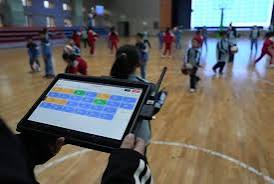
October 24, 2026 — International sports federations are moving toward unified guidelines for artificial intelligence in officiating, addressing how automated video reviews, player tracking systems, and digital decision tools should be used at major championships. The initiative reflects a growing need for consistent standards as technology takes on a greater role in decisions that can determine medals, records, careers, and the outcome of an entire season. For athletes and fans, the central question is no longer whether technology belongs in sport, but how it can support fair competition without weakening human judgment or public trust.
Consider the tension inside a packed stadium when a referee makes a decision in the final seconds of a match. Players protest, supporters hold their breath, and millions watching at home wait for a replay. An automated system may provide additional evidence within moments, but the decision still carries consequences for real people. A reliable framework for artificial intelligence must therefore address more than technical accuracy. It must establish clear responsibilities, transparent review procedures, and safeguards against errors that could unfairly affect competitors.
The reported move toward common international guidelines offers an opportunity to reduce inconsistencies between competitions. However, the precise effect will depend on how individual federations implement the standards, which technologies they approve, and whether athletes, officials, and spectators can understand how important decisions are reached.
Why Sports Federations Are Seeking Common AI Standards
Artificial intelligence and automated analysis are increasingly relevant to competitive sport. Camera systems can track athletes and equipment, computer vision can identify movement patterns, and software can compare video footage with established rules. Depending on the sport and the technology approved for use, these tools may help officials assess boundary calls, detect infringements, evaluate timing, or review incidents that are difficult to judge from a single viewing angle.
Yet technology is not applied uniformly across every competition. Different sports have different rules, equipment, playing environments, and tolerance for delays. A system suitable for tracking a ball across a tennis court may not be appropriate for evaluating contact during a crowded football match. Even within one sport, differences in camera placement, lighting, venue infrastructure, and system configuration can influence the evidence available to officials.
Common guidelines can provide a shared foundation for evaluating these differences. They can clarify how systems should be tested, who is responsible for approving them, when officials may rely on automated recommendations, and what happens when a system produces an uncertain result. Consistency matters particularly at international championships, where athletes from many countries expect the same rules and comparable standards of enforcement.
We should not assume that unified guidelines mean every sport will use identical technology or follow exactly the same review process. A more practical approach is to establish common principles while allowing sport specific rules to determine how those principles work during competition.
How AI Officiating Technology Works
AI officiating is not a single product. It is a broad category that includes camera based tracking, automated video analysis, digital measurement, and software designed to assist officials in interpreting events. Some systems provide measurements or alerts, while others help identify moments that deserve closer examination. Their capabilities depend on the quality of the available footage, the rules they are designed to interpret, and the conditions under which they operate.
Automated tracking and measurement
Tracking technology can follow the position and movement of athletes, balls, or other equipment throughout a contest. In sports where precise location or timing matters, such information may help determine whether an object crossed a boundary, whether an athlete completed a movement within the permitted area, or whether a recorded performance meets the applicable requirements.
These systems can process large amounts of visual information faster than a person reviewing footage manually. That speed can be valuable when a decision must be made before play resumes. However, the output is only as dependable as the system’s design, calibration, camera coverage, and operating conditions. A tracking result should not automatically be treated as unquestionable evidence simply because it was produced by software.
Automated video review
Video review tools can help officials locate relevant moments, compare different camera angles, and examine incidents that may have been difficult to see in real time. Artificial intelligence may assist with identifying an event or organizing footage, allowing a human reviewer to focus on the evidence that matters most.
The distinction between assistance and authority is crucial. A system that flags a possible infringement is performing a different task from one that independently determines whether a rule has been broken. Unified guidelines need to make that distinction clear so that players, coaches, officials, and viewers understand what the technology is permitted to do.
Fairness Must Remain the Foundation of Competition
The strongest argument for AI officiating is that it may reduce certain kinds of human error. Referees and judges work under intense pressure, often making decisions in fractions of a second while managing movement, noise, and competing demands for attention. Additional evidence can help resolve close calls and give officials more confidence when the available information supports a clear conclusion.
But automated systems introduce their own risks. Cameras may fail to capture an important angle, tracking software may misidentify an object, and a model trained on limited examples may perform less reliably in unfamiliar conditions. A system can also produce an answer that appears precise while concealing uncertainty in the underlying evidence.
Fairness therefore requires more than measuring how often a system reaches the expected answer during a demonstration. Testing should examine how it performs across different venues, lighting conditions, equipment types, and realistic competition scenarios. Independent assessment can help identify weaknesses before the technology is used in a championship where the consequences of failure are substantial.
Federations should also establish procedures for situations in which a system becomes unavailable or returns conflicting information. Officials need a clear fallback process, including guidance on whether play should continue, whether a decision can be reviewed manually, and how the incident should be recorded. These arrangements help prevent a technical failure from becoming an unpredictable disadvantage for one competitor or team.
Human Officials Still Need Clear Authority
Technology can supply evidence, but sporting decisions often require interpretation. Some rules involve measurable boundaries or elapsed time. Others depend on context, intent, contact, or the precise circumstances of an incident. These distinctions make it difficult to treat every officiating decision as a problem that software can solve in the same way.
Clear authority is essential when automated recommendations conflict with an official’s observations. Guidelines should explain which decisions can be supported by technology, which remain the responsibility of human officials, and when an additional review is justified. Without these boundaries, referees may feel pressure to accept a system’s recommendation even when they have legitimate reasons to question it.
Training is equally important. Officials need to understand not only how to operate a review interface but also how to recognize its limitations. They should know what the system measures, what it cannot establish, and how uncertainty is communicated. This knowledge can help prevent both excessive reliance on automation and unnecessary rejection of useful evidence.
Maintaining human responsibility also protects the character of sport. Spectators expect decisions to follow established rules, and athletes deserve to know that a qualified official remains accountable for how those rules are applied. A well designed system should support that responsibility rather than obscure it.
Transparency and Appeals Could Shape Public Confidence
One of the most visible challenges in AI officiating is explaining a decision to the people affected by it. When a review changes the result of a match, a brief announcement may not be enough to satisfy athletes or supporters who cannot see what evidence was considered. The more consequential the decision, the more important it becomes to communicate the reason in language people can understand.
Federations can improve transparency by defining what information officials may share, how review outcomes are recorded, and whether teams can request clarification under the applicable rules. Where appropriate, a competition might show a replay, provide a clear explanation of the relevant rule, or publish a technical account after the event. Such measures can help distinguish a decision based on evidence from one that appears arbitrary.
Appeal procedures also require careful design. Not every call can reasonably be reopened, and unrestricted challenges could interrupt competition or create strategic delays. At the same time, athletes need a fair way to raise concerns about a malfunction, incorrect measurement, or failure to follow the required review process. The rules should specify which circumstances permit an appeal and who has authority to resolve it.
For broader context on how artificial intelligence governance is being discussed across sectors, the OECD AI Policy Observatory provides information on policy approaches and responsible AI development. Sporting federations face their own distinct requirements, but principles such as accountability, reliability, and transparency offer useful starting points for designing rules that people can trust.
Data Privacy and Athlete Protection Need Attention
Player tracking systems can collect detailed information about movement, speed, positioning, and performance. Depending on how a system is designed, it may also process video showing athletes, coaches, officials, and spectators. That information can be valuable for officiating and analysis, but its collection creates responsibilities that should not be overlooked.
Federations and technology providers should define what data is collected, why it is needed, how long it is retained, and who can access it. They should distinguish information required to resolve an officiating decision from data collected for coaching, commercial analysis, or other purposes. Athletes should not be left uncertain about how competition footage or tracking records may be used after an event.
Security matters as well. If decision systems rely on digital infrastructure, unauthorized access, altered records, or service disruption could threaten the integrity of a competition. Access controls, secure storage, audit records, and documented incident procedures can reduce these risks. Independent technical reviews may also help establish whether the system is operating as intended.
Data protection should not be treated as an obstacle to innovation. Clear rules can give athletes greater confidence and help federations work with technology providers under predictable conditions.
What the New Guidelines Could Mean for Athletes and Fans
For athletes, consistent officiating standards could make major championships more predictable. Competitors should know which systems will be used, how reviews are conducted, and what options are available when an apparent error occurs. Clear procedures may also reduce confusion when athletes move between competitions organized by different bodies.
Coaches and teams could benefit from better information about how automated decisions are reached. Understanding the permitted review process would help them prepare athletes for competition and avoid unnecessary disputes. However, access to technical information should not be limited to the wealthiest teams. If some competitors receive substantially more insight into the system than others, technology intended to improve fairness could create a new source of inequality.
For fans, more reliable decisions may strengthen confidence in results, particularly when a championship is decided by a narrow margin. Yet supporters also care about the pace and emotional rhythm of a contest. Reviews that take too long, produce confusing explanations, or interrupt play too frequently can weaken the experience of watching sport.
Federations therefore need to balance accuracy with efficiency. Not every minor incident requires a lengthy technical review, and the rules should make clear which situations justify intervention. The objective is not to eliminate every moment of uncertainty from sport, but to resolve important questions through a process that is fair, proportionate, and understandable.
Implementation Will Determine Whether the Standards Succeed
Publishing common principles is only the first step. Federations will need practical testing requirements, approved procedures, staff training, and systems for reviewing performance after competitions. They may also need to coordinate with leagues, tournament organizers, broadcasters, equipment manufacturers, and independent technical specialists.
A responsible implementation process should begin with defined performance criteria and realistic trials. Officials and athletes can provide feedback on whether the technology is understandable and useful under competitive conditions. After deployment, federations should monitor errors, delays, appeals, and technical failures, then revise their procedures when evidence shows that changes are needed.
Smaller federations may face financial and technical barriers that larger organizations can manage more easily. If common standards require expensive equipment without offering practical alternatives, adoption could become uneven. Shared testing resources, technical guidance, and proportionate requirements could help make reliable officiating tools more accessible across different levels of competition.
A More Consistent Future for Technology in Sport
The move toward unified AI officiating guidelines reflects a broader recognition that sports technology needs clear rules as well as technical capability. Automated tracking and video review can help officials assess difficult incidents, but their value depends on reliable evidence, human accountability, transparent procedures, and meaningful safeguards for athletes.
The success of these guidelines will ultimately be judged in the moments that matter most: a close finish, a disputed boundary call, a championship point, or a decision that changes an athlete’s future. If the technology works reliably and officials can explain how it was used, it may strengthen confidence in competition. If systems remain opaque or inconsistent, even accurate decisions may struggle to earn public trust.
Sport does not need to choose between human judgment and technological progress. It needs a careful balance in which technology helps officials make better informed decisions while preserving accountability and the shared rules that give competition its meaning. With clear standards, independent evaluation, and a commitment to equal treatment, international sports federations can help ensure that artificial intelligence serves the integrity of the game rather than becoming another reason to question it.