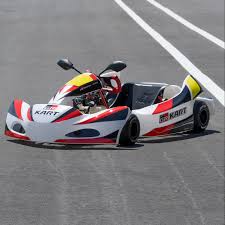
GAZOO Racing has launched the GR KART in Japan as a new entry level racing kart designed to make hands on motorsport more accessible to children, families, and newcomers. The compact machine brings Toyota’s motorsport philosophy into a much simpler format, addressing some of the biggest barriers to karting such as purchase cost, transportation, storage, and maintenance. While the September 18, 2026 news cycle has renewed attention around the project, Toyota officially launched the GR KART on September 10, marking a significant step in its effort to broaden participation in grassroots racing.
Toyota Wants More People to Experience Real Motorsport
For many aspiring drivers, the dream of racing begins long before a professional circuit. It can start with the sound of a small engine, the smell of fuel near a paddock, or the first nervous lap around a karting track. Yet getting from that first spark of interest to actual ownership can be difficult.
GAZOO Racing says the GR KART was created specifically to lower those barriers. The company describes karting as an important gateway to motorsport because many professional drivers experience competitive driving through karts before moving into more advanced racing categories.
Toyota Chairman Akio Toyoda, who is also known by the motorsport name Morizo, has expressed a long standing ambition to make motorsport something that more people can participate in, much like football or baseball. The GR KART reflects that philosophy by focusing not only on performance, but also on practicality and accessibility.
What Makes the GR KART Different
The GR KART is not designed to be a conventional family vehicle or a recreational toy. It is a genuine racing kart intended for closed course driving and competition. Toyota has focused on making ownership less complicated for people who may be entering motorsport for the first time.
The kart measures 1,820 millimeters in length, 1,160 millimeters in width, and 670 millimeters in height. It has a wheelbase of 1,045 millimeters and weighs 83 kilograms without gasoline. Power comes from a 215 cubic centimeter engine.
Its manufacturer suggested retail price in Japan is 385,000 yen including consumption tax. Toyota says the price reflects efforts to reduce costs while maintaining safety, durability, and ease of ownership.
The official GAZOO Racing announcement provides the detailed specifications, sales information, and operating requirements for the new kart.
One Kart Can Serve Both Children and Adults
One of the most practical features is the adjustable driving position. Toyota designed the GR KART so that people ranging from approximately 135 centimeters to 185 centimeters in height can use the same machine.
The pedals can be adjusted with a simple sliding mechanism, while the steering wheel can be tilted to suit the driver. That means parents and children do not necessarily need separate karts simply because their body sizes are different.
For a family considering its first experience with motorsport, that detail can make a major difference. Instead of treating karting as an expensive activity belonging to one driver, the GR KART can become something shared across generations.
Transport and Storage Were Part of the Design
Owning a racing kart involves more than buying the machine. Families also need somewhere to store it and a practical way to transport it to a circuit. Toyota specifically addressed both problems during development.
The GR KART can be transported without disassembly inside Toyota Noah and Voxy minivans when the appropriate securing equipment is used. This removes the need for a large dedicated racing transporter for owners who already have a family vehicle.
The kart can also be stored upright. Toyota designed components including the oil catch tank, diaphragm carburetor, and fuel filler arrangement to support upright storage while reducing the possibility of fuel or oil leakage.
That may sound like a small engineering decision, but for a newcomer it can determine whether karting feels manageable or overwhelming. A machine that can be moved and stored using ordinary household resources is easier to integrate into family life.
Maintenance Has Also Been Simplified
Another major consideration is maintenance. Motorsport can quickly become expensive and technically demanding when owners have to perform frequent adjustments or prepare a vehicle before every session.
GAZOO Racing says the GR KART was designed to minimize maintenance requirements so that beginners can spend more time learning to drive. The kart uses a belt drive system rather than a traditional chain, helping eliminate chain oil contamination and incorporating an automatic tensioner that reduces the need for regular belt adjustment.
The engine also has a built in self charging battery, removing the need for a separate battery installation and charging routine.
These decisions reveal the philosophy behind the project. Toyota is not simply trying to create a smaller racing machine. It is attempting to remove the practical obstacles that can cause first time participants to abandon motorsport before they have a chance to develop their skills.
A Dedicated App Adds a Digital Layer
The GR KART experience also includes digital support through the GR app. The application provides information about the kart, educational material, and support for drivers preparing to use the machine.
Owners can register through the application and obtain a GR KART Driver Passport. At participating circuits, this passport can serve as proof that the driver is eligible to participate in sports driving without obtaining a separate kart track license.
Participation in specific GR KART races under the SL Kart Meeting system requires a separate dedicated license. The app therefore acts as a bridge between learning, ownership, circuit participation, and the wider GR motorsport community.
The Toyota global newsroom also outlines how the GR KART and its driver support system fit into the company’s wider motorsport strategy.
Built Through Toyota Production Experience
Toyota has described the GR KART as a machine made by a car manufacturer, with production taking place at the Gamagori GR KART Workshop in Aichi Prefecture. The workshop operates on a smaller scale than a conventional automotive factory, allowing engineers and production staff to test ideas and technologies more quickly.
The project also uses principles associated with the Toyota Production System. The company says the workshop focuses on quality, continuous improvement, and cost reduction while experimenting with new production approaches.
That manufacturing philosophy is significant because the GR KART is positioned as an accessible motorsport product rather than a premium racing machine. Keeping production efficient is central to the goal of lowering the financial barrier for newcomers.
Japan Launches the First Phase
The GR KART went on sale in Japan on September 10 through selected kart tracks and GR Garage locations. Toyota initially listed 36 participating kart tracks and seven GR Garage locations, with additional sales locations planned.
The network stretches across several regions of Japan, giving prospective owners access to a growing selection of places where the kart can be purchased and used.
For now, the launch is focused on Japan. Toyota’s announcement does not establish a global sales program for the GR KART, so international availability should not be assumed simply because the GR brand operates in many markets.
Could GR KART Become a New Gateway Into Racing?
The most interesting part of the GR KART story is not its engine size or compact dimensions. It is the attempt to rethink how people enter motorsport.
Traditional racing can appear intimidating to newcomers. There are machines to maintain, licenses to obtain, equipment to purchase, transportation to arrange, and circuits to find. For parents considering motorsport for a child, those practical questions can be just as important as the excitement of competition.
GR KART addresses several of those concerns in one package. The same kart can accommodate different family members. It can fit into a family minivan. It can be stored upright. Maintenance has been simplified. Educational support is available through a dedicated application. Participating circuits are already connected to the program.
None of these features removes the responsibility that comes with operating a racing vehicle. The kart is strictly for closed courses and cannot be registered for public road use. Proper safety equipment, circuit rules, driver training, and responsible supervision remain essential.
Why Entry Level Karting Matters to the Future of Motorsport
Motorsport depends on having a pathway through which new drivers can develop. Without affordable and approachable entry points, racing can become increasingly concentrated among people who already have the financial resources, equipment, and connections required to participate.
The GR KART represents one response to that problem. Its approach places practical ownership alongside driving enjoyment, creating an experience that Toyota hopes can bring more families into the paddock.
We should also view the project as part of a broader change in how automotive manufacturers engage with motorsport. Manufacturers are increasingly connecting physical racing with digital communities, driver development, enthusiast events, and accessible performance experiences. The result is a more connected pathway from gaming and casual interest toward real world driving.
The GR KART will not make motorsport inexpensive for everyone, and it does not remove every barrier associated with competitive racing. What it does is address several obstacles at the starting line. For a child holding a steering wheel for the first time, or a parent taking a first lap alongside them, that starting line can be the most important part of the journey.
With the GR KART now available in Japan, Toyota is putting that philosophy into physical form. The small machine may be modest compared with a professional race car, but its purpose is considerably larger: to give more people a practical opportunity to discover the concentration, excitement, discipline, and joy that come from controlling a racing vehicle on a real circuit.