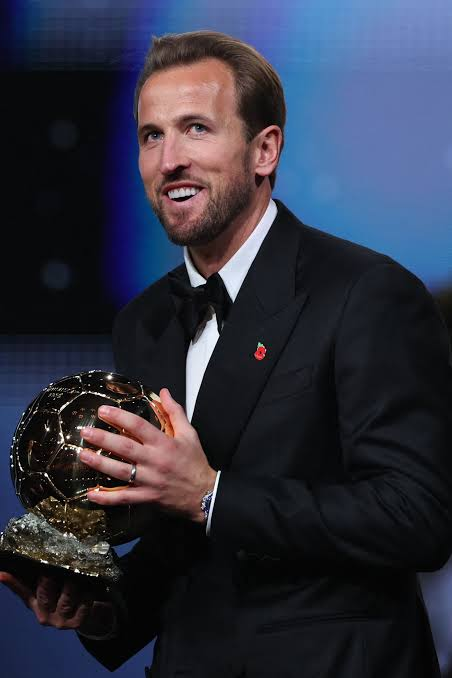
Harry Kane has reportedly received the 2026 Ballon d’Or after scoring 73 goals for club and country, according to the supplied news summary. The reported achievement would place the Bayern Munich striker and England captain among football’s most celebrated figures and make him the first Englishman in 25 years to win the prestigious individual award. For a player whose career has been defined by consistent goalscoring and a determination to compete at the highest level, such recognition would represent a defining moment. However, the reported result and statistics require independent confirmation before they can be treated as established facts.
Why the Reported Ballon d’Or Victory Matters
The Ballon d’Or is one of football’s best known individual honours. It recognises outstanding performance over a defined period, bringing together achievements for club teams and national sides. Winning it can reflect far more than a player’s ability to find the net. Consistency, influence in major matches, contribution to team success and performances against elite opponents all shape the debate surrounding the award.
If Kane has secured the 2026 prize as reported, his achievement would carry particular significance for English football. English players have long featured prominently in domestic competitions and European tournaments, but the Ballon d’Or has remained an uncommon distinction for them. A new English winner would attract attention well beyond Bayern Munich supporters, particularly among fans who have followed Kane from his early professional years through his rise to international captaincy.
We should also distinguish between an extraordinary individual season and the broader team accomplishments that often influence award voting. A striker can score at a remarkable rate while depending on teammates to create chances, control possession and provide defensive stability. Individual recognition is most meaningful when it acknowledges both personal excellence and the collective work that makes it possible.
Harry Kane’s Goalscoring Reputation
Kane has built his reputation around a combination of clinical finishing, intelligent movement and an ability to contribute to attacking play beyond the penalty area. He can score with either foot, threaten in the air and find space between defenders. His passing and awareness also allow him to drop deeper, link midfield with attack and create opportunities for teammates.
That variety makes him difficult to defend against. Centre backs must decide whether to follow him when he moves away from the goal or remain in position to protect the penalty area. If they step forward, Kane can exploit the space behind them. If they hold their line, he can receive the ball between defensive and midfield lines and help build an attack.
The reported total of 73 goals for club and country would represent an extraordinary scoring return across a season. Such a figure would demand examination of the competitions involved, the number of appearances, the distribution of goals between club and international matches, and the quality of opposition. Those details matter because a headline total becomes more informative when readers can see how the goals were scored and how consistently the player performed throughout the campaign.
Bayern Munich and the Importance of Team Support
Kane’s role at Bayern Munich places him in a club environment where expectations are high and success is measured across domestic and European competitions. A leading striker at a club of Bayern’s stature is expected to deliver goals, provide a focal point for attacking moves and perform under pressure in matches that can define an entire campaign.
Scoring regularly in such an environment requires more than technical ability. The striker must develop an understanding with wingers, attacking midfielders and full backs, anticipating their movements and adjusting his own positioning to create useful passing options. Timing is particularly important. A run made too early can leave a player offside, while a delayed movement can allow defenders to close the available space.
Teammates also play a central role in a striker’s success. Accurate deliveries, quick combinations and well timed passes can turn a promising attack into a clear chance. Kane’s own movement and finishing determine whether those opportunities become goals, but the quality of the supporting players helps explain how a prolific scoring season is achieved.
For Bayern, an award for Kane would also reflect the visibility of the club’s attacking performances. Yet the individual prize would not, by itself, establish how successful the team had been in every competition. To understand the full story, readers would need confirmed season records covering Bayern’s league campaign, cup matches and European performances.
England Captaincy Adds Another Dimension
Kane’s standing as England captain gives the reported achievement an additional national dimension. International football creates a different set of demands from the weekly rhythm of club competition. Players have less time to train together, tactical preparation is often compressed, and the pressure of representing a country can magnify every important moment.
As a centre forward, Kane is judged by his goals, but a captain is also expected to communicate, maintain focus and help teammates manage difficult periods in a match. That responsibility becomes especially visible during major tournaments, when a single mistake or missed opportunity can change the direction of a team’s campaign.
For younger English players, a confirmed Ballon d’Or victory would provide a powerful example of how sustained performance at club level can support international recognition. It would also encourage a broader conversation about player development, coaching, technical education and the competitive pathways that help talented footballers progress from youth teams to the highest level.
The English Winners Who Came Before
The claim that Kane would be the first Englishman in 25 years to win the award places the reported result in a longer historical context. The Ballon d’Or has traditionally been dominated by a relatively small group of exceptional players, with winners emerging from different footballing cultures and generations. Each victory reflects the standards of its own era, making comparisons across decades difficult.
Historical records and the award’s official archive provide the best way to verify a new winner and assess the significance of the result. The France Football Ballon d’Or platform offers a starting point for readers interested in the award’s history and past recipients. Reviewing those records can help establish whether the reported gap between English winners is accurate and how Kane’s achievement would fit into the competition’s wider story.
A historic result would inevitably prompt comparisons with previous generations of English forwards. Such discussions can be enjoyable, but they are rarely settled by goal totals alone. Different eras bring different tactical systems, schedules, competition formats and expectations. A fair assessment considers the football each player faced as well as the honours they earned.
What a Ballon d’Or Means for a Player’s Legacy
Individual awards can shape how a career is remembered, but they do not tell the whole story. A player’s legacy also depends on the quality of performances over time, contributions to important matches, influence on teammates and ability to remain effective as opponents adapt. A single trophy can become a defining symbol, yet the work behind it usually stretches across many seasons.
For Kane, the reported award would invite fresh attention to the different stages of his career, his development as a complete forward and his transition into a leading role at Bayern Munich. It would also strengthen discussion of his place among the leading strikers of his generation. Those conclusions, however, should rest on verified records and the confirmed award result rather than on an unverified headline alone.
Supporters often remember the goals that arrive at decisive moments: the finish that rescues a match, the composed penalty under pressure or the late strike that sends a team into the next round. These moments give statistics their emotional meaning. If the reported 73 goal season is confirmed, its importance will depend not only on the final number but also on the matches in which Kane delivered and the results his goals helped secure.
What Readers Should Watch for Next
The most useful next step is to confirm the award through the organisers and compare the reported statistics with official club and national team records. Readers should look for the final voting announcement, the precise period covered by the award, the breakdown of Kane’s goals and the performances that most influenced the outcome.
The official FIFA website provides international football news and competition information that can help readers follow developments involving national teams and major tournaments. For detailed club statistics, Bayern Munich’s official communications and competition records would provide further context on Kane’s performances.
Until the result and figures are independently confirmed, the reported victory should be treated cautiously. If verified, Kane’s 2026 Ballon d’Or would mark a major personal milestone, a notable moment for English football and recognition of a season defined by exceptional goalscoring. The final assessment should combine the award itself with the evidence behind it, giving readers a clear picture of what Kane achieved and why it matters.
The Numbers Behind Kane’s Historic Season
Official reports confirm that Kane scored 73 goals across 65 appearances for Bayern Munich and England during the 2025 to 2026 season. His total included 61 goals for Bayern and 12 for England, underlining the consistency he maintained across club and international football. He also claimed the men’s Striker of the Year honour, adding another individual distinction to an already exceptional campaign.
Bayern’s success provided an important backdrop to his individual achievement. The club won the Bundesliga title, the German Cup and the German Super Cup, while Kane’s international performances helped England reach third place at the 2026 World Cup. Those accomplishments strengthened the case for a player who combined outstanding personal statistics with meaningful contributions to successful teams.
The final rankings placed Kylian Mbappé second and Lamine Yamal third. Kane’s victory was officially confirmed at the ceremony held at London’s Palladium Theatre on October 26, 2026. Readers can review the award announcement and the full list of winners through the official UEFA website, which publishes information about the awards and European football competitions.
Kane’s triumph is therefore more than a remarkable scoring story. It recognises years of persistence, the ability to adapt to different footballing environments and the collective effort of teammates and coaches. For English football, his name now joins a select group of previous winners, including Stanley Matthews, Bobby Charlton, Kevin Keegan and Michael Owen. For Kane, the trophy marks a career milestone, while the challenge ahead remains familiar: continue scoring, help his teams compete for major honours and prove that exceptional standards can be sustained beyond one memorable season.