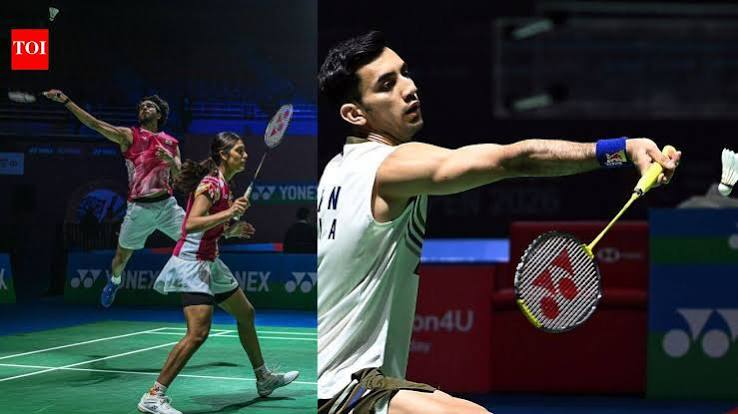
New Delhi delivered one of the most memorable chapters in international badminton on August 22, 2026, as the BWF World Championships moved toward its decisive final day with history being rewritten across several events. France secured a landmark mixed doubles breakthrough, Alex Lanier moved into a historic men’s singles final, and India celebrated another significant medal moment through its rising women’s doubles partnership. Thousands of spectators inside the Indira Gandhi Indoor Stadium watched the drama unfold, while elsewhere in Lausanne, Switzerland, the Diamond League produced its own collection of remarkable performances.
New Delhi Becomes the Stage for Badminton History
The atmosphere in New Delhi reflected the importance of the occasion. With the BWF World Championships running from August 17 through August 23, the tournament had already produced major surprises before the semifinal stage. By August 22, the remaining contenders were no longer simply competing for medals. They were competing for a place in the history of their countries, careers and partnerships.
The official BWF World Championships platform recorded a dramatic semifinal day in which several nations reached milestones that would have seemed distant before the tournament began. The strongest example came from France, which continued an extraordinary week by reaching its first ever World Championships mixed doubles final.
France Secures a Historic Mixed Doubles Final
Thom Gicquel and Delphine Delrue created one of the defining stories of the championship when they advanced to the mixed doubles final. Their achievement gave France its first ever appearance in a World Championships mixed doubles final, a milestone that carried significance far beyond a single match.
The French pair had already established themselves as one of the country’s leading mixed doubles teams, but a World Championships final represents a different level of achievement. The pressure of a major championship is amplified by the knowledge that every rally can become part of a nation’s sporting history.
For Gicquel and Delrue, reaching the final also demonstrated how sustained development can eventually challenge the traditional powers of badminton. China, Japan, Indonesia, South Korea and other Asian nations have historically dominated the sport’s biggest stages, making France’s progress especially notable.
Alex Lanier Continues France’s Extraordinary Run
France’s breakthrough did not stop with mixed doubles. Alex Lanier also moved into the men’s singles final after defeating Canada’s Victor Lai in the semifinal. The result placed Lanier on the brink of another historic achievement and gave France an extraordinary presence in the closing stages of the championship.
Lai’s semifinal appearance was itself another landmark for Canadian badminton. The 21 year old secured a second consecutive World Championships bronze medal after making history in 2025 as Canada’s first badminton world championship medalist. His performance in New Delhi showed that his earlier success was not an isolated moment.
Lanier’s progress has been particularly compelling because men’s singles is one of the most physically and mentally demanding disciplines in badminton. Every rally requires rapid movement, precise anticipation and the ability to maintain concentration under intense pressure. Reaching a World Championships final therefore represents years of preparation condensed into a handful of crucial matches.
India’s Women’s Doubles Partnership Earns Another Milestone
India also had reason to celebrate as Treesa Jolly and Gayatri Gopichand secured a bronze medal after reaching the women’s doubles semifinals. Their result became India’s second ever women’s doubles medal at the BWF World Championships.
The achievement carries particular weight for Indian badminton because the country has traditionally produced more celebrated results in men’s singles and selected other disciplines. Jolly and Gopichand have steadily changed that picture through their consistency, athleticism and growing confidence against the world’s strongest pairs.
Playing a home World Championships brings a unique emotional burden. The crowd can provide energy when a player is struggling, but it can also create enormous expectations. For Jolly and Gopichand, converting that atmosphere into a medal represents an important step in their development as an international partnership.
Ayush Shetty’s Breakthrough Adds to India’s Story
India’s wider campaign had already produced one of the tournament’s biggest shocks when 21 year old Ayush Shetty defeated world number one Shi Yuqi in the opening round. Shetty won 21 to 14, 13 to 21, 21 to 19 in a match that immediately became one of the championship’s defining upsets.
The result was significant not only because of Shi’s ranking and status as defending champion, but also because Shetty was making his World Championships debut. The young Indian player showed the value of playing aggressively while remaining composed when the match reached its most difficult stage.
For us, that upset helps explain why the 2026 championship has felt unusually unpredictable. The tournament has not simply been about established champions protecting their positions. Young players and emerging partnerships have repeatedly challenged the established order.
Lausanne Adds Another Chapter to a Major Sporting Week
While badminton produced historic moments in New Delhi, the athletics world was gathering in Lausanne for the Wanda Diamond League. The Athletissima meeting on August 20 and 21 delivered several performances that will remain important as athletes build toward the decisive part of the season.
One of the most striking performances came from Sweden’s Mondo Duplantis in the pole vault. Duplantis cleared 6.21 meters to win the event, improving his own Lausanne meeting record of 6.15 meters. Greece’s Emmanouil Karalis pushed him strongly by clearing 6.16 meters, the second best performance of his career.
The contest was particularly remarkable because both athletes moved into heights that would be extraordinary achievements at most competitions. Duplantis later attempted 6.32 meters, a height that would have challenged his own world record, although he did not clear it.
The official World Athletics results and competition platform lists Duplantis first at 6.21 meters, followed by Karalis at 6.16 meters. The performances showed how the pole vault continues to evolve as athletes repeatedly push the boundaries of what appears physically possible.
Wanyonyi Finds His Winning Form in Lausanne
The men’s 800 meters provided another compelling story. Kenya’s Emmanuel Wanyonyi won in 1 minute 42.19 seconds, finishing ahead of Algeria’s Djamel Sedjati and American Brandon Miller. The victory was especially significant for Wanyonyi because it was his first Diamond League 800 meter win of the season.
Wanyonyi’s performance demonstrated the importance of timing and patience in middle distance racing. Rather than attempting to force the race too early, he positioned himself for the decisive stages before producing the acceleration required to secure victory.
In the women’s 800 meters, Switzerland’s Audrey Werro gave the home crowd a memorable evening by winning in 1 minute 55.33 seconds. Dutch athlete Femke Broeders Bol finished just behind in 1 minute 55.41 seconds, while Ethiopia’s Saida Tsehaye took third in a personal best of 1 minute 56.92 seconds.
Neeraj Chopra Misses Gold by a Narrow Margin
Indian fans also had a reason to follow Lausanne closely because Olympic champion Neeraj Chopra competed in the javelin. Chopra finished second with a season best throw of 88.05 meters, narrowly missing victory to Sri Lanka’s Rumesh Pathirage, who produced 88.14 meters.
The nine centimeter difference illustrated just how fine the margins can be at elite athletics competitions. Chopra’s silver medal nevertheless provided valuable points as he continues his Diamond League campaign, while Pathirage strengthened his reputation as one of the athletes capable of challenging the Indian star.
A Weekend Defined by Milestones
What connects the events in New Delhi and Lausanne is not simply the presence of famous athletes. Both competitions demonstrated how sport can create moments that carry meaning beyond the final score.
France’s progress in badminton represented a breakthrough for a nation seeking greater influence in the sport. Canada’s Victor Lai continued building a new tradition after becoming the country’s first World Championships medalist. India’s Jolly and Gopichand expanded the country’s medal history in women’s doubles, while Shetty’s early upset showed the depth of India’s next generation.
In Lausanne, Duplantis once again pushed pole vaulting into extraordinary territory, Wanyonyi rediscovered his winning rhythm and Werro delivered a home victory in front of a Swiss crowd. Chopra, meanwhile, demonstrated that even a silver medal can carry significance when the margin between first and second is measured in centimeters.
Why These Results Matter Beyond August
The significance of these performances will extend beyond the immediate celebrations. World Championships medals can influence rankings, sponsorship opportunities, confidence and national expectations. For younger athletes, a breakthrough at this level can also change how opponents prepare for them in future tournaments.
For badminton in particular, the 2026 World Championships have offered a reminder that the sport’s competitive center is becoming broader. Established Asian powers remain formidable, but France, Canada and India are producing players and partnerships capable of reaching the deepest stages of the sport’s biggest competition.
As the New Delhi championship approaches its final matches, the medals will determine the official winners, but the lasting stories are already taking shape. Historic firsts, breakthrough performances and narrow defeats have combined to create a championship that reflects the uncertainty and emotional intensity that make elite sport so compelling.
August 22 therefore stands as more than another day on the international sporting calendar. In New Delhi, players chased moments that could define their careers. In Lausanne, athletes tested the limits of speed, strength and technique. Across both venues, the message was remarkably similar: history often arrives through a single rally, a single throw, a single jump or a final burst of speed when everything is at stake.