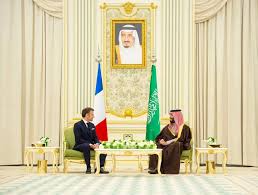
Saudi Arabia and France are preparing to deepen cooperation across healthcare, medical technology and strategic infrastructure as Crown Prince Mohammed bin Salman visits Paris for high level talks with President Emmanuel Macron. The August 22 developments come ahead of a broader Saudi French strategic partnership meeting scheduled for August 24, with French officials indicating that agreements covering health, transport and energy are expected during the visit. The health discussions build on several years of growing cooperation between Riyadh and Paris in digital health, biotechnology, emergency medicine, oncology and medical supply chains.
Paris Talks Put Healthcare at the Center of a Broader Strategic Partnership
The Saudi Crown Prince departed for France on August 21 at the direction of King Salman and following an invitation from President Macron. The two day state visit is expected to address regional issues as well as economic and strategic cooperation between the two countries. French officials have indicated that several agreements are expected to be signed during the visit, including arrangements connected with healthcare.
The timing is significant. Saudi Arabia has been pursuing a major restructuring of its healthcare system under Vision 2030, while France brings decades of experience in public healthcare, biomedical research, hospital systems and medical innovation. A closer relationship between the two countries could therefore connect Saudi investment and infrastructure development with French clinical expertise, research capabilities and technology.
The French Foreign Ministry describes the relationship as a broad strategic partnership covering political, economic, cultural and scientific cooperation. Its country profile also reflects the established institutional links between the two nations, including diplomatic missions and long running bilateral exchanges.
Earlier Health Agreements Created the Foundation for New Cooperation
The latest discussions do not begin from an empty table. Saudi Arabia and France have already established several practical healthcare partnerships, particularly during the Saudi health minister’s official visit to France in April 2025.
During that visit, Saudi Health Minister Fahad Abdulrahman AlJalajel held meetings with senior French health officials and witnessed the signing of three memoranda of understanding. The agreements addressed emergency medical services, veterinary pharmaceutical regulation and cooperation in oncology, research and digital health. The Saudi Ministry of Health has since kept those agreements listed among its bilateral health initiatives.
One of the most significant arrangements involved the Saudi Red Crescent Authority and the Greater Paris University Hospitals, commonly known as AP HP. Their cooperation focuses on improving ambulance services in Saudi Arabia through the exchange of expertise and the adoption of established French emergency medical practices.
For patients, this type of cooperation can have a meaning that is much more practical than the language of diplomacy suggests. Better emergency response systems can reduce the time between an accident and professional medical treatment. Better coordination between ambulance teams and hospitals can also improve the continuity of care when a patient arrives at an emergency department.
Digital Health and Medical Technology Are Becoming Key Areas of Cooperation
Digital health is another major part of the Saudi French relationship. The two governments have previously discussed cooperation in healthcare innovation, biotechnology, scientific research and digital services. Saudi Arabia’s healthcare transformation program has increasingly focused on technology as a means of improving access, efficiency and quality across a rapidly expanding health system.
That includes areas such as electronic health services, remote medical consultations, artificial intelligence, health data systems, advanced diagnostics and digitally supported clinical decision making. France, meanwhile, has a strong ecosystem of hospitals, universities, research institutions and technology companies working across medical science.
The potential value of bilateral cooperation lies not simply in purchasing technology. The more significant opportunity is the development of long term partnerships in which research, training, regulation and implementation progress together.
Saudi officials have already highlighted this approach through meetings with French technology and innovation communities. During the 2025 visit, the Saudi health minister visited Station F in Paris and met entrepreneurs working in health technology. Those discussions focused on opportunities to support Saudi healthcare innovation and strengthen the country’s digital health ecosystem.
Medical Logistics Could Become an Important Part of the Partnership
Healthcare systems depend on infrastructure that patients rarely see. Medicines must reach hospitals, medical devices must be available when needed, laboratory materials require controlled transportation and emergency supplies must be positioned close to areas of demand.
That makes medical logistics a potentially important component of broader Saudi French cooperation. The current diplomatic discussions are taking place alongside wider conversations about transportation, logistics and industrial partnerships. Bringing those sectors closer to healthcare could support more resilient medical supply chains.
For Saudi Arabia, stronger domestic medical manufacturing and distribution capabilities are closely connected with its ambition to build a more resilient healthcare economy. Cooperation with international partners can help develop expertise in procurement, regulatory compliance, storage, distribution and technology localization.
The experience of recent global health emergencies demonstrated how vulnerable medical supply chains can become when manufacturing, transportation or international trade is disrupted. Building diversified sources of medicines, equipment and critical healthcare products can therefore be viewed as part of national health preparedness rather than simply an economic objective.
Oncology and Biomedical Research Offer Another Path Forward
Cancer care is another area where Saudi and French institutions have already begun building closer links. During the 2025 health ministerial visit, Seha Virtual Hospital signed a strategic executive program with Gustave Roussy International, one of Europe’s leading cancer centers.
The partnership covers research, innovation and digital health in oncology. Such cooperation can create opportunities for physicians and researchers to exchange knowledge while exploring new approaches to diagnosis and treatment.
For families dealing with cancer, the significance of international medical partnerships is ultimately measured through clinical outcomes. Faster access to specialist knowledge, stronger research networks and better use of digital tools can potentially support earlier diagnosis and more personalized care.
The relationship also has an educational dimension. Training programs and professional exchanges can help Saudi healthcare workers gain experience with international clinical practices while allowing French institutions to develop deeper relationships with a rapidly expanding healthcare market.
Biotechnology Is Becoming a Strategic Priority for Riyadh
The healthcare relationship also fits into Saudi Arabia’s broader push to develop biotechnology as a national economic sector. Riyadh is preparing to host the fourth Riyadh Global Medical Biotechnology Summit from September 14 through September 16, 2026. The event is expected to bring together government leaders, pharmaceutical executives, researchers, investors and specialists working in areas including cell and gene technologies and artificial intelligence in life sciences.
The Saudi government has positioned biotechnology as part of its wider economic diversification strategy. The country’s objectives include attracting investment, supporting medical research, developing pharmaceutical industries and strengthening advanced technology capabilities.
France can offer useful connections in this area because of its established biomedical research institutions and pharmaceutical industry. A stronger bilateral relationship could therefore move beyond healthcare delivery toward the development of medicines, diagnostics, research infrastructure and biotechnology companies.
What the Agreements Could Mean for Patients and Healthcare Workers
The most meaningful test of any international healthcare agreement is whether it eventually produces measurable improvements for people. Government announcements and memoranda create the framework, but implementation determines whether those promises become part of everyday healthcare.
Several areas could produce tangible benefits if the Saudi French cooperation develops as planned:
- More advanced emergency medical response and ambulance services
- Greater cooperation in cancer research and specialist treatment
- Expanded digital health and remote care capabilities
- Stronger medical supply and logistics infrastructure
- Joint research in biotechnology and biomedical sciences
- Professional training and exchange opportunities for healthcare workers
These areas are closely connected. A sophisticated digital health platform is less useful without trained professionals. Advanced medical equipment requires reliable supply chains and regulatory systems. Biomedical research requires laboratories, skilled researchers and long term investment. The strongest partnerships therefore tend to connect several parts of the healthcare system rather than concentrating on one technology.
Why the Timing Matters for Saudi Arabia
Saudi Arabia is entering a period in which healthcare investment is increasingly linked with broader economic development. The country wants to improve healthcare services while also developing domestic capabilities in pharmaceuticals, biotechnology, medical devices and digital health.
The Ministry of Health’s upcoming Global Health Exhibition in Riyadh reflects that ambition. The 2026 event is expected to feature life sciences, digital health, pharmaceuticals, medical devices, startups and investment opportunities, alongside forums focused on healthcare leadership and medical excellence.
That environment gives international agreements a potential pathway from government discussions into commercial partnerships, research projects and technology deployment.
France Gains Opportunities From a Growing Saudi Healthcare Market
The relationship is not one sided. French healthcare institutions and companies can gain access to a Saudi market that is investing heavily in healthcare infrastructure and advanced medical capabilities.
French expertise in hospital management, emergency medicine, oncology, biotechnology and health technology can complement Saudi capital, infrastructure development and demand for specialized services. The two sides can also create opportunities for joint ventures and research programs rather than relying exclusively on conventional commercial transactions.
The Saudi French Business Council has already brought together companies and healthcare professionals to discuss opportunities in infrastructure, investment and medical technology. During its 2025 healthcare sector meeting in Paris, more than 120 healthcare professionals participated in discussions focused on strategic partnerships and investment opportunities.
A Partnership Moving From Diplomacy Toward Practical Healthcare
The significance of the August 22 developments is therefore best understood as part of a longer progression. Saudi Arabia and France have moved from broad diplomatic commitments toward increasingly specific cooperation involving hospitals, emergency services, oncology, digital health, biotechnology and healthcare investment.
The upcoming strategic partnership discussions in Paris could provide another step in that process. If the expected healthcare agreements are implemented with clear targets, funding and institutional accountability, they could influence how medical technology and healthcare services develop in both countries.
For ordinary patients, the most valuable outcome will not be the number of agreements signed in Paris. It will be what happens afterward: an ambulance reaching a patient sooner, a doctor gaining access to better diagnostic information, a researcher collaborating across borders, a hospital receiving critical supplies reliably or a cancer patient benefiting from knowledge developed through international research.
That is where the Saudi French health partnership will ultimately be judged. The diplomatic meetings provide the starting point, but sustained cooperation between hospitals, researchers, technology companies, regulators and healthcare professionals will determine whether the promises made in Paris become lasting improvements in medical care.