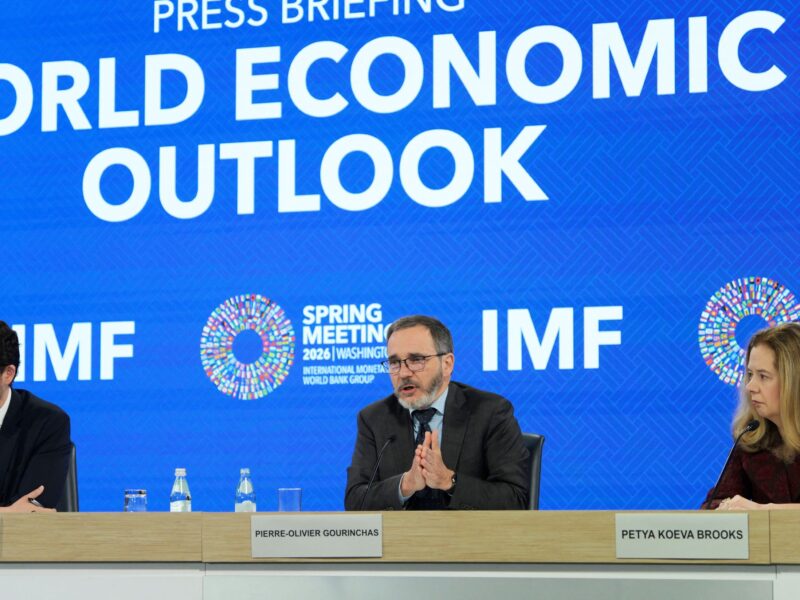
On April 15, 2026, finance leaders gathered with the International Monetary Fund to confront a sobering reality. The ongoing Middle East conflict is no longer a regional crisis alone. It is now a defining global economic shock, one that officials say echoes the scale and intensity of the COVID era. In the room, the tone was not alarmist, but it was unmistakably urgent. We are witnessing a moment where supply chains, energy markets, and fragile economies are all being tested at once.
A Shock That Feels Familiar Yet Different
The IMF panel centered around its latest findings on MENAP economies navigating war conditions. What emerged was a clear message. This is one of the largest supply shocks in modern economic history. Unlike isolated disruptions, this crisis cuts across energy, food, logistics, and financial markets simultaneously.
Officials described how the conflict has disrupted trade routes, tightened energy supplies, and fueled volatility across global markets. Oil prices have surged past critical thresholds, with shipping routes through key chokepoints under strain. These disruptions mirror the sudden economic paralysis seen during the pandemic, yet the drivers are geopolitical rather than health related.
According to IMF observations, the war has already caused “disruptions to trade and economic activity” alongside sharp increases in energy prices and financial instability. (IMF official statement)
Why This Supply Shock Is So Severe
We often think of supply shocks as temporary interruptions. This one carries deeper structural consequences. The Middle East remains central to global energy flows, and even limited disruptions ripple outward quickly. Economists at the panel pointed to three overlapping pressures:
- Energy constraints driven by reduced oil and gas flows
- Rising food prices linked to transport and fertilizer costs
- Supply chain fragmentation affecting manufacturing and trade
Kristalina Georgieva, IMF Managing Director, has emphasized that the conflict is not confined to oil markets. It is also disrupting food systems, technology supply chains, and investment flows, creating a layered crisis with global reach. (Economic Times report)
Echoes of the Pandemic Era
During the discussion, comparisons to COVID were not made lightly. The pandemic froze economies through lockdowns and labor shortages. This crisis, by contrast, is constricting the arteries of global commerce.
Both events share a common thread. They expose how interconnected the global economy has become. When a critical region falters, the effects cascade across continents. During COVID, it was factories and ports. Today, it is energy corridors and geopolitical fault lines.
The IMF has already revised its global growth outlook downward, warning that continued disruptions could slow economic expansion significantly. Growth projections for 2026 have been trimmed, reflecting rising uncertainty and persistent inflation pressures.
A World of Higher Prices
For households, the consequences are immediate and tangible. Fuel costs rise first, followed by transport, food, and basic goods. This layered inflation is particularly difficult to contain.
Economists at the panel stressed that prolonged oil prices above 100 dollars per barrel could push the global economy toward recession. Governments are already grappling with difficult choices between supporting citizens and maintaining fiscal stability.
The challenge is compounded by rising debt levels. Global government debt has climbed close to historic highs and is expected to rise further if the crisis persists.
MENAP Economies on the Front Line
For the Middle East, North Africa, Afghanistan, and Pakistan region, the stakes are even higher. These economies sit at the center of the crisis, both geographically and economically.
We see a stark divide emerging. Oil exporting nations may benefit from higher prices in the short term, while oil importing countries face severe fiscal strain. Currency volatility, inflation, and reduced investor confidence are already reshaping the regional outlook.
The IMF has cut growth forecasts sharply for several economies in the region, highlighting how vulnerable they are to prolonged conflict and energy shocks.
The Human Dimension Behind the Numbers
Behind every percentage point of lost growth lies a human story. Rising food prices mean families cutting back on essentials. Higher fuel costs affect transport, jobs, and daily life. In fragile states, these pressures can quickly escalate into social instability.
The IMF estimates that billions of people living in conflict affected regions are already more vulnerable to economic shocks, with weaker institutions and limited fiscal space to respond. (IMF analysis)
In conversations at the panel, there was a clear recognition that economic resilience is not evenly distributed. Some nations can absorb shocks. Others cannot.
Policy Dilemmas Facing Governments
One of the most debated topics at the panel was how governments should respond. The instinct to shield citizens from rising costs is understandable. Yet broad subsidies can create long term distortions.
The IMF has cautioned against blanket fuel subsidies, urging instead targeted support measures such as temporary cash transfers. This approach aims to protect vulnerable populations while preserving market signals that encourage energy conservation.
We heard repeatedly that policy choices made now will shape recovery for years. Missteps could deepen debt burdens and weaken economic stability.
The Tightrope Between Inflation and Growth
Central banks face their own dilemma. Raising interest rates can curb inflation but risks slowing growth further. Keeping rates low may support economies but allow inflation to persist.
This balancing act is becoming increasingly difficult as the conflict introduces new uncertainties. Supply shocks are notoriously hard to manage because they lie outside traditional monetary control.
As one economist noted during the discussions, policymakers are no longer dealing with a single crisis but a convergence of risks that reinforce each other.
Global Spillovers No Country Can Ignore
Perhaps the most striking takeaway from the IMF panel was the scale of global spillover effects. No economy remains insulated. Even countries far from the conflict are experiencing its consequences through higher import costs, disrupted trade, and financial volatility.
Shipping disruptions, particularly in critical maritime routes, have amplified uncertainty. Energy security has reemerged as a central concern for governments worldwide, reshaping strategic priorities.
The IMF has warned that if the conflict escalates or persists, the global economy could face a prolonged period of slower growth and elevated inflation, a combination that challenges both policymakers and households.
Lessons From History
While comparisons to past oil shocks and the pandemic are useful, this crisis carries its own unique characteristics. It combines geopolitical tension with economic fragility in ways that are difficult to predict.
Historically, supply shocks of this magnitude have reshaped global economic structures. They have accelerated transitions in energy, trade, and policy frameworks. Many at the panel suggested that we may be witnessing the early stages of another such transformation.
What Comes Next
As the IMF and global finance leaders continue their discussions, one theme remains clear. The path forward depends heavily on how the conflict evolves. A swift resolution could stabilize markets and restore confidence. A prolonged crisis could deepen economic fractures.
We are left with a sobering realization. The global economy is navigating yet another defining test. The resilience built after the pandemic is now being challenged by forces that are harder to control and slower to resolve.
In the quiet moments between sessions, the conversations often returned to a simple question. Not whether the world can withstand this shock, but how evenly the burden will be shared. That question, more than any forecast or statistic, may define the years ahead.