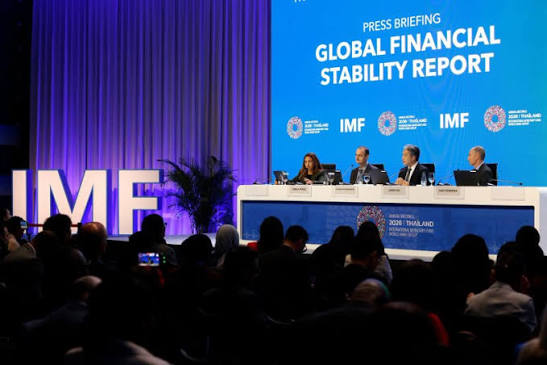
Financial market pressures are increasingly important to the stability of essential public services, including hospitals, community clinics, and national health programs. In assessments reported on October 13, 2026, the International Monetary Fund highlighted concerns involving stretched asset valuations, sovereign debt risks, and wider macroeconomic volatility. These issues extend beyond investors and government finance ministries. When borrowing becomes more expensive, markets lose confidence, or public budgets come under pressure, health systems can face difficult choices about staffing, medicines, infrastructure, and access to care. The central concern is how countries can protect essential services while preparing for a more uncertain financial environment.
Why Financial Stability Matters for Public Health
At first glance, financial markets and healthcare may appear to operate in separate worlds. One involves interest rates, bonds, investment portfolios, and government borrowing, while the other depends on trained medical professionals, reliable equipment, medicines, and accessible treatment. In practice, these systems are closely connected because governments, hospitals, insurers, and healthcare providers all depend on stable financing.
Public health services require long term planning. Hospitals need funding to maintain buildings, purchase diagnostic equipment, pay staff, and keep essential medicines available. Preventive health programs often require years of sustained investment before their full benefits become visible. When financial conditions deteriorate, governments may face higher borrowing costs and reduced room in their budgets, making it harder to maintain these commitments.
Financial instability can also affect private healthcare providers. Higher interest rates may increase the cost of financing new facilities or expanding existing services. Exchange rate movements can make imported medicines, medical devices, and laboratory supplies more expensive. If inflation reduces household purchasing power, patients may find it harder to afford consultations, prescriptions, transport, and other costs associated with treatment.
The consequences are not identical across countries. Wealthier economies may have greater access to capital markets and more resources to respond to financial shocks, while countries carrying heavy debt burdens may have fewer options. For vulnerable communities, even a relatively small reduction in health spending can affect access to care when local services are already stretched.
Stretched Asset Valuations Raise Questions About Market Resilience
One concern identified in the reported assessments is the possibility that asset prices have moved beyond levels justified by underlying economic conditions. Asset valuations reflect the prices investors are willing to pay for investments such as equities, bonds, and property. High valuations do not automatically signal an imminent crisis, but they can leave markets more exposed when expectations change or financial conditions tighten.
When investors become concerned about economic growth, inflation, corporate earnings, or government finances, they may reassess the risks attached to their holdings. A sudden adjustment can reduce asset prices, increase market volatility, and make it more difficult or expensive for businesses and governments to raise money. If several markets come under pressure at once, the effects can spread through banks, investment funds, insurers, and other financial institutions.
For healthcare, the connection is practical. A hospital expansion may rely on loans, public funding, or private investment. If financing costs rise sharply, planned projects may be delayed or scaled back. Healthcare companies may also postpone investments in equipment, research, and new facilities when market conditions become unpredictable.
We should distinguish between a warning about vulnerability and a prediction that a financial crash will occur. Asset prices can remain elevated for extended periods, and different markets carry different levels of risk. The important question is whether investors and institutions are prepared for a correction and whether financial systems can continue providing credit when conditions become difficult.
Sovereign Debt Risks Put Government Budgets Under Pressure
Sovereign debt is money borrowed by a national government through instruments such as government bonds and loans. Governments use borrowing to finance public services, infrastructure, emergency responses, and other spending when current revenues are insufficient. Borrowing can be a legitimate tool for economic development, but rising debt servicing costs can gradually restrict the resources available for essential services.
When a government must devote a larger share of its revenue to interest payments, less funding may remain for hospitals, schools, transport, and social protection. The pressure becomes more serious when economic growth weakens, tax receipts decline, or the government needs to refinance large amounts of debt at higher interest rates.
Countries with substantial foreign currency borrowing can face additional challenges. If their domestic currency loses value against the currencies in which their debts are denominated, repayments can become more expensive in local currency terms. The same exchange rate movement may increase the cost of imported medical supplies, creating pressure on both government budgets and healthcare providers.
Debt sustainability is therefore relevant to public health planning, even when a government has not entered a financial crisis. Policymakers need to understand how debt repayments could evolve under different assumptions about growth, interest rates, inflation, and currency movements. This can help them identify potential funding gaps before those gaps affect essential services.
Macroeconomic Volatility Can Reach Hospitals and Patients
Macroeconomic volatility refers to significant or unpredictable changes in conditions such as inflation, economic growth, interest rates, and exchange rates. These changes can influence how much governments can spend, what healthcare providers pay for supplies, and whether households can afford medical treatment.
Consider a hospital that imports essential medicines or diagnostic equipment. If its national currency weakens, the same shipment may cost substantially more in local currency. If the hospital operates on a fixed budget, administrators may need to delay purchases, renegotiate contracts, or redirect money from other services. The effects depend on local purchasing arrangements, available reserves, and the ability of the health system to absorb higher costs.
Inflation can create additional pressure through wages, electricity, transportation, and building maintenance. Healthcare workers may seek higher pay to keep pace with living costs, while hospitals face rising bills for supplies and utilities. If public funding does not keep up, service providers can experience financial strain even when patient demand remains high.
These pressures are particularly difficult for countries that depend heavily on imported medicines and medical equipment. A financial shock can affect several parts of the supply chain at once, from currency markets and shipping costs to government procurement and household budgets. Planning for these risks requires cooperation between finance ministries, health departments, central banks, and healthcare providers.
Why the IMF’s Latest Financial Stability Assessment Matters
The IMF’s October 2026 Global Financial Stability Report, titled Resilience, Risk, and Transformation, describes financial markets that have remained resilient while significant risks persist. The report identifies potential corrections in artificial intelligence related asset prices, rising sovereign bond yields, and growing cyber threats as issues that could disrupt financial conditions. Its analysis provides a broader financial risk assessment rather than, by itself, a direct forecast of health system failures.
For policymakers, the distinction matters. A financial vulnerability does not mean that hospitals will immediately lose funding or that medical services are certain to deteriorate. Instead, it signals the importance of examining how financial shocks might pass through public budgets, banking systems, supply chains, and household finances. The IMF’s official website provides access to its financial stability analysis and wider economic research.
The report’s concerns about rising government bond yields are particularly relevant to public finance. Bond yields influence the cost at which governments borrow money. When yields rise, new borrowing and refinancing can become more expensive, especially for countries that need to issue substantial amounts of debt. Governments may then face difficult choices about spending priorities, tax policy, and the pace of new investment.
Artificial intelligence related investment presents a different potential source of instability. If investor expectations about future profits prove too optimistic, a sharp market correction could affect businesses, funds, and financial institutions with concentrated exposure to the sector. The consequences for health services would depend on the scale of the correction and the connections between financial markets, government revenues, and healthcare financing.
Cybersecurity Is Also a Financial Stability Concern
Modern healthcare depends on digital systems for patient records, appointments, laboratory results, billing, insurance claims, and supply management. A serious cyber incident can interrupt these systems, delay treatment, expose sensitive information, and impose substantial recovery costs. When a health provider already faces financial pressure, recovering from such an incident can become even more difficult.
Although the IMF’s cyber risk concerns relate to the financial system, the wider lesson applies to other essential services. Banks, payment providers, hospitals, and suppliers rely on interconnected technology. A disruption affecting a payment system or a major service provider can create operational problems for organizations that depend on it.
Healthcare institutions can reduce their exposure by maintaining secure backups, restricting access to sensitive systems, updating software, training staff to recognize suspicious messages, and preparing clear procedures for operating during an outage. Governments can support this work through information sharing, appropriate cybersecurity standards, and coordinated emergency planning.
Cybersecurity should be treated as part of financial and operational resilience rather than an isolated technology expense. Prevention can be costly, but the potential consequences of prolonged disruption include lost revenue, delayed care, legal liabilities, and damage to public trust.
Protecting Essential Health Services During Financial Stress
Governments cannot eliminate every financial risk, but they can reduce the likelihood that economic shocks lead to avoidable disruptions in healthcare. The first step is to identify which services must remain available during a period of fiscal pressure. Emergency treatment, essential medicines, maternal care, vaccination programs, and services for people with serious ongoing conditions may require particular attention when budgets become constrained.
Public finance planning can also include stress tests that examine how health budgets would respond to different economic conditions. Officials could model the effects of higher interest payments, weaker tax revenues, rising medicine prices, or currency depreciation. Such exercises can reveal where funding arrangements are most vulnerable and which contingency measures would be practical.
Procurement policies can provide another layer of protection. Where feasible, healthcare authorities can diversify suppliers, monitor stock levels for critical medicines, and develop contingency arrangements for products that have limited alternatives. These measures cannot prevent every shortage, but they may reduce dependence on a single supplier or delivery route.
Protecting health spending does not mean that governments can ignore debt sustainability. Persistent fiscal problems can eventually undermine the very services that public budgets are intended to support. The challenge is to manage public finances responsibly while protecting high priority services and making spending more effective.
What Governments, Investors, and Health Leaders Can Do
The IMF’s warnings offer a reason for institutions to review their exposure to financial and operational shocks before market conditions deteriorate. Different organizations will require different responses, but several practical priorities can help strengthen resilience.
- Finance ministries: assess refinancing needs, improve debt transparency, and examine how changes in interest rates could affect essential public spending.
- Health authorities: identify critical services and supplies, prepare realistic contingency budgets, and monitor the affordability of medicines and equipment.
- Healthcare providers: review financial reserves, supplier dependence, cybersecurity protections, and plans for maintaining services during disruptions.
- Financial regulators: monitor leverage, market concentration, liquidity pressures, and the connections between banks and other financial institutions.
- International institutions: support countries that need stronger financial oversight, more sustainable debt arrangements, and better preparation for external shocks.
Coordination is essential because no single institution controls all the risks. A health ministry may understand which medicines are most urgently needed, while a finance ministry understands the pressures on public borrowing. Sharing information can help governments identify threats early and choose responses that protect both economic stability and essential services.
Why Lower Income Countries May Face Greater Challenges
Countries with limited fiscal space often have fewer options when borrowing costs rise or currencies weaken. They may already devote a large share of public revenue to debt repayments, leaving less flexibility to respond to emergencies or expand healthcare services. Dependence on imported medical products can add another source of vulnerability when exchange rates or international transport costs change.
These pressures do not mean that every lower income country will experience the same outcome. Domestic revenue collection, debt structure, foreign exchange reserves, access to concessional financing, and the strength of public institutions all influence how well a country can respond. Effective planning and transparent spending can help, although they cannot fully offset a severe external shock.
International financial cooperation can play a role where debt pressures threaten essential investment. Credible debt management, timely restructuring where necessary, and carefully designed development financing may give governments more room to maintain important services. Support should also be linked to clear priorities and accountable use of public funds.
For health systems, resilience means preparing for financial difficulties without abandoning long term goals. Preventive care, workforce training, reliable supply chains, and well maintained facilities can reduce the risk that a temporary financial shock produces lasting damage.
Looking Ahead: Stability Must Include the Services People Depend On
The IMF’s financial stability assessment underlines the importance of looking beyond headline market performance. Financial markets can appear strong while vulnerabilities accumulate beneath the surface. Stretched valuations, rising borrowing costs, concentrated investment risks, and cyber threats deserve attention because their effects can spread across sectors and borders.
Health systems are not isolated from these forces. Their ability to deliver reliable care depends partly on sustainable public finances, functioning payment systems, stable supply chains, and the purchasing power of households. Preparing for economic uncertainty therefore requires policymakers to consider the potential consequences for essential services alongside the stability of financial institutions.
The practical goal is not to predict every market movement. It is to build systems that can absorb shocks without placing unnecessary burdens on patients and communities. Transparent public finances, careful risk monitoring, secure digital infrastructure, diversified supply arrangements, and clear priorities for essential spending can all contribute to that effort.
The IMF’s warning should be read as a call for preparedness, not a declaration that a crisis is inevitable. Financial stability and public health are connected through the everyday systems that fund treatment, deliver medicines, employ healthcare workers, and keep facilities operating. By planning for those connections now, governments and health leaders can improve their chances of protecting essential care when economic conditions become less predictable.