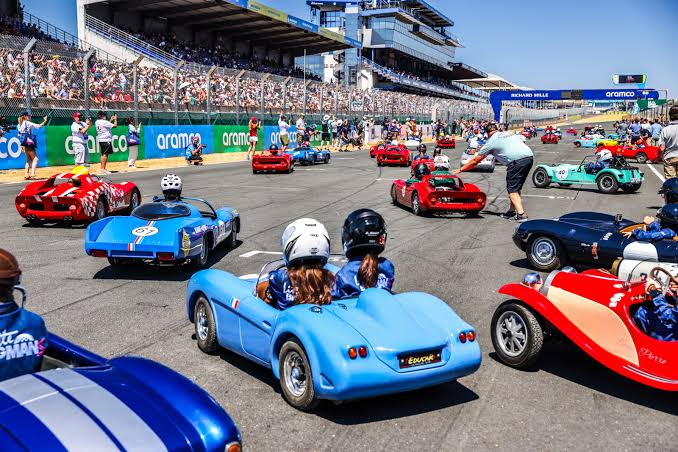
On July 4, 2026, the Circuit de la Sarthe reopened its gates for the Le Mans Classic Legend festival, a sprawling celebration where roaring engines meet projected celluloid and live music reverberates across grandstands and paddocks. The event fused open air drive in cinema screenings, headline concerts, and curated exhibitions of vintage race cars to create an immersive tribute to motorsport history and its long entanglement with film and popular music.
How the festival staged an encounter between film and speed
The festival designers staged experiences that felt instinctive and theatrical. At dusk, a row of classic Citroens, Porsches, and Jaguars lined up facing a giant outdoor screen, their headlights forming a warm, moving proscenium as families and aficionados settled into folding chairs and truck beds. The program paired cinematic touchstones with live soundtracks by visiting musicians, creating moments where a narrator sipped coffee in a black and white frame while a guitarist on a raised platform echoed the scene in real time.
Sensory details mattered. The cool July air carried the smell of hot oil and popcorn, a low mechanical vibration hummed through the ground when vintage V12s idled nearby, and the glow from the screen painted chrome in soft oranges and blues. Organizers curated film selections that traced motor racing as cultural drama and myth, including classic documentaries, mid century thrillers, and contemporary features that interrogate nostalgia and technology.
Programming highlights and headline acts
Musicians from Europe, North America, and Africa took turns on two stages placed near the historical pits and the iconic Dunlop bridge. Setlists mixed original compositions with cinematic themes and period songs that underscored the emotional temper of the films. One standout performance was a string quartet that rearranged a famous racing score to play among parked cars, turning metalwork into an acoustic amphitheater. Later night sets by indie rock bands pushed the energy back toward the circuit, where classic endurance machines rumbled in adjacent demonstrations.
Celebrating automotive heritage with public scholarship
The exhibitions combined archival material, technical displays, and oral histories to trace the social history of Le Mans and motorsport. Museum curators and former mechanics offered workshops on early engine design, brake evolution, and preserving fiberglass bodywork. A dedicated pavilion showcased the role of cinema in shaping racing myths by displaying original movie posters, director notes, and restored camera rigs used in famous car chase sequences.
Panels invited filmmakers and drivers to discuss how narrative and spectacle intersect on and off the track. One conversation explored how vérité documentaries have shaped public understanding of endurance racing by focusing on human endurance rather than mechanical achievement alone. Another session examined representation and access, asking who gets to inherit automotive heritage and how communities can keep local histories alive while museums professionalize collections.
How fans and collectors experienced the weekend
For many attendees the festival offered a rare intimacy. Collectors opened workshops to show restoration techniques, teenagers compared model kits, and grandparents recounted first Le Mans memories beside concession stands. Drive in cinema audiences applauded when a familiar engine note appeared on screen and cheered when archival footage captured close calls and triumphant laps.
Practicality also mattered. Organizers provided dedicated charging zones for electric support vehicles, picnic areas with shaded seating for older spectators, and accessible viewing platforms for those with limited mobility. Food vendors offered regional cuisine alongside classic stadium fare so the festival tasted as much of Sarthe as it did of international motor culture.
Economic and cultural impact on the region
Local officials noted an uptick in tourism revenue from international visitors and short stay packages that combined race day access with cinema and concert tickets. Hotels and restaurants near Le Mans reported increased bookings, while artisans and local restoration shops benefited from demand for parts and custom upholstery. Cultural stakeholders argued that the festival serves as a soft power asset for the region by connecting industrial heritage with contemporary creative economies.
At the same time, community groups pressed organizers to ensure that rising visitor numbers do not price out long standing local participants. Festival planners responded by reserving discounted passes for nearby residents and creating apprenticeship opportunities for local youth in event production and restoration trades.
Balancing nostalgia with modern sustainability
One of the festival tensions was reconciling the love of historic internal combustion engines with contemporary concerns about climate and sustainability. The program addressed this by hosting panels on sustainable fuels, showcasing restored cars running on biofuels, and demonstrating battery electric conversions used in non competitive exhibitions. Organizers published a carbon offset plan and offered incentives for car owners to participate in car pools and low emission transport options for spectators.
Restoration experts emphasized that preserving automotive legacy need not mean fossil fuel glorification. Careful stewardship of original vehicles, investment in museum grade climate control, and adaptive reuse of parts keep history visible while supporting responsible stewardship of materials and energy resources.
Notable moments that will linger
Several vignettes captured the festival spirit. A retired driver returned to the pits, light touching his lined face while he signed posters and recounted a rainy 1965 race with the specificity of a dream. Children sat cross legged beside a restored Le Mans winning GT as an engineer pointed out the throttle linkage by the glow of a worklight. A midnight screening of a road movie drew a hush that felt like a collective intake of breath, and the following acoustic set left listeners walking back to their cars in quiet conversation.
Resources and further reading
For those planning to attend future editions or researching motorsport culture, the official Le Mans Classic site maintains schedules and historical archives about endurance racing and heritage exhibitions at https://www.lemans-classic.com. Academic writing on cinema and automotive culture can be explored through film studies repositories and public collections at institutions such as the British Film Institute https://www.bfi.org.uk.
A final reflection
The Le Mans Classic Legend festival offered more than spectacle. It wove together memory, craft, and communal ritual so that racing history felt alive rather than static. The weekend suggested a path for heritage festivals where sensory experience, public scholarship, and local livelihoods work in tandem. For anyone who has ever watched a silver body cut dusk on a track or sat near an outdoor screen as engines purred like a chorus, the festival reaffirmed why motorsport remains a powerful story of human ingenuity and shared longing.