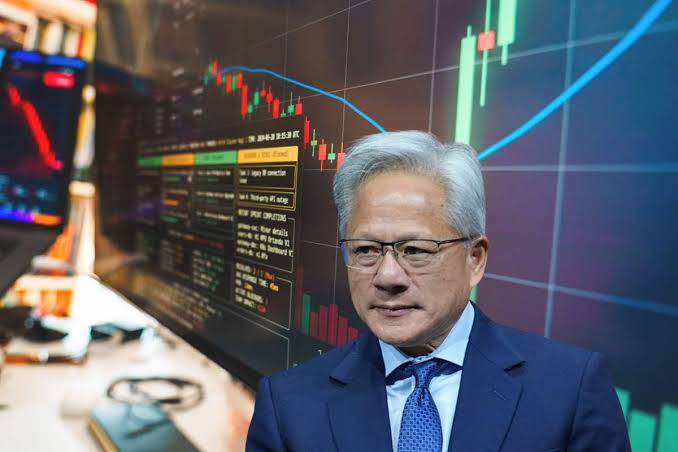
Nvidia entered November 17 under unusual pressure, with investors weighing a leadership crisis and questions about corporate security just hours before the chipmaker’s latest quarterly results. Co founder Jensen Huang resigned as chief executive on November 12, and Chief Financial Officer Colette Kress took over as interim CEO. The departure has unsettled a company closely associated with Huang’s leadership and arrives amid scrutiny of alleged links to Chinese intelligence and possible breaches of US chip export controls. Nvidia’s earnings report is now being watched not only for revenue and artificial intelligence demand, but also for answers about governance, security oversight and the company’s next chapter.
Leadership Crisis Puts Nvidia’s Governance Under Scrutiny
Huang’s departure is significant because he was not simply an executive overseeing a large technology business. He co founded Nvidia in 1993 and led its growth from a graphics processor manufacturer into one of the most influential suppliers of artificial intelligence computing infrastructure. His public appearances, product announcements and close relationships with customers helped make him the company’s most recognizable representative.
Nvidia announced on November 12 that Huang had resigned as president, chief executive and a member of the board, effective immediately. The company appointed Kress, its finance chief since 2013, as interim CEO while directors begin searching for a permanent successor. Harvey C. Jones was also appointed as the board’s first chairman.
The leadership change creates an unusual challenge for a company whose strategy and public identity have been closely associated with its founder. Kress must maintain confidence among employees, customers and investors while managing the financial reporting process and addressing questions about the board’s investigation. The company has said its existing leadership team remains focused on customer commitments and its technology roadmap.
On November 17, Reuters reported that Huang had expressed willingness to return if the board concluded that doing so would serve shareholders and employees. He said he regretted the problems he had caused and would cooperate with the independent investigation. However, ABC News reported that a source familiar with the matter said the board was not considering reinstating him. The possibility of a return therefore remains uncertain, rather than an established succession plan.
What the Investigation Actually Concerns
The controversy involves reports about Huang’s personal relationships and concerns raised by US intelligence agencies about a woman associated with Singapore based cloud computing company Megaspeed International. US officials reportedly suspect that the woman has links to Chinese intelligence. These claims have not been established as proof that Nvidia’s confidential information was transferred to a foreign government.
Nvidia previously said it was investigating whether Huang had been the target of a foreign intelligence effort. The company also stated that it had no reason to believe national security or corporate secrets had been compromised, while saying it would examine the available information. Huang has accepted responsibility for the problems he caused and pledged to cooperate with the board’s independent review.
A separate issue concerns Megaspeed and allegations involving the possible diversion of restricted Nvidia chips to China. The company has faced scrutiny over potential export control violations, but Megaspeed has denied wrongdoing. Reuters reported on November 17 that the new Nvidia board committee will oversee national security and global trade compliance programmes, with outside legal, national security and trade compliance experts expected to provide support.
It is important to distinguish these issues. Allegations involving a suspected intelligence connection, questions about export control compliance and an investigation into corporate security are related in the wider controversy, but they are not interchangeable. No conclusion that Nvidia secrets were stolen or that Huang knowingly assisted espionage should be drawn from the information currently available.
Nvidia Creates a National Security and Export Control Committee
The company’s new board level National Security and Export Control Oversight Committee is one of the most consequential developments announced on November 17. Chaired by director Suzanne Nora Johnson, the committee will oversee the company’s security and trade compliance programmes. Directors Stephen Neal and John Dabiri will also serve on the panel.
Nvidia said its National Security Team and Global Trade Compliance Team will report to the committee. Kress will continue managing daily operations, while the committee is expected to meet at least quarterly and consult with management and outside specialists.
The structure matters because Nvidia’s products have become strategically important. Advanced processors are used to train and operate artificial intelligence systems across cloud computing, scientific research, business applications and government related projects. Their commercial value is enormous, but their technological capabilities also make them sensitive from a national security perspective.
The new committee signals that the board intends to give export controls and security oversight a more direct role in corporate governance. Investors will want to see whether this produces clearer accountability, stronger compliance procedures and more transparent reporting. A committee announcement alone cannot resolve the underlying questions, but it establishes a formal structure for oversight.
US China Tensions Add Another Layer of Risk
Nvidia’s business has become closely connected to the broader competition between Washington and Beijing over advanced computing. The United States has imposed restrictions on exports of certain high performance chips to China, arguing that access to advanced computing technology can have military and strategic implications. Nvidia has had to navigate these restrictions while serving customers in one of the world’s largest technology markets.
The issue is complicated by the scale of demand for artificial intelligence infrastructure. Chinese technology companies want powerful processors for data centres and AI development, while US policymakers are concerned that restricted technology could reach prohibited users through indirect routes. Questions about intermediary companies, cloud access and the final destination of hardware have therefore become increasingly important.
Reuters reported that the Trump administration was preparing further restrictions on China’s access to advanced AI chips as the political focus on technology security intensified. The timing places Nvidia under pressure from two directions: it must comply with US export rules while managing commercial expectations from international customers.
For shareholders, the consequences could extend beyond legal expenses or reputational damage. Tighter export rules may limit the company’s addressable market, complicate product planning and affect relationships with overseas customers. At the same time, stronger compliance systems could help protect Nvidia’s ability to operate in markets where governments increasingly view advanced chips as strategic assets.
Quarterly Results Carry More Weight Than Usual
Nvidia is scheduled to release its third quarter fiscal 2027 results after the US market closes on November 17. The earnings call will be particularly important because it will be the first led by Kress as interim CEO. Investors are expected to examine the financial figures while also seeking clarity about leadership continuity and the company’s response to the controversy.
The company’s previous results show why expectations remain high. For the second quarter of fiscal 2027, Nvidia reported revenue of $96.2 billion, an increase of 106 percent from the same period a year earlier. Data Center revenue reached $89 billion, rising 117 percent year over year. The company also reported a gross margin of 75 percent and diluted earnings per share of $2.46 on a generally accepted accounting principles basis.
For the third quarter, Nvidia had previously forecast revenue of approximately $108 billion, with a margin of plus or minus 2 percent. Its outlook did not assume any Data Center compute revenue from China. That detail is significant because it shows the company had already incorporated the absence of those sales into its expectations before the latest leadership developments.
Investors will be looking for evidence that demand from cloud providers, technology companies and businesses building AI infrastructure remains strong. They will also examine gross margins, operating expenses, supply capacity and management’s expectations for the following quarter. Any change in guidance could influence how the market values Nvidia’s growth prospects.
The company’s previous quarterly financial results provide a useful baseline for assessing the new report. However, strong revenue growth will not automatically remove concerns about governance or export compliance. Investors must evaluate the company’s financial performance and its ability to manage the current crisis as separate, though connected, questions.
Why Nvidia’s Stock Matters Beyond the Company
Nvidia has become a major influence on financial markets because its processors are central to the expansion of artificial intelligence infrastructure. Large technology companies have committed substantial sums to data centres, specialised chips and computing capacity. Nvidia’s results are therefore treated as an important indication of whether the enormous investment in AI infrastructure is producing sustained demand.
The recent share price pressure reflects more than one concern. Huang’s resignation has created uncertainty about leadership, while the security allegations and export control questions have added political and regulatory risk. Investors are also assessing whether the pace of AI investment can continue and whether customers will maintain their spending as infrastructure costs rise.
Reuters reported that the controversy had erased more than $400 billion from Nvidia’s market value by Monday’s close. On Tuesday, after the company announced its new board committee and Huang made his statement about a possible return, the shares pared some losses and were last down around 1 percent in the trading reported by Reuters. That movement illustrates how quickly sentiment can change as new information emerges.
For other semiconductor companies, uncertainty surrounding Nvidia may create opportunities to compete for customers. Yet the broader industry is not insulated from the same pressures. Export controls, data centre investment decisions and questions about the profitability of AI services affect the entire technology supply chain.
What Investors Should Watch Next
The next phase of Nvidia’s story will depend on developments that go beyond one earnings announcement. Investors and industry observers will be looking for answers in several areas:
- Leadership succession: Whether the board identifies a permanent CEO and how Kress manages the transition.
- Investigation findings: Whether the independent review produces evidence of compromised information or identifies weaknesses in corporate oversight.
- Export compliance: Whether Nvidia introduces additional controls or faces new restrictions affecting international sales.
- AI demand: Whether major cloud providers and enterprise customers continue investing in advanced computing at the expected pace.
- Financial guidance: Whether revenue growth, margins and future projections remain consistent with the company’s earlier outlook.
These factors will help determine whether the current share price weakness represents a temporary reaction to uncertainty or a more lasting reassessment of Nvidia’s business risks. Investors should avoid treating short term market movements as a definitive judgment on the company’s long term prospects.
A Critical Test for Nvidia and the AI Industry
Nvidia’s leadership crisis has arrived at a moment when the company remains central to the global artificial intelligence economy. Its technology continues to support the expansion of data centres and advanced computing, but its position also brings greater scrutiny from governments, customers and investors. The resignation of a founder who led the company for more than three decades has made that scrutiny impossible to ignore.
Kress now faces the difficult task of maintaining operational stability while the board addresses questions involving leadership, security and international trade. The new oversight committee is a significant step, but its credibility will depend on the strength of its work and the transparency of its conclusions.
The November 17 earnings report may reassure investors about the underlying demand for Nvidia’s products, or it may expose further uncertainty about the company’s outlook. Either way, the market is being asked to judge more than quarterly revenue. It must consider whether Nvidia can preserve its technological leadership while strengthening the governance and security practices expected of a company with such strategic importance.
The central question is no longer simply how quickly Nvidia can grow. It is whether the company can sustain that growth while restoring confidence in its leadership, protecting sensitive technology and navigating an increasingly difficult international environment.