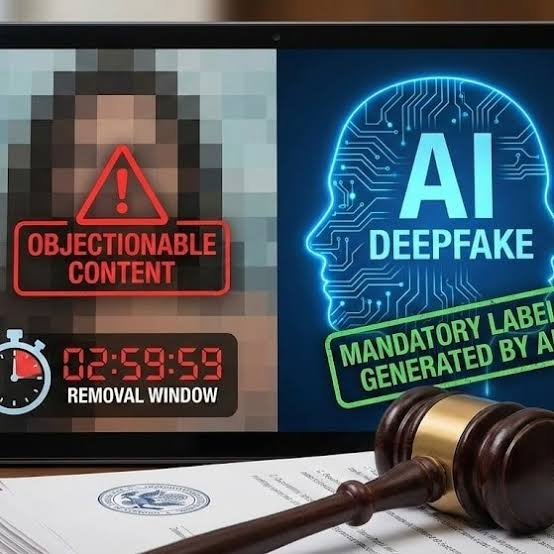
On July 6 2026 major social media conglomerates activated mandatory deepfake labeling protocols that use automated background algorithms to instantly tag and watermark hyper realistic AI generated media across their platforms. The move follows sustained pressure from multi national regulators and a wave of public concern over synthetic audio video and images that can mimic real people with unsettling accuracy. For users creators and news organizations the change marks a turning point in how online content is identified and how trust is managed in an era where seeing is no longer believing.
What the new protocols do
The core requirement is simple in concept and complex in execution. Any media that is created or significantly altered by generative AI systems must carry a visible or machine readable label that identifies it as synthetic. Platforms deploy detection models that scan uploads in real time and apply watermarks or metadata tags when AI generation is identified. The labels appear alongside posts and in player interfaces so that viewers know before they engage whether they are watching a real recording or a synthetic reconstruction. The goal is not to remove content but to provide context that helps people judge credibility.
How detection and labeling work
Detection systems combine signal analysis and provenance tracking to identify AI generated content. Signal analysis looks for patterns in pixels audio waveforms and compression artifacts that are common in synthetic media. Provenance tracking relies on metadata standards and cryptographic signatures that creators or tools attach at the point of generation. When a file arrives on a platform the system checks for valid signatures and runs detection models in parallel. If AI generation is confirmed a label is applied and a record is stored for audit and appeals. Human review remains available for edge cases and disputed content.
Why regulators pushed for action
Lawmakers and agencies across multiple regions have warned that unlabeled deepfakes threaten electoral integrity public safety and personal reputation. Synthetic clips of political leaders can spread false statements within minutes and cause real world harm before corrections catch up. Impersonation scams using cloned voices or faces have targeted families and businesses with alarming success. The regulatory response has been to demand that platforms take responsibility for labeling rather than leaving the burden entirely on users to spot fakes. The new protocols reflect a compromise that allows synthetic content to remain online while ensuring it is clearly identified.
Impact on creators and newsrooms
Professional creators and news organizations must adapt workflows to comply with the new rules. Legitimate uses of AI for visual effects animation and audio cleanup will require documentation that proves the origin and extent of synthetic modification. Newsrooms that use AI generated graphics or reconstructions will need to attach clear disclosures so that audiences do not mistake them for original footage. At the same time the labels can serve as a trust signal that a publisher is transparent about its methods. The expectation is that audiences will reward honesty even when the content is not a raw recording.
User experience and interface changes
Users will notice new icons and banners on posts that contain AI generated media. Tapping or hovering over the label reveals additional details such as whether the content was fully synthesized or partially altered and which tool or platform created it. Some interfaces will offer sliders that let viewers compare the original and modified versions when available. The design aim is to make the information accessible without interrupting the flow of scrolling or watching. Education campaigns will explain what the labels mean and how to report content that appears mislabeled.
Enforcement and penalties
Platforms have established enforcement frameworks that penalize repeated attempts to bypass labeling or to upload synthetic media without disclosure. Accounts that deliberately remove watermarks or use obfuscation techniques face restrictions or suspension depending on severity and intent. Appeals processes allow creators to contest false positives when genuine content is misidentified as AI generated. Independent oversight boards will review high profile cases and publish transparency reports that show how often labels are applied and how many appeals succeed.
Voices from the ground
Early reactions from users and creators are mixed. A documentary filmmaker noted that clear labels help audiences distinguish between real archival footage and AI assisted reconstructions which builds trust in long form storytelling. A political campaign manager expressed relief that synthetic clips of candidates will be tagged so that voters are not misled by out of context statements. A meme creator worried that the rules could stifle parody and satire if detection systems are too aggressive. Platform officials responded that human review will protect legitimate creative expression while still enforcing the labeling requirement.
Challenges that remain
Despite the progress several hurdles persist. Detection models are not perfect and can miss sophisticated fakes or mislabel genuine content. Bad actors may try to train generative tools to evade detection or to remove watermarks after download. Cross platform coordination is essential because a clip labeled on one service could be re uploaded elsewhere without the tag. The long term solution will require industry wide standards for metadata and provenance that travel with files regardless of where they are posted.
What to watch next
Key indicators of success will include the accuracy of detection systems the speed of labeling and the clarity of user interfaces. Regulators will monitor whether the rules reduce the spread of harmful synthetic media and whether appeals processes are fair and timely. Industry groups are expected to publish technical specifications for watermarking and metadata that can be adopted by tool developers and platforms beyond the initial signatories. The next phase may include real time alerts for high risk content such as deepfakes involving public figures during elections.
Resources for deeper context
Readers seeking technical and policy background on synthetic media can consult materials from the National Institute of Standards and Technology which maintains research on media authentication and detection methods NIST research on media authentication. For global policy perspectives on AI governance and platform accountability the Organisation for Economic Co operation and Development offers guidance and country reports relevant to digital content regulation OECD AI policy and governance resources.
As the labels go live the focus will shift from rollout to refinement. The measure of success will be whether users feel more confident about what they see online whether creators can work within clear rules and whether the public sphere becomes more resilient to the most dangerous forms of synthetic deception.