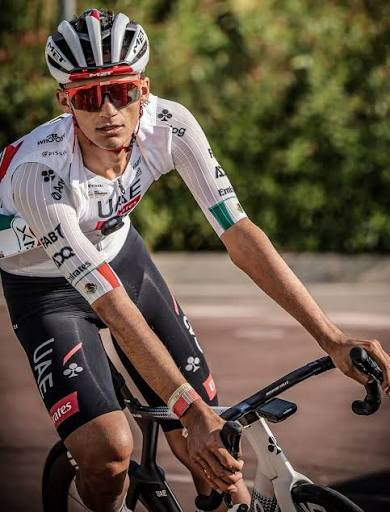
On July 6 2026 UAE Team Emirates XRG finalized a multi year partnership with WHOOP that will capture and globally broadcast real time biometric strain sleep and recovery data from riders during premier cycling events. The agreement marks one of the most visible integrations of wearable health technology into professional sport and promises to give fans an unprecedented window into the physical demands of elite racing. For athletes coaches and viewers the collaboration turns hidden physiological signals into live narratives that explain why a climb breaks a peloton or how a rider recovers enough to attack the next day.
What the partnership delivers
The core of the deal is continuous monitoring of riders using WHOOP straps that track heart rate variability resting heart rate sleep stages and daily strain scores. Data streams from the devices to secure servers where analytics teams translate raw signals into actionable insights for performance staff and digestible visuals for broadcast partners. During races selected metrics will be shared with global audiences to illustrate effort levels fatigue accumulation and recovery quality across stages. The goal is to make the invisible work of endurance sport visible without compromising athlete privacy or competitive secrets.
Metrics that matter on the bike
Strain scores reflect the cumulative physiological load from training and racing while recovery indicators show how well a rider has recharged between efforts. Sleep data including duration and deep sleep proportion helps staff plan rest days and adjust travel schedules. Heart rate variability offers a sensitive measure of autonomic balance that can signal when a rider is fresh or when the body is struggling to adapt. Together these metrics allow coaches to fine tune pacing strategies nutrition plans and rest protocols to keep riders at peak performance throughout long grand tours.
Why this changes the fan experience
Viewers often watch a race and wonder why a favorite rider fades on a climb or why a team protects a leader on a particular stage. Live biometric overlays can answer those questions by showing how hard a rider is working relative to their baseline and how much reserve they have left. A spike in strain during a mountain pass becomes more meaningful when paired with a recovery score that shows the rider has not slept well for two nights. The result is a richer story that connects tactics to physiology and helps fans appreciate the human cost of every move.
Broadcast integration and storytelling
Broadcast teams will receive curated data feeds that can be turned into on screen graphics commentary notes and highlight packages. Producers can select moments when a rider pushed beyond typical strain thresholds or when a sprint finish coincided with exceptional recovery metrics. The intent is to enhance rather than overwhelm the viewing experience so that numbers support the drama instead of distracting from it. Commentators will use the data to explain why a break succeeded or why a team chose to chase at a specific moment.
Operational realities for the team
Integrating continuous monitoring into a world tour program requires careful planning. Riders must wear the straps comfortably during long stages and staff must ensure devices remain charged and synchronized. Data pipelines need to be secure to prevent leaks that could reveal tactical vulnerabilities to rival teams. Performance directors will set thresholds for what is shared publicly and what remains internal to protect competitive advantage while still giving fans meaningful insight. The balance is delicate because too much transparency could influence race dynamics while too little would miss the opportunity to educate and engage.
Privacy ethics and competitive fairness
The partnership includes safeguards to protect athlete privacy and maintain fair play. Individual data will be shared only with consent and aggregated metrics may be used when detailed numbers could expose a rider to unwanted scrutiny. Teams retain control over what is released during a race and can withhold information that might reveal a planned attack or a hidden injury. Independent oversight will review data usage to ensure that the technology supports athlete welfare and does not create pressure to perform at unsafe levels.
Voice from the peloton
Riders who have tested the system describe a new level of awareness about how their bodies respond to different efforts. One climber noted that seeing recovery scores after mountain stages helped him understand why some days felt harder despite similar power outputs. A sprinter explained that sleep data made it easier to adjust travel routines and pre race routines to maximize freshness on key days. Coaches value the ability to spot early signs of fatigue and to intervene before a small issue becomes a performance limiting problem.
What comes next
The initial phase will focus on selected races where data can be integrated smoothly into broadcast workflows. Based on viewer response and operational lessons the partnership may expand to cover more events and additional metrics such as thermal load and hydration proxies. Research collaborations with universities could use the dataset to study how elite athletes adapt to extreme demands and to develop better recovery protocols for all levels of sport. The long term vision is to make biometric storytelling a standard part of cycling coverage much like power and speed data became in previous years.
Resources for deeper context
Readers interested in wearable health technology and performance analytics can explore research and guidance from the American College of Sports Medicine which offers evidence based resources on monitoring training load and recovery in athletes ACSM resources on training load and recovery. For context on data privacy and ethical use of biometric information in sport the World Anti Doping Agency provides policy frameworks and educational materials relevant to athlete data governance WADA policy and athlete data resources.
As the partnership rolls out the focus will shift from novelty to utility. The measure of success will be whether riders feel supported rather than exposed whether coaches can make better decisions with the data and whether fans leave the broadcast with a deeper appreciation of what it takes to compete at the highest level of professional cycling.