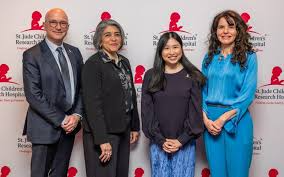
On June 17, 2026, St Jude Children’s Research Hospital announced its reappointment as the World Health Organization Collaborating Centre dedicated exclusively to pediatric cancer. We examine what this designation means for children, clinicians, and health systems worldwide, and why the hospital’s role in technical training, education, and capacity building could reshape outcomes for young patients in low and middle income countries.
What the reappointment signifies
Being the sole WHO Collaborating Centre focused on childhood cancer gives St Jude a formal mandate to support WHO priorities through technical guidance, workforce training, and standardized approaches to diagnosis and treatment. The centre will work with ministries of health, regional oncology networks, and academic partners to scale evidence based protocols, improve data collection, and deliver training that equips clinicians to treat complex cancers under resource constrained conditions. The designation formalizes a relationship that channels expertise into global policy and programmatic work critical for raising survival rates where they remain unacceptably low.
Practical responsibilities under the designation
St Jude will coordinate curriculum development for clinical training, advise on essential medicine lists and procurement strategies for chemotherapy and supportive care, and assist countries in establishing national childhood cancer registries to track outcomes. The centre will also support implementation research that adapts best practice protocols to local contexts, offer virtual mentorship for multidisciplinary teams, and lead workshops that build pathology and radiation oncology capacity where shortages persist.
The human stakes behind the policy
Childhood cancer survival varies dramatically worldwide. In higher income settings cure rates exceed 80 percent for many common pediatric cancers, yet in parts of Africa and South Asia survival can fall below 20 percent because of late diagnosis, limited treatment access, and gaps in supportive care. St Jude’s work aims to close that gap through pragmatic interventions that save lives now as well as long term investments that fortify health systems. For families facing a cancer diagnosis these efforts are more than technical exercises; they are vital pathways to hope and recovery.
Voices from clinicians and families
We spoke with physicians in partner hospitals who described training sessions where simple changes in chemotherapy scheduling and infection control made measurable differences in patient outcomes. A parent in a regional centre recalled the relief of receiving remote consultation from St Jude specialists that clarified a treatment plan and reduced the need for costly travel. These personal accounts underscore how capacity building can change the course of a child’s illness and relieve family hardship.
Education, mentorship, and telemedicine
Education will be central to the WHO collaboration. St Jude plans blended learning programs that combine online modules, regional in person workshops, and longitudinal mentorship where local care teams present cases and receive iterative feedback. Telepathology and teleoncology services will allow pathology slides and imaging to be reviewed by expert panels, reducing diagnostic delays. The centre also intends to expand scholarship programs that enable clinicians from low resource settings to train at St Jude and then return with skills adapted to their health systems.
Building durable local capacity
Training without systemic supports can falter, so St Jude emphasizes strengthening supply chains, laboratory infrastructure, and record keeping alongside clinician skills. The centre will advise on procurement strategies for essential diagnostics and medicines, help design chemotherapy compounding facilities with safety standards, and support the creation of clinical pathways that ensure continuity of care from diagnosis through survivorship.
Data, registries, and research priorities
Accurate data is the bedrock of effective cancer control. St Jude will assist countries in setting up or enhancing cancer registries, standardizing data definitions, and enabling secure sharing for research. Better data will allow policymakers to prioritize interventions, track progress toward survival targets, and identify inequities in access. The centre also plans to coordinate multi centre implementation studies that evaluate adapted treatment regimens, cost effective supportive care interventions, and strategies to reduce treatment abandonment.
Metrics that will matter
Impact will be measured by improvements in early diagnosis rates, reductions in treatment abandonment, increases in treatment completion rates, and improved survival at one and five year benchmarks. Patient reported outcomes and measures of quality of life will supplement clinical endpoints to ensure care is both effective and humane. Transparent reporting and independent evaluation will be essential for accountability and continuous learning.
Partnerships across sectors
St Jude’s role as a WHO Collaborating Centre will extend beyond clinical networks to include collaborations with non governmental organizations, pharmaceutical suppliers, and philanthropic partners. These alliances can address barriers such as drug shortages, affordability, and the need for affordable diagnostic tools. The centre will work with international bodies to advocate for pediatric cancer priorities within broader universal health coverage agendas so that childhood cancer care is integrated into national benefit packages and not left to episodic funding.
Mobilizing sustainable financing
Long term progress requires predictable financing for drugs, diagnostics, and workforce development. St Jude will support dialogue on financing models that combine domestic resources, pooled procurement, and targeted donor funding to sustain core services. Costing studies and economic evaluations will help health ministries plan budgets and demonstrate the return on investment for childhood cancer programs that reduce premature mortality and support productive futures for survivors.
Equity and patient centered approaches
Equity will be a guiding principle. Programs will prioritize rural and marginalized populations that often face the greatest barriers to care. St Jude aims to embed culturally sensitive communication, psychosocial support for families, and interventions that reduce indirect costs such as transport and lodging that drive treatment abandonment. Ensuring that work is shaped by local voices is critical to designing interventions that are acceptable and feasible within diverse communities.
Survivorship and long term care
As survival improves, attention to long term effects will grow. St Jude will support developing survivorship clinics, monitoring for late effects of treatment, and integrating rehabilitation and educational support so children can return to school and community life. These services are essential to translate cure into a full life for survivors and to address the social determinants that influence long term wellbeing.
Where to find more information
WHO maintains a list of collaborating centres and thematic priorities on its official website, which provides context for how partner institutions support global health agendas. St Jude publishes program reports and training resources that outline specific initiatives and country partnerships. For authoritative guidance on childhood cancer control and policy frameworks consult WHO resources and St Jude program pages for training calendars and collaborative opportunities.
Key resources
Readers seeking technical guidance and policy reference can visit the World Health Organization and the St Jude Global page for program details and training opportunities. These resources offer entry points for clinicians, policymakers, and civil society partners interested in joining efforts to reduce childhood cancer inequities.
The reappointment of St Jude as the WHO Collaborating Centre for Childhood Cancer marks a vital step toward a world where the diagnosis of cancer in a child is no longer a sentence defined by geography. By coupling clinical expertise with training, data systems, and local partnerships the centre aims to make effective, compassionate cancer care accessible to children everywhere. We will follow implementation closely to report on progress and the lives that change because of these concerted global efforts.