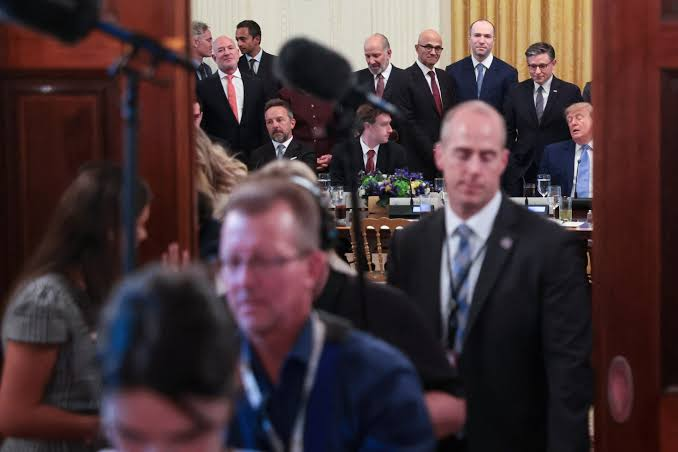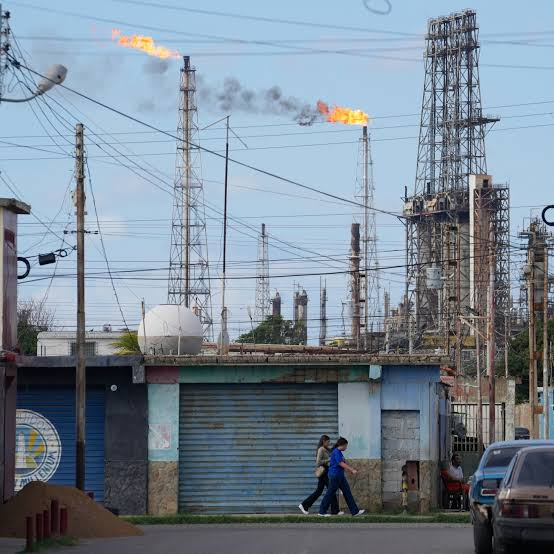
The United States is reportedly preparing to take a 35% passive stake in North American Blue Energy Partners, an oil venture led by Venezuelan businessman Alejandro Betancourt, in a move that could reshape Washington’s role in Venezuela’s energy industry. The proposed arrangement would also give the United States preferential rights to purchase 20% of the company’s production at cost. The reported agreement comes only days after President Donald Trump said the United States had secured control over a significant portion of Venezuela’s vast oil reserves, placing energy security, investment and geopolitics at the center of a rapidly changing relationship between Washington and Caracas.
A Reported Deal That Would Put Washington Directly Into Venezuela’s Oil Industry
The reported agreement is significant because it would move the United States beyond its traditional role of encouraging private American investment in Venezuela. Instead, Washington would become an equity participant in a private energy company with plans to develop major Venezuelan oil assets.
Reuters reported on August 29 that the U.S. government plans to take the passive stake in North American Blue Energy Partners, citing people involved in negotiations. The Wall Street Journal first reported details of the proposed arrangement. Under the reported structure, the United States would also receive preferential rights to purchase 20% of the company’s future production at cost. :contentReference[oaicite:0]{index=0}
The arrangement would be unusual for the U.S. government because Washington has generally relied on private energy companies to invest capital and develop foreign oil resources. A government equity position could give the United States a more direct economic interest in the success of a Venezuelan energy project.
For Venezuela, which possesses the world’s largest proven crude oil reserves, the proposed investment could bring access to capital, technology and infrastructure needed to increase production. For Washington, it could provide a direct connection to a strategically important source of crude in the Western Hemisphere.
How the 35% Stake Is Reportedly Being Structured
The financial structure is one of the most unusual aspects of the reported agreement. The Pentagon’s Office of Strategic Capital is expected to use what are known as penny warrants to obtain the equity interest without making a substantial upfront investment, according to reporting on the negotiations. :contentReference[oaicite:1]{index=1}
A warrant can give its holder the right to acquire an ownership interest under specified conditions. In this case, the reported structure would allow the U.S. government to obtain a significant passive interest in the company while limiting the amount of capital it would need to contribute at the beginning.
There is, however, an important qualification. Pentagon spokesperson Sean Parnell told Reuters that the Office of Strategic Capital does not take equity stakes in private companies under its statutory authority. He said its role is limited to capital assistance such as loans, loan guarantees and technical assistance, including transaction structuring. :contentReference[oaicite:2]{index=2}
That statement creates an important distinction between the reported deal structure and what the Pentagon has publicly said its office is authorized to do. The White House and North American Blue Energy Partners had not provided comments to Reuters at the time of its report. :contentReference[oaicite:3]{index=3}
Why Venezuela’s Oil Reserves Matter So Much
Venezuela sits on an extraordinary concentration of petroleum resources. Its proven reserves exceed those of any other country, although much of the country’s production potential has remained difficult to realize because of years of economic crisis, underinvestment, sanctions, declining infrastructure and operational problems.
President Trump said on August 28 that the United States had secured majority control of more than 65 billion barrels of Venezuela’s proven oil reserves through partnerships with private businesses. The reported North American Blue Energy Partners arrangement appears connected to that broader strategy.
According to reporting on the agreement, the company could develop 17 oil fields containing approximately 65 billion barrels of reserves. That would represent roughly one fifth of Venezuela’s proven oil resources. :contentReference[oaicite:4]{index=4}
The numbers are enormous, but reserves should not be confused with immediately available production. A barrel underground does not automatically translate into a barrel reaching a refinery or international market. Producing Venezuelan crude at scale would require substantial investment in wells, pipelines, processing facilities, transportation systems and other infrastructure.
Venezuela Needs Investment as Much as It Needs Access to Markets
The country’s oil industry has enormous physical resources but has struggled to turn those resources into consistent production. Years of economic instability have damaged infrastructure and reduced the industry’s ability to maintain and expand output.
Heavy Venezuelan crude can also require specialized processing and blending arrangements. That makes refinery compatibility and transportation infrastructure particularly important. Any large production increase would therefore require more than simply opening oil fields.
The proposed U.S. involvement could potentially help address some of these constraints by making international financing and technical expertise easier to mobilize. Private investors may also feel more comfortable entering a project when the U.S. government has an economic interest in its success.
But the opposite argument is also possible. Government participation in a private energy venture could expose Washington to financial, legal and political risks that private investors would otherwise absorb themselves.
A Major Shift in U.S. Energy Strategy
The proposed stake represents a notable change in how Washington could approach Venezuela. For years, the relationship between the two countries was dominated by sanctions, political conflict and restrictions on economic activity. The new approach places oil development much closer to the center of U.S. policy.
Rather than treating Venezuelan oil primarily as a source of geopolitical leverage, Washington appears to be moving toward a model in which American interests are directly connected to future production.
The strategy also reflects a broader concern about energy security. Venezuela is located in the Western Hemisphere and possesses enormous reserves, making it geographically important to the United States. Increasing Venezuelan output could eventually provide additional crude to international markets while strengthening energy links between North and South America.
What the Deal Could Mean for Global Oil Markets
If the proposed investment eventually results in a major increase in Venezuelan production, the effects could extend well beyond Caracas and Washington.
Additional Venezuelan crude entering international markets could increase available supply. The impact on prices would depend on how quickly production rises, how much crude reaches export markets and what happens simultaneously with production from other major oil producing nations.
The scale of the proposed project makes the issue particularly significant. Reports have described an ambition to develop 17 fields and eventually increase Venezuelan output substantially. Barron’s reported that a separate 25 year agreement discussed by Venezuelan interim President Delcy Rodríguez targets production above 1.5 million barrels per day. :contentReference[oaicite:5]{index=5}
Those targets should be treated as future objectives rather than immediate production gains. Rebuilding an oil industry after years of deterioration takes time, and the final production level will depend on investment, infrastructure, labor, technology and political stability.
Why Alejandro Betancourt Is Central to the Story
Alejandro Betancourt is the Venezuelan businessman behind North American Blue Energy Partners, the company at the center of the reported arrangement.
His involvement gives the proposed agreement an important private sector dimension. Washington would not simply be negotiating directly for ownership of Venezuelan state oil assets. Instead, the reported structure would place the U.S. interest inside a privately led company developing Venezuelan resources.
That distinction could prove important as questions emerge over ownership, control, revenue distribution and the legal status of oil development agreements. A private company can provide flexibility for investment, but a government equity position can also attract greater political scrutiny than an ordinary commercial transaction.
Legal and Political Questions Are Likely to Follow
The proposed arrangement raises difficult questions about the role of the U.S. government in private energy ventures. If the Pentagon ultimately holds an ownership interest, lawmakers and legal experts could examine whether the arrangement fits within existing statutory authority.
The Pentagon’s statement regarding the Office of Strategic Capital’s authority makes this issue particularly relevant. Reuters reported that the office says it does not take equity stakes and instead provides loans, guarantees and technical assistance. :contentReference[oaicite:6]{index=6}
There are also questions on the Venezuelan side. Oil is closely tied to national sovereignty, political legitimacy and public finances. Any arrangement that gives a foreign government a substantial economic interest in production is likely to attract intense domestic debate.
The long term durability of the agreement could depend on whether Venezuelan political institutions, future governments and the country’s legal system recognize the arrangements negotiated during the current transition.
The Energy Deal Could Change the U.S. and Venezuela Relationship
The economic consequences may ultimately be only one part of the story. Oil has shaped Venezuela’s relationship with the United States for generations, and a major American investment could redefine that relationship again.
For Washington, a direct economic interest in Venezuelan oil could create stronger incentives to support production, infrastructure and market access. For Venezuela, U.S. involvement could provide a path toward attracting investment after years of isolation and economic decline.
But greater economic integration would also create greater interdependence. If production targets are missed, political conditions deteriorate or legal disputes emerge, both sides could face consequences.
What Consumers Should Watch Next
Consumers should not expect a reported agreement involving billions of barrels of reserves to immediately change gasoline prices. Oil production projects take years to develop, and global fuel prices depend on many factors beyond Venezuelan output.
The more meaningful indicators will be investment commitments, field development schedules, infrastructure projects and actual production increases. Markets will also watch whether the proposed U.S. ownership structure receives formal confirmation and whether the Pentagon provides additional details about its role.
Investors should distinguish between announced reserves and actual production. Venezuela may have enormous quantities of oil underground, but turning those reserves into commercially available crude requires sustained capital and operational stability.
A Potential Turning Point for Venezuelan Oil
The reported 35% U.S. stake in North American Blue Energy Partners is striking not simply because of its size, but because of what it represents. Washington could move from encouraging American companies to invest in Venezuela toward taking a direct economic interest in the country’s energy future.
That would be a major departure from the relationship of recent years. It could bring investment and production opportunities to Venezuela while giving the United States greater influence over a strategically important source of crude.
At the same time, the unusual financial structure and the Pentagon’s public statement about its legal authority mean important details remain unresolved. Until the terms are formally documented and the roles of the U.S. government, North American Blue Energy Partners and Venezuelan authorities become clearer, the reported 35% stake should be viewed as a developing agreement rather than a completed transfer of ownership.
What is already clear is that Venezuelan oil has returned to the center of global geopolitical strategy. With more than 300 billion barrels of proven reserves and a badly underdeveloped production system, the country represents both an enormous opportunity and a formidable challenge. If Washington succeeds in turning the proposed partnership into sustained production, the consequences could reach far beyond Venezuela’s oil fields, influencing energy markets, investment flows and the balance of power across the Western Hemisphere.