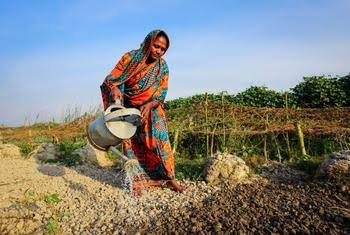
The United Nations Food and Agriculture Organization has warned of mounting pressure on global food supplies as extreme weather disrupts agricultural production and contributes to instability in international food markets. From damaged fields and prolonged drought to destructive storms and intense heat, climate driven shocks are increasingly reaching far beyond the farms where they begin, affecting export prices, household budgets, food security, and the livelihoods of millions of people.
Extreme Weather Is Becoming a Food Supply Problem
A poor harvest has never been only a farming problem. When crops fail in one major producing region, the effects can travel through international markets, transportation networks, food processors, retailers, and eventually into kitchens. A farmer may first notice the crisis as dry soil or a damaged crop, but families far away may experience it later through higher prices at a local market.
The latest warning from the UN Food and Agriculture Organization places renewed attention on that chain of consequences. Climate related agricultural disruptions can reduce the amount of food available for export while increasing competition among countries seeking reliable supplies. When several important producing regions experience weather stress at the same time, the pressure can become considerably harder to absorb.
We should therefore view food security as more than the question of whether enough food exists globally. It also depends on whether food can be produced consistently, moved efficiently, purchased at reasonable prices, and accessed by vulnerable communities when unexpected shocks occur.
Crop Disruptions Can Quickly Reach Global Markets
Agricultural markets are closely connected. Major exporters of grains, vegetable oils, sugar, fruits, vegetables, and other commodities influence prices well beyond their borders. A significant reduction in production can alter international purchasing decisions and encourage governments, traders, and food companies to search for alternative supplies.
That response can create additional pressure. When several buyers compete for fewer available crops, international prices can rise. Import dependent countries may face larger food bills, while lower income households can be forced to make difficult choices between food and other essential expenses.
For families already operating on narrow budgets, even a moderate increase in staple food prices can be painful. A higher price for grain, cooking oil, vegetables, or other basic products can mean fewer nutritious foods on the table. The effects are especially serious for children, older people, and communities where household income is already vulnerable to economic shocks.
Farmers Are Often the First to Feel the Pressure
Farmers face a difficult balance when weather conditions become less predictable. Planting decisions are made months before harvest, often using expectations about rainfall, temperature, water availability, and market demand. Extreme weather can overturn those calculations in a matter of days.
A farmer facing severe heat may see crops mature too quickly or lose productivity. Heavy rainfall can damage fields, wash away nutrients, or make harvesting impossible. Drought can reduce irrigation supplies and force difficult decisions about which fields receive limited water.
Small farmers can be particularly exposed because they may have fewer financial reserves, limited access to irrigation, and less ability to absorb a failed season. A large agricultural company may be able to shift production or purchase insurance, while a smallholder farmer may have far fewer options.
Food Prices and Household Security Are Closely Connected
The connection between climate conditions and food prices becomes especially important when inflation is already affecting household spending. Higher agricultural costs can move through food processing, transportation, storage, and retail distribution before reaching consumers.
Not every weather event produces a major global price shock. Food markets can sometimes respond through larger inventories, alternative suppliers, improved transportation, or changes in consumer demand. But repeated disruptions can weaken those buffers over time.
This is why agricultural resilience matters. A food system that can recover from one difficult season may struggle if extreme conditions continue year after year. Building resilience requires attention to production as well as storage, trade, water management, infrastructure, and access to financial support.
Food Security Is More Than Having Enough Calories
Food security also concerns nutrition and reliable access. A household may technically have enough calories while struggling to afford fruits, vegetables, protein, or other nutritious foods. When prices rise, families often protect the cheapest sources of energy first, which can gradually reduce dietary quality.
The consequences can extend beyond immediate hunger. Poor nutrition can affect childhood development, learning, health, and productivity. Communities facing repeated food shortages may also experience greater social and economic pressure.
The Food and Agriculture Organization has long placed food security, sustainable agriculture, nutrition, and rural livelihoods at the center of international policy discussions. Its warning highlights why these issues cannot be separated from climate risk and economic stability.
Why Export Markets Matter to Vulnerable Countries
Countries that depend heavily on imported food can be particularly sensitive to international agricultural disruptions. When domestic production is limited, governments may need to spend more foreign currency to secure essential supplies during periods of elevated prices.
That can create difficult policy choices. Governments may need to protect consumers from sudden price increases while also ensuring that farmers receive enough income to continue producing food. Import restrictions may offer short term relief in some situations but can also affect regional supply chains when several countries respond at the same time.
International trade therefore remains an important part of global food security. Reliable trade relationships can help countries compensate for local production losses, provided transportation networks remain functional and markets are able to respond without excessive restrictions or disruption.
Climate Resilience Is Becoming an Agricultural Necessity
Farmers and policymakers have a growing range of tools for reducing climate related risks. No single solution can protect every crop or region, but a combination of approaches can make agricultural systems more capable of handling shocks.
- Improved irrigation and water conservation can reduce exposure to drought.
- Crop varieties suited to local heat and water conditions can help protect yields.
- Better soil management can improve water retention and reduce erosion.
- Weather forecasting can help farmers make more informed planting and harvesting decisions.
- Stronger storage facilities can reduce losses after harvest and improve supply stability.
These measures require investment, knowledge, and access to financing. For small farmers, technology is useful only when it is affordable and practical. Climate resilience therefore needs to include financial and educational support alongside agricultural research.
Early Warning Systems Could Save Crops and Livelihoods
Better information can make a major difference. If farmers receive reliable warnings about extreme heat, drought, flooding, or severe storms early enough, they may be able to adjust planting dates, protect vulnerable crops, move livestock, or change irrigation schedules.
Early warning systems can also help governments prepare emergency food assistance and market responses before a crisis becomes severe. The value of such systems is not limited to predicting weather. Their greatest benefit comes when information reaches the people who can act on it.
We should also recognize that adaptation looks different from one agricultural region to another. A strategy that works for a grain producing area may not be suitable for a vegetable growing community or a region dependent on livestock. Local knowledge remains essential when national and international climate policies are designed.
What Governments and Food Companies Can Do
Reducing food supply risk requires cooperation across the entire agricultural system. Governments can strengthen rural infrastructure, support climate resilient farming practices, improve agricultural research, and maintain emergency food reserves where appropriate.
Food companies can also examine how dependent their supply chains are on individual regions or crops. Greater diversification can reduce exposure when one producing area experiences a severe weather event. Better storage and transportation systems can further reduce losses between farms and consumers.
Consumers also have a role, although responsibility should not be placed primarily on individuals. Household food choices can influence demand, but major food security risks require coordinated action from governments, producers, traders, and international institutions.
The Human Cost Behind Global Food Statistics
Food supply reports often contain numbers that can feel distant from everyday life. Behind every change in production, however, there are people making difficult decisions.
There is the farmer standing in a field after an unexpected storm, looking at crops that were supposed to support a family for months. There is the parent in a crowded market comparing prices and quietly putting one item back. There is the food worker whose income depends on a reliable harvest. There is the community that depends on one agricultural season to support schools, local shops, transport workers, and other businesses.
These experiences remind us that food security is ultimately about human security. When agricultural disruptions become more frequent, the consequences can spread through entire communities.
A Stronger Global Food System Will Require Long Term Planning
The warning from the UN Food and Agriculture Organization comes as governments and agricultural industries face the difficult task of preparing for more uncertain growing conditions. The objective should not be limited to responding after crops fail. Resilience depends on preparing farms, markets, infrastructure, and communities before the next disruption arrives.
Research into climate resilient crops, responsible water use, improved forecasting, efficient storage, and sustainable agricultural practices can help reduce future risks. International cooperation can also make it easier for food producing and importing countries to respond when disruptions cross borders.
The United Nations climate action program provides a broader international framework for addressing climate related risks, including the pressures that extreme weather can place on communities and essential resources.
Global Food Security Is Becoming a Shared Responsibility
The latest warning should not be viewed only as a forecast of higher prices or weaker harvests. It is a reminder that the world’s food system depends on a delicate network of farms, water supplies, transportation routes, markets, workers, and consumers.
Extreme weather can disrupt that network quickly, but thoughtful preparation can strengthen it. Supporting farmers, protecting natural resources, improving infrastructure, maintaining open and reliable trade, and investing in climate resilience can all contribute to a more secure food system.
There is no single answer to the growing agricultural challenge. Yet there is a clear opportunity to act before temporary disruptions become deeper structural problems. Protecting food supplies means protecting livelihoods, household stability, nutrition, and human dignity. As climate pressures continue to test agricultural systems, that responsibility will increasingly belong to all of us.