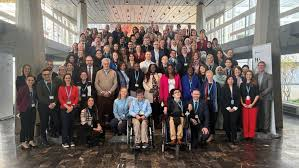
The World Health Organization is seeking broader international support for a global movement that places scientific evidence at the center of public health decisions and equitable access to care. In an invitation dated October 13, 2026, the WHO called on international health organizations to join an initiative intended to strengthen the role of science in improving health outcomes worldwide. The effort speaks to a challenge that reaches far beyond laboratories and medical journals: how can reliable research lead to better care for people in every community, including those who struggle to access basic health services?
WHO Seeks Wider International Support for Science Based Health Policy
The invitation signals an effort to bring health organizations together around a shared principle: decisions that affect public health should be guided by the strongest available evidence. Scientific research helps identify disease risks, assess treatments, evaluate prevention programs, and determine how limited health resources can be used most effectively. When that evidence is communicated clearly and applied responsibly, it can help governments and communities make better informed choices.
For the WHO, a global movement of this kind would also depend on cooperation across national and institutional boundaries. Health threats do not respect borders, and the knowledge needed to respond to them is often spread across universities, hospitals, research centers, public agencies, and community organizations. Bringing these groups into closer dialogue can help reduce duplication, support shared learning, and make scientific findings more useful to the people responsible for delivering care.
The precise membership arrangements, timetable, and commitments associated with the invitation should be confirmed through formal WHO announcements. The central principle described in the supplied announcement is nevertheless clear: scientific evidence should serve as a foundation for public health action, while health equity should remain a central measure of whether that action benefits people fairly.
Why Scientific Evidence Matters for Public Health
Scientific evidence is not an abstract concern for specialists. It influences decisions that affect everyday life, from which vaccines are recommended to how hospitals prepare for disease outbreaks and how health officials communicate risks. It also helps determine whether a treatment works, whether a prevention campaign reaches the people it is intended to serve, and whether public spending is producing meaningful results.
When health policy follows sound evidence, authorities can compare possible approaches, measure outcomes, and adjust their decisions when new information becomes available. This process is particularly important during outbreaks, when incomplete information and rapidly changing circumstances can make decisions difficult. Research cannot remove every uncertainty, but transparent methods and honest communication allow decision makers to explain what is known, what remains unclear, and why a particular course of action is being taken.
Scientific findings also need careful interpretation. A study may offer useful evidence without providing a complete answer for every population or setting. Researchers must consider the quality of the data, the size and diversity of the study population, possible limitations, and whether other independent studies support the same conclusion. Public health institutions have a responsibility to communicate those limits rather than presenting preliminary findings as settled facts.
Health Equity Must Extend Beyond Scientific Discovery
Scientific progress does not automatically produce equal health outcomes. A promising medicine can remain out of reach if it is too expensive, unavailable in local clinics, or difficult to distribute. A public health recommendation may be based on strong evidence but still fail if people lack transportation, clean water, reliable electricity, or access to trained health workers. Health equity requires attention to these practical conditions as well as to the science itself.
Consider a rural family living far from the nearest clinic. A new diagnostic test may allow health workers to identify an illness earlier, but its value is limited if the clinic has no trained staff or the family cannot afford the journey. In a crowded urban neighborhood, an effective prevention campaign may fail to reach residents who do not receive information in a language they understand. These examples illustrate why evidence must be connected to the realities of daily life.
A movement focused on science and equity would therefore need to encourage more than research production. It would need to support fair access to reliable information, health services, medicines, diagnostics, and preventive care. It would also need to consider whether research includes populations that have historically been underrepresented and whether findings can be applied in low resource settings.
How International Health Organizations Can Contribute
Organizations that join a global effort to prioritize science could contribute in several practical ways, depending on the final structure of the initiative. Research institutions can share findings and improve the transparency of their methods. Medical associations can help clinicians interpret evidence and keep professional guidance current. Public health agencies can use reliable data to plan services, monitor disease patterns, and evaluate interventions.
Universities and training organizations can strengthen scientific literacy among health professionals and students. Community groups can help explain public health guidance in accessible language and identify barriers that official data may overlook. International partners can support collaboration across countries, particularly where research infrastructure, laboratory capacity, or access to specialist expertise is limited.
For cooperation to be meaningful, participants would need clear goals and ways to assess progress. A shared statement of principles can help establish direction, but practical outcomes matter more. These might include improved access to research, stronger collaboration between institutions, more transparent communication, or better use of evidence in health programs. Any formal targets would need to be confirmed by the organizations involved rather than assumed from the invitation alone.
Building Public Trust Through Transparent Science
Public trust is essential to effective health policy. Even the strongest scientific recommendation may be ignored if people believe that information is being withheld, risks are being minimized, or decisions are driven by interests unrelated to public welfare. Trust grows when institutions explain their reasoning, acknowledge uncertainty, respond to questions, and correct errors openly.
Health authorities can support that trust by distinguishing between established evidence and emerging research. When recommendations change because new findings become available, officials should explain what has changed and why. Such adjustments are a normal part of science, not necessarily evidence that earlier decisions were made in bad faith. Clear communication can help people understand that scientific knowledge develops through testing, review, and revision.
Reliable communication also requires listening. Community concerns may reveal obstacles that researchers or policymakers have overlooked. A program can be scientifically sound yet ineffective if it ignores cultural practices, local languages, working hours, or the cost of reaching a service. Engaging communities before and during implementation can help ensure that evidence based policies are both credible and practical.
The New Movement Will Connect Science, Policy, and Society
The initiative is called Together for Science and Health. The WHO describes it as a global movement intended to bring researchers, policymakers, health professionals, communities, young people, civil society groups, and other stakeholders into a shared effort to make science more accessible, trusted, and useful to society.
The movement is organized around three connected priorities. The first focuses on science and society, bringing researchers closer to the communities whose experiences and needs should inform research. The second focuses on science and policy, encouraging decision makers to use reliable evidence when developing public health strategies. The third focuses on science communication, helping people understand research and creating constructive responses to misinformation and disinformation.
These priorities address different parts of the same problem. Researchers may produce important findings, but those findings have limited value if policymakers cannot apply them or the public cannot understand them. Likewise, a government may have access to strong evidence but struggle to implement an effective program if local communities have not been consulted. Better connections among these groups can help scientific knowledge move from publication into practical improvements in health.
The WHO has invited organizations and institutions that share the movement’s principles to affiliate by endorsing its Declaration of Commitment and completing the relevant affiliation process. The organization says participants can contribute their expertise, networks, and practical solutions. Further information is available through the WHO Together for Science and Health initiative.
Preparing for the Global Launch in November
The movement is scheduled for its official launch on November 10, 2026, with events planned in Paris and Geneva to coincide with World Science Day for Peace and Development. The launch will mark a formal step toward building a wider network of organizations committed to improving the relationship between scientific knowledge, public policy, and community needs.
The launch itself will not determine whether the initiative succeeds. Its value will depend on the work that follows, including the quality of participation, the strength of cooperation between organizations, and whether members can demonstrate practical benefits. A broad network can create opportunities for collaboration, but it also needs clear expectations and ways to assess whether its activities are making a difference.
For participating organizations, the immediate task is to identify where they can contribute most effectively. A research institution might share evidence in a more accessible format. A medical association could help health professionals interpret new guidance. A community organization might identify why residents are reluctant to use a service and work with health authorities to address those concerns. Contributions of this kind can make a shared commitment more meaningful than a simple declaration of support.
Measuring Progress Through Real Health Outcomes
Any global science movement should be judged by whether it helps improve people’s lives. Membership numbers and public statements can demonstrate interest, but they do not necessarily show that health systems have become more equitable or that people are receiving better care. Evaluation should look at tangible changes, including the use of evidence in policy decisions, access to reliable health information, and the ability of underserved communities to benefit from research.
Disaggregated data can help identify who is benefiting and who is being left behind. Looking at health outcomes by factors such as age, sex, income, disability, and location can reveal inequalities hidden by national averages. Qualitative research and community feedback are also necessary because statistics alone may not explain why people cannot reach a clinic, afford treatment, or trust official guidance.
The WHO’s broader work on building the evidence for health equity highlights the importance of monitoring inequalities and using findings to guide action. That approach is relevant to the new movement because it connects scientific knowledge with the conditions that shape people’s health, including housing, education, employment, access to services, and the distribution of resources.
A Shared Responsibility for Healthier Communities
The WHO invitation arrives with a clear message: science can contribute more to public health when it is accessible, trusted, and connected to the needs of society. But scientific evidence alone cannot eliminate health inequalities. Governments must be willing to act on credible findings, institutions must communicate honestly, and communities must have opportunities to help shape the decisions that affect them.
For people waiting for a diagnosis, seeking affordable treatment, or trying to protect their children from preventable disease, the value of science is measured in practical terms. It is seen in whether a clinic has the tools to detect an illness, whether a medicine is available when needed, and whether reliable advice reaches families before a health problem becomes more serious. Those are the everyday outcomes that give a global movement its purpose.
As the November launch approaches, the challenge for participating organizations will be to turn shared principles into sustained cooperation. By connecting researchers, health professionals, public officials, and communities, Together for Science and Health has the opportunity to help evidence inform decisions more consistently and ensure that scientific progress serves a broader share of humanity. Its ultimate measure of success will not be the number of institutions that join, but whether more people can live healthier lives and benefit fairly from the knowledge science produces.