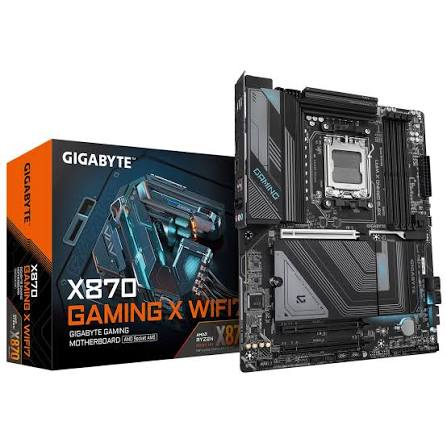
Next generation PC hardware is becoming easier for mainstream buyers to find as manufacturers continue bringing Wi Fi 7 connectivity and PCIe 5.0 support into motherboards, laptops, storage platforms, and other consumer systems. During the October 6 and 7, 2026 autumn retail period, the technology is increasingly appearing as part of complete hardware platforms rather than as an expensive feature reserved only for specialist enthusiasts.
Wi Fi 7 Moves From Early Adoption Toward Broader Hardware Availability
For people shopping for a new computer this season, wireless networking is becoming an increasingly important part of the hardware decision. Wi Fi 7 is designed to provide higher throughput, wider channels, improved use of available spectrum, and better handling of multiple connected devices. The technology operates across the 2.4 GHz, 5 GHz, and 6 GHz bands, giving compatible equipment more room to manage demanding wireless traffic.
Intel’s current Wi Fi 7 hardware illustrates how quickly the ecosystem is expanding. Its BE200 platform supports Wi Fi 7, 320 MHz channels, 4096 QAM, 2 by 2 wireless operation, and the 2.4 GHz, 5 GHz, and 6 GHz bands. Intel also lists a newer Killer Wi Fi 7 product launched during the third quarter of 2026, showing that the technology is continuing to reach new hardware generations.
For consumers, the practical benefit is not simply a larger number printed on a product box. A faster wireless connection can become valuable when several devices are competing for bandwidth at the same time. A household may have a gaming computer, televisions, phones, tablets, security cameras, smart appliances, and work equipment connected simultaneously. A capable wireless network can help manage that environment more effectively.
PCIe 5.0 Gives Modern Computers More Room for High Speed Components
While Wi Fi 7 affects the way a computer communicates with the network, PCIe 5.0 focuses on communication inside the computer. The standard provides a major increase in data transfer capability compared with PCIe 4.0. PCI SIG states that PCIe 5.0 supports a signaling rate of 32.0 GT per second per lane, compared with 16.0 GT per second for PCIe 4.0.
That additional bandwidth matters for components such as high performance solid state drives, graphics hardware, accelerators, and other expansion devices. The official PCI SIG explanation of PCIe 5.0 bandwidth shows how the technology scales across different lane configurations.
For an ordinary buyer, however, the presence of PCIe 5.0 does not automatically mean every application will become dramatically faster. The actual improvement depends on the component connected to the interface and the workload being performed. A PCIe 5.0 motherboard paired with an older PCIe storage device will not suddenly make that older drive operate at PCIe 5.0 speeds.
Why Storage Is One of the Most Important Use Cases
High speed solid state storage is one of the clearest consumer applications for PCIe 5.0. Modern operating systems, large games, professional video projects, artificial intelligence workloads, and other demanding applications can move enormous quantities of data. Faster storage interfaces give manufacturers more room to develop drives capable of handling those workloads.
The advantage becomes easier to understand when we look at the direction of modern software. Games are becoming larger, creative applications increasingly work with high resolution media, and professional workflows routinely involve files that would have been considered enormous a generation ago. Faster storage does not solve every performance problem, but it can reduce one of the bottlenecks between a processor and the data it needs.
Motherboards Are Becoming the Center of the Upgrade Conversation
Motherboards are particularly important to the current hardware cycle because they bring several technologies together. A modern board can combine a recent processor platform with PCIe 5.0 connectivity, high speed memory support, advanced storage interfaces, USB connectivity, and integrated Wi Fi 7.
That combination changes the way consumers approach a new PC purchase. Instead of adding wireless networking later or replacing a motherboard when faster storage becomes necessary, buyers can choose a platform designed to accommodate several generations of components.
This is especially relevant to people building computers for several years of use. A system purchased during a major hardware upgrade cycle may remain in service long after the original processor or graphics card has been replaced. Choosing a motherboard with modern connectivity can therefore provide additional flexibility even if the buyer does not immediately use every available feature.
Monitors Are Joining a Broader High Performance Hardware Ecosystem
Monitors are also becoming part of the broader performance conversation. Modern displays increasingly target high refresh rates, high resolutions, fast response times, adaptive synchronization, and connectivity designed for powerful graphics systems. Although Wi Fi 7 is not a display standard and PCIe 5.0 does not directly connect a monitor to a computer, these technologies belong to the same wider consumer movement toward faster and more capable personal computing systems.
For gamers, the difference can be felt when a fast graphics card is paired with a display capable of presenting high frame rates smoothly. For creators, a high resolution display can provide more workspace for editing photographs, video, design projects, and other detailed content. For ordinary office users, the benefits may be less dramatic, but improved display quality and modern connectivity can still contribute to a more comfortable workstation.
Retail Promotions Could Make Advanced Hardware More Accessible
The autumn retail season is an important moment for manufacturers because promotional campaigns can introduce newer technologies to customers who might otherwise wait for a future upgrade. Discounts, bundle offers, retailer financing, and system builder packages can reduce the gap between enthusiast hardware and more mainstream products.
This matters because advanced hardware often reaches consumers gradually. Early adopters may purchase a technology shortly after launch, while most households wait until the technology becomes easier to find, more affordable, and supported by a wider range of products. The appearance of Wi Fi 7 across multiple product categories suggests that the ecosystem is moving further along that path.
Retailers also have a responsibility to explain what customers are actually buying. A motherboard advertised with Wi Fi 7 and PCIe 5.0 may sound impressive, but consumers should still check processor compatibility, memory support, storage slots, graphics requirements, wireless router compatibility, and the number of high speed expansion slots available.
Wi Fi 7 Requires a Compatible Network to Deliver Its Full Potential
One of the easiest mistakes for buyers is assuming that purchasing a Wi Fi 7 computer automatically creates a Wi Fi 7 network. The computer and wireless router both need compatible technology to take advantage of the newer standard. Older routers can continue working with newer computers, but the connection will operate according to the capabilities of the network equipment.
Intel’s Wi Fi 7 product information provides a useful reference for consumers comparing compatible wireless hardware and its supported capabilities.
This is why a household planning a complete technology upgrade should consider the network as a system. Replacing a computer while leaving an aging router in place may still provide a good experience, but some of the new wireless capability will remain unused until the network infrastructure is upgraded.
PCIe 5.0 Is About More Than Today’s Performance
There is another reason PCIe 5.0 continues to matter even as newer PCI Express generations become available. PCI SIG has already moved the PCI Express specification far beyond version 5.0, with newer specifications supporting substantially higher data rates. Yet PCIe 5.0 remains relevant because consumer hardware often adopts mature standards after they have had time to reach wider availability and manufacturing scale.
That creates a useful balance for consumers. The newest specification is not always the most sensible purchase. A mature platform with strong component support, reliable firmware, reasonable pricing, and good upgrade options can offer more practical value than a system built around technology that has limited availability.
What Buyers Should Check Before Choosing a New System
Consumers considering a new computer or motherboard during the current retail cycle should look beyond the headline specifications. The most useful questions are often straightforward.
- Does the motherboard support the processor planned for the system?
- Does the board provide the number and type of PCIe slots needed for future components?
- Does the installed wireless hardware support Wi Fi 7 or an older wireless standard?
- Does the household router support Wi Fi 7?
- Does the chosen solid state drive actually support PCIe 5.0?
- Does the power supply provide enough capacity for the complete system?
- Will the computer remain useful for the buyer’s expected upgrade period?
These questions can prevent consumers from paying for specifications that they cannot use while also helping them avoid a system that becomes restrictive too quickly.
A More Connected PC Market Is Taking Shape
The significance of the current Wi Fi 7 and PCIe 5.0 hardware cycle is not that every consumer suddenly needs the fastest possible computer. The more important development is that technologies once associated with premium systems are becoming part of a wider hardware ecosystem.
That progression gives consumers more choice. Someone building a gaming computer can prioritize fast storage and wireless performance. A professional creator can focus on high bandwidth storage and expansion capability. A household computer can be configured around reliability and long term flexibility without necessarily purchasing every premium component.
We are also entering a period when the quality of the surrounding infrastructure matters almost as much as the central computer. A powerful motherboard, fast solid state drive, modern wireless adapter, capable router, and suitable monitor can work together to create a much more responsive computing environment. When those parts are mismatched, however, some of the investment may provide little practical benefit.
As global retailers promote new hardware through the autumn buying season, Wi Fi 7 and PCIe 5.0 are increasingly becoming familiar names rather than distant specifications. Their broader availability reflects a natural progression in personal computing, where faster networking and higher internal bandwidth are gradually becoming standard expectations. For buyers who choose carefully, the result can be a computer that feels faster today while leaving more room for tomorrow’s storage, networking, and performance demands.