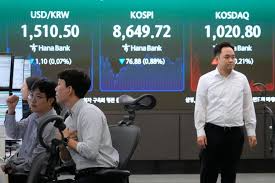
Global markets reacted to a tentative diplomatic step on June 17, 2026, as investors parsed an interim agreement aimed at ending hostilities between the United States and Iran. Asian equities climbed, with benchmarks in Japan and South Korea reaching historic highs, while European and US indexes traded in mixed fashion as traders weighed geopolitical relief against lingering uncertainty. Oil prices remained relatively steady as markets balanced hopes for de escalation with questions about longer term supply dynamics.
Asian gains driven by risk on sentiment
Tokyo and Seoul led the advance with notable strength in cyclicals and export oriented technology stocks. The Nikkei recorded fresh intraday highs as automakers and semiconductor suppliers rose on expectations that improved geopolitical stability would ease shipping risks and encourage capital spending. In Seoul memory chip makers and foundries added to gains as order books signalled resilience for the summer quarter. Investors described the mood at Asian trading floors as cautiously optimistic, with the clack of keyboards and cheer at brokerage desks punctuating a rare sense of relief.
Local catalysts amplifying rallies
Domestic factors reinforced the regional move. Japan posted stronger than expected machinery orders for May which underpinned cyclical positioning, while South Korean export data showed a sequential improvement in electronic shipments. Those data points gave traders cover to increase exposure once headlines suggested diplomatic progress. Portfolio managers said positioning had been light in risk assets going into the session, which allowed a sharper uptick when optimism returned to the tape.
European and US markets tread carefully
Across Europe indices fluctuated as gains in industrial and travel stocks were offset by weakness in defensive sectors. London and Frankfurt reflected the mixed tone as investors applied a nuanced reading to the diplomatic announcement, seeking confirmation of durable peace rather than a headline driven bounce. In New York, futures and early trade showed divergence between growth oriented names and value oriented names, with the S and P 500 exhibiting restrained moves even as certain small cap stocks saw intraday strength.
Why markets are not uniformly bullish
Traders noted several reasons for the lukewarm reaction in some markets. First, interim agreements can be fragile and subject to rapid reversal, so capital is allocated with care. Second, inflation and interest rate expectations remain central to equity valuations; strong geopolitical improvements alone may not shift central bank policy outlooks quickly. Finally, investors are watching for follow through in trade routes and insurance cost reductions that would materially improve corporate supply chain visibility before committing to aggressive repositioning.
Oil steadiness reflects balanced risks
Brent and West Texas Intermediate benchmarks held steady as market participants digested the prospect of reduced regional risk against the hard data on spare capacity and stockpiles. Energy traders pointed out that while a de escalation could lower the risk premium priced into Middle East related shipping and insurance costs, it would not immediately reopen curtailed production or replenish strategic reserves. The result was a measured market that priced in some relief but kept an eye on inventories and seasonal demand patterns.
Supply technicals and the outlook
Analysts highlighted key variables that will determine whether oil moves decisively: OPEC plus output discipline, US shale responsiveness to price signals, and the behavior of global refinery runs into the northern hemisphere summer. Inventories reported by major agencies in the coming weeks will be closely watched. For now traders maintained that a sustained drop in oil prices would require clear evidence of increased physical supply or a sharp demand slowdown.
Currency and bond market response
Safe haven currencies such as the US dollar and Japanese yen showed modest declines as risk appetite improved, though moves were contained. Government bond yields displayed mixed patterns; US Treasury yields drifted slightly lower in early trade as geopolitical concerns eased but remained elevated relative to historical norms given inflation expectations. European sovereign yields moved in a narrow range as investors awaited more detailed policy signals from central banks and any potential economic fallout that might emerge from renewed diplomatic negotiations.
Inflation and central bank calculus
Market participants emphasized that central bank policy remains the dominant longer term driver for bond and equity valuations. Even with improved geopolitical sentiment, any sign that inflationary pressures persist could keep policy rates higher for longer and temper equity enthusiasm. Investors are parsing data releases scheduled this week for clues on inflation momentum and labour market tightness that will shape official responses.
Sector winners and losers
Industrials, travel and leisure, and certain commodity exposed stocks fared better on prospects for smoother logistics and renewed consumer activity in travel related areas. Defence and aerospace names cooled as near term war risk premium diminished. Technology stocks moved unevenly with semiconductors and hardware firms benefiting from the regional demand narrative while some software and high growth names paused after recent rallies.
Market breadth and technical signals
Although headline indices showed gains in some regions, breadth metrics were mixed which suggests selective buying rather than a broad based rally. Technical analysts noted that confirmation from higher volume and sector breadth would be necessary to indicate a sustainable market turn rather than a transient relief rally driven by headlines alone.
What investors should monitor next
Key items to watch in the coming sessions include confirmation of the interim agreement’s implementation timeline, supply chain and shipping cost indicators, weekly oil inventory reports, and economic releases that shape central bank expectations. Market participants will also track fund flows into risk assets and whether institutional investors increase allocations following the diplomatic signal. Any negative developments in the negotiating process would likely reverse early gains, reinstating risk aversion.
Practical considerations for portfolios
For cautious investors maintaining balanced exposure is prudent. Tactical tilts toward sectors that benefit from reduced logistical friction may be appropriate for those with shorter term horizons, while longer term investors should continue to account for interest rate risks and valuation discipline. Diversification, attention to liquidity, and scenario planning for both renewed conflict and sustained peace remain sound portfolio practices.
Where to find authoritative updates
For official developments on the agreement, investors should consult statements from foreign ministries and recognized international organizations for verified information. Market data and commodity updates are available through major financial news services and exchanges which provide near real time statistics. For background on energy statistics and inventory data consider the International Energy Agency and national energy administrations. The IEA maintains timely analysis and inventory information that market professionals rely on at iea.org.
The market reaction of June 17 reflects a complex blend of relief and restraint. While Asian markets celebrated new highs buoyed by improved risk sentiment, Europe and the United States remained guarded as investors balanced geopolitical optimism with persistent macroeconomic concerns. The coming days will reveal whether this diplomatic moment marks a durable shift in risk appetite or a temporary pause in a volatile chapter of global markets.