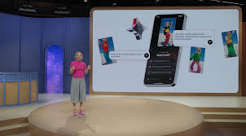
YouTube is giving creators a new way to edit videos by simply telling the platform what they want to change. The company has previewed a conversational editing assistant powered by Gemini, allowing creators to describe edits in natural language instead of manually completing every step on a traditional timeline. The announcement is part of YouTube’s broader 2026 creator strategy, which also includes new Studio tools, video testing features, creator protection measures, and additional ways to manage the business side of a channel.
YouTube Wants Editing to Feel More Like a Conversation
For many creators, recording a video is only the beginning. Hours can disappear while reviewing footage, removing pauses, rearranging clips, matching music, adding text, and trying to make the opening seconds strong enough to keep viewers watching. YouTube’s new conversational editing approach is designed around that reality.
Instead of treating editing as a series of technical commands, the new assistant allows creators to communicate their intentions through ordinary language. A creator can begin with suggested prompts or provide their own instructions, then continue the conversation while the video develops. YouTube says the assistant can help trim speech, reorder frames, synchronize music with the footage, and add text hooks.
The company announced the feature as part of its Made On YouTube 2026 event. YouTube describes the tool as a conversational editing assistant integrated into Shorts and the YouTube Create app. Creators can move between the AI assistant and manual editing, giving them the option to accept automated suggestions while retaining control over the timeline.
More details about the wider creator rollout are available through the official YouTube Blog, where YouTube publishes product announcements and creator updates.
What Conversational Editing Could Look Like in Practice
The most interesting part of the feature is not simply that artificial intelligence can make edits. Video editing software has already offered automated features for years. The more significant change is the interaction model.
Imagine a creator returning from a day of filming with several clips showing different outfits. Instead of manually opening every clip and deciding which take should appear in the final sequence, the creator could describe the desired result and ask the assistant to organize the footage. In a demonstration reported during the rollout, creator Happy Kelli showed how conversational instructions could be used to select suitable takes, add music, and apply transitions to footage.
A creator could then continue refining the result. They might ask for a faster opening, shorter pauses, a different sequence of clips, or music that follows the rhythm more closely. Rather than starting over, the editing process becomes iterative.
That distinction matters because creative decisions rarely happen once. A good editor watches a sequence, notices something that feels slow, changes it, watches again, and continues refining the result. YouTube’s conversational approach attempts to bring that natural back and forth into an AI assisted workflow.
Gemini Becomes Part of the Creator Workflow
YouTube has been gradually placing Google’s Gemini technology inside its creation tools. Earlier in 2026, Gemini Omni was introduced for creative features involving Shorts and the YouTube Create app, including AI assisted remixing and more complex video and audio adjustments.
At the September creator event, YouTube took that idea further by positioning Gemini as an editing partner rather than simply a generation tool. The assistant is intended to understand a creator’s instructions and help execute multiple editing decisions while the creator remains involved.
YouTube said that hundreds of thousands of channels were using Gemini Omni related capabilities each day during August 2026. The company also cited its own research showing that 72 percent of United States video posters between ages 14 and 44 had used AI to help create or edit video content during the previous year.
Those figures suggest that AI assisted editing is moving beyond experimentation for a significant portion of creators. The challenge now is making these systems useful without making the creative process feel automated or impersonal.
The Creator Still Has Manual Control
One of the most important details in YouTube’s announcement is that conversational editing does not replace manual editing. Creators can move between AI suggestions and the traditional timeline, making their own adjustments whenever the automated result does not match their vision.
That approach recognizes a basic reality of creative work. A technically correct edit is not necessarily a good edit. The right pause, reaction, camera angle, sound effect, or transition can depend on context that is difficult to express in a single instruction.
For experienced editors, conversational tools may therefore function more like assistants than replacements. They can handle repetitive operations while the creator concentrates on pacing, storytelling, personality, and the emotional rhythm of a video.
YouTube Is Building a Larger AI Toolkit for Creators
Conversational editing is only one part of the broader collection of tools announced by YouTube. The company is also expanding YouTube Studio with features intended to support creators before and after a video is published.
New Studio capabilities include personalized feedback on early drafts, assistance with thumbnails, research tools, and video testing. YouTube says creators will be able to test up to three different video cuts to determine which opening keeps viewers engaged more effectively.
The company is also expanding its use of AI for channel management. Ask Studio is being developed as a more comprehensive assistant that can provide guidance based on a creator’s channel and content. YouTube says it can also work with older videos and suggest refreshed thumbnails in an effort to help existing content reach new audiences.
This creates a larger picture. YouTube is not simply adding an AI button to an editing application. It is gradually connecting AI assistance to research, production, packaging, testing, publishing, and channel management.
Why Natural Language Editing Could Matter to Smaller Creators
Professional production teams have traditionally divided video work among several roles. One person might record the footage, another might edit it, someone else might design graphics, and another person might review performance data after publication.
Independent creators often do all of those jobs themselves.
For a person running a small channel after school, work, or family responsibilities, the difference between a manageable production schedule and an exhausting one can come down to how much time is spent on repetitive editing. A conversational assistant could reduce some of that workload by handling routine decisions through simple instructions.
The potential benefit is especially relevant to Shorts creators, where frequent publishing can require a constant supply of edited clips. YouTube’s integration of the assistant into Shorts and YouTube Create puts the technology directly into workflows designed for mobile and short form creation.
Speed Will Not Automatically Create Better Videos
There is also a reason for creators to remain selective about how they use these tools. Faster editing does not automatically produce stronger storytelling.
If thousands of creators rely on similar automated suggestions, videos could begin to develop recognizable patterns. Similar pacing, similar hooks, similar transitions, and similar music choices could make content feel increasingly predictable.
The strongest use of conversational editing may therefore be as a starting point rather than a final decision maker. A creator can allow the assistant to remove repetitive work while still making the personal choices that give a channel its identity.
This balance may become increasingly important as AI becomes part of ordinary video production. YouTube itself has continued developing systems for identifying and labeling meaningful AI generated or altered content, reflecting the broader need for transparency as synthetic media becomes easier to create.
Creator Protection Is Expanding Alongside AI Tools
YouTube’s creator announcements also addressed a concern that grows as generative technology becomes more capable: protecting a creator’s identity.
The platform is expanding likeness detection so creators can enroll, receive alerts about potential matches, and take action from their mobile devices. YouTube also plans to combine speaking voice detection with facial detection to improve the ability to identify unauthorized uses of a person’s likeness.
That development is significant because AI creation tools and creator protection are becoming closely connected. The easier it becomes to reproduce a voice, face, or visual style, the more important it becomes for creators to have tools that help them monitor how their identity is being used.
What Creators Should Watch Next
The conversational editing assistant is part of a larger shift toward creator software that responds to intentions rather than requiring users to master every technical control. For creators, the practical question will be how accurately the system understands instructions and how much control remains available when the first result is not right.
- Creators should watch for availability across Shorts and the YouTube Create app.
- Editors should test AI suggestions against their own manual workflow rather than assuming automated changes are always appropriate.
- Creators using generative features should pay attention to YouTube’s disclosure and labeling requirements.
- Channel owners should also explore Studio tools for testing video cuts, improving thumbnails, and reviewing drafts.
YouTube’s official Creator support resources remain useful for checking feature availability, publishing requirements, and platform guidance as new tools roll out.
A More Conversational Future for Video Editing
YouTube’s September 2026 creator announcements point toward a future in which editing software increasingly responds to what creators mean rather than requiring them to translate every idea into a technical command. The appeal is easy to understand. A creator can think about the story first and let software handle more of the mechanical work.
But the real test will come from everyday use. The value of conversational editing will depend on whether creators can move quickly without losing control, personality, and creative judgment.
For now, YouTube’s preview represents a notable step in that direction. Instead of asking creators to learn another complicated editing system, the platform is experimenting with something much more familiar: a conversation. If the technology can reliably turn those conversations into precise edits while keeping creators firmly in control, video production could become less about wrestling with timelines and more about deciding what story deserves to be told.