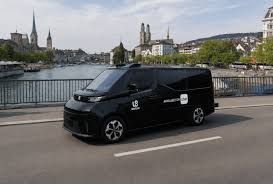
WeRide and Uber revealed on June 17, 2026 that commercial, driverless Robotaxi services will begin operating in the Greater Zurich Region later this year following a similar rollout in Madrid. We visited city streets, spoke with transport officials, riders, and safety experts to trace how autonomous mobility is moving from trial lanes into paid services and what residents can expect when driverless vehicles become part of everyday transit.
What the partnership will deliver
The agreement pairs WeRide’s autonomous driving stack and sensor integration with Uber’s rider network, dispatching systems, and local operations knowhow. Operators say the initial service will run in defined operational design domains that cover central Zurich and adjacent suburbs, focusing on high demand corridors, major transit hubs, and popular commercial districts. Vehicles will operate without onboard safety operators in regular service, while remote operations centers will supervise fleets and intervene when necessary. Pricing and service hours were described as competitive with premium ride hailing tiers to attract early adopters and commuters testing the convenience of Robotaxi trips.
Technology and safety layers
WeRide emphasises layered sensing architectures including lidar, cameras, and radar fused through advanced perception models to detect pedestrians, cyclists, and unexpected obstacles common in dense European cities. The software stack includes trajectory planning, redundant compute systems, and fail safe states that bring vehicles to controlled stops if anomalies occur. Uber will integrate ride matching, navigation handoffs, and customer support workflows so riders can book Robotaxi trips through familiar apps, request assistance, and receive real time updates on vehicle arrival and status.
Why Zurich is a strategic choice
Zurich offers several advantages for a commercial launch. The region has high smartphone penetration, dense employment and leisure corridors that create consistent demand, and a regulatory environment that has been open to testing advanced mobility solutions under strict safety conditions. Local transport agencies and universities provide data partnerships and testing corridors that help calibrate systems to Swiss traffic patterns and pedestrian behaviours. Officials also cited existing public enthusiasm for technology pilot programs and a strong municipal focus on reducing inner city car traffic.
Policy and regulatory groundwork
Swiss federal and cantonal authorities worked with the companies to define operational rules, data sharing agreements, and safety certification processes. Requirements include demonstrable incident response plans, cybersecurity protections for vehicle control systems, and transparent reporting on disengagements and interventions. Regulators will monitor service performance with periodic reviews and maintain authority to scale service up or down based on safety metrics and public feedback.
How riders and communities are reacting
Reactions in Zurich were mixed but constructive. Early adopters who rode test vehicles praised the smooth accelerations and quiet interiors while noting the oddness of an empty driver seat. Commuters expressed interest in last mile trips that connect suburban train stations to offices and homes. Some residents voiced concern about job impacts for taxi drivers and drivers who worked in ride hail services, alongside questions about noise, curb competition at busy pick up points, and liability if collisions occur.
Community engagement and workforce considerations
WeRide and Uber said they will run public information sessions, station staffed kiosks for first time users, and partnerships with local driver unions to explore transitional roles such as fleet maintenance, remote operations staff, and customer experience agents. Municipalities are asking for commitments on local hiring and training programs to ensure economic benefits are shared with communities affected by automation.
Transit integration and environmental implications
Officials framed Robotaxi services as a complement to public transport rather than a replacement. Pilot routes will prioritize connections to mainline rail and tram stops to solve first and last mile challenges. The partners also committed to electric vehicle fleets to reduce local emissions, aligning with Zurich’s climate targets and air quality goals. Transport planners caution that if Robotaxi pricing undercuts public transport widely it could draw riders away from mass transit, creating congestion and undermining environmental aims. Careful pricing and dedicated pick up zones are therefore central to integration plans.
Measuring success beyond trips completed
Authorities will evaluate success by tracking mode shift, changes in private car usage, public transport ridership patterns, and emissions metrics. Accessibility gains for people with mobility challenges, reductions in parking demand, and safety outcomes such as fewer traffic incidents involving vulnerable road users will also factor into assessments used to guide future deployment decisions.
Safety record and transparency demands
Safety advocates and journalists stressed the importance of transparent reporting. WeRide and Uber committed to publishing incident logs, disengagement statistics, and software updates aggregated in a public dashboard for regulators and researchers. Independent third party audits of hardware and software integrity, cybersecurity resilience, and human factors in remote supervision will be part of the oversight framework. Swiss authorities indicated they will require rapid public disclosure if any serious safety events occur during the commercial phase.
Insurance and liability frameworks
Liability frameworks were negotiated before launch, with insurers, the companies, and cantonal authorities outlining coverage for property damage and personal injury claims that may arise. The agreements balance consumer protection with practicalities of attributing fault in complex human machine interactions. Insurers will monitor incident trends closely to refine premiums and coverage terms once operational data becomes available.
Lessons from Madrid and what Zurich can borrow
WeRide and Uber described their Madrid deployment earlier in 2026 as a real world proving ground that informed European operations. Lessons included refining urban routing logic to avoid narrow streets at peak times, calibrating pedestrian intent prediction models for crowded plazas, and building local maintenance hubs to keep vehicles operationally ready. Zurich planners will apply those learnings while adapting to alpine weather patterns and densely used tram corridors that require specialized software and operational rules.
Weather, road markings, and local idiosyncrasies
Swiss winters and rapid weather shifts demand robust sensor interpretation under rain, sleet, or bright reflections from glass facades. The companies said they have adapted perception models with local datasets and added heated sensor housings to reduce data loss from condensation or ice. Road marking conventions and tram interactions led to software changes to predict and respect tram priority and track geometry in crowded districts.
What riders should expect and next steps
Residents can expect phased rollouts that begin with daylight operations on constrained corridors, followed by gradual expansion of service hours and geographic scope if safety metrics remain strong. First time riders will see app based onboarding prompts, clear guidance on pick up points with signage, and staff at central locations to assist with booking and feedback. Regulators will publish initial performance reviews after the first months and may require adjustments based on safety, equity, and traffic impacts.
Where to find official information
For verified updates and operational details check municipal transport authority notices and the companies’ official pages that publish safety reports and service areas. The European Union Agency for Rail and Road also maintains guidance on urban mobility projects and can offer context on broader regulatory trends affecting autonomous vehicles. For safety guidelines and regulatory frameworks consult the municipal transport authority and the European Commission mobility publications.
The Zurich launch marks a significant step in mainstreaming driverless Robotaxis in complex urban settings. Its success will rest on careful integration with public transport, rigorous safety oversight, transparent reporting, and tangible local benefits for workers and communities. We will follow the rollout closely to assess whether driverless mobility can provide reliable, safe, and equitable transport options for urban residents.