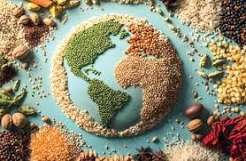
The Food and Agriculture Organization issued a stark warning on July 25 2026 that the world is edging toward a broader food crisis after shipping chokepoints in the Strait of Hormuz and renewed Black Sea tensions drove fertilizer prices sharply higher and lifted global wheat and grain benchmarks to their highest levels in three years. Farmers from the Great Plains to the Punjab are watching input costs climb while families in import dependent regions brace for pricier staples at the market. The convergence of geopolitical friction and supply chain fragility is testing food security at a moment when resilience has already been stretched by climate shocks and conflict.
How shipping disruptions turned into a fertilizer squeeze
Fertilizer is the hidden engine of modern harvests. Nitrogen phosphorus and potassium compounds feed crops that feed people. When tankers and bulk carriers face delays or rerouting at strategic maritime corridors costs ripple through the entire agrifood system. In recent weeks vessels moving urea ammonium nitrate and potash encountered longer transit times and higher insurance premiums around the Strait of Hormuz while Black Sea grain and fertilizer corridors remained volatile. The result was a rapid pass through of higher freight and risk costs into farmgate prices.
We saw this pattern before during earlier supply shocks yet the repeated nature of these disruptions is draining buffers. Exporters adjusted quotes within days. Importers faced tighter credit terms and longer lead times. Governments that subsidize fertilizer for smallholders found budgets strained. The pressure is not theoretical. It shows up in the price of a sack of wheat flour in a Karachi bazaar or a bag of maize meal in a Nairobi market. It shows up in the choice a farmer makes between planting a full area or holding back seed because fertilizer is too dear.
Grain markets react with speed and conviction
Benchmark wheat and key coarse grains rallied to multi year highs as traders priced in the prospect of smaller outputs if farmers cut back on fertilizer or switch to lower input crops. Futures markets moved fast. Cash markets followed. Millers and buyers adjusted contracts to reflect higher costs and tighter availability. The price signal is clear. When fertilizer is expensive and uncertain yields are at risk. When yields are at risk inventories look thinner and the premium for security rises.
For consumers the transmission is uneven but real. In regions where bread rice and maize dominate daily diets even modest increases in grain prices can reshape household budgets. In places where social safety nets are thin the margin between a full plate and a skipped meal can vanish quickly. The FAO warning is not merely about spot prices. It is about the human cost when those prices persist.
Why this crisis hits hardest in import dependent regions
Countries that rely heavily on imported cereals and fertilizers sit at the front line of this episode. Currency weakness compounds the problem. When a local currency depreciates against the dollar the landed cost of fertilizer and grain climbs even if global prices were flat. Many governments in South Asia the Middle East and parts of Africa already face tight fiscal space. Subsidy programs that once shielded farmers and consumers now compete with other urgent spending needs.
Smallholder farmers who produce a large share of food in these regions are especially exposed. They often buy fertilizer on credit or in small quantities at retail. When prices jump and supply is patchy they may apply less than agronomically optimal rates. That decision can shave percentage points off yields that translate into millions of tonnes of lost production at the global level. The mathematics are simple and unforgiving. Less fertilizer means less grain. Less grain means higher prices and tighter supplies.
Climate shocks are stacking on top of logistics
Extreme weather has not waited for markets to stabilize. Heat waves erratic monsoons and localized flooding have already dented crop prospects in several major producing zones. When climate stress meets input scarcity the margin for error disappears. A field that might have tolerated a dry spell with adequate nutrition now struggles. A delayed planting window due to late fertilizer arrival runs into an early heat spike. The agronomic penalties accumulate and the harvest shrinks.
We have watched this pattern deepen over recent seasons. The FAO has documented how climate variability threatens food security and the 2026 Global Report on Food Crises highlights that conflicts and climate shocks are driving acute hunger in a concentrated group of countries. The latest market moves are happening against that backdrop. Supply is not collapsing everywhere but the fragility is widespread and the tolerance for new shocks is low.
What governments and the private sector can do now
Immediate action should focus on three objectives. Keep fertilizer moving. Protect the most vulnerable from price spikes. And preserve planting incentives for the next cycle. Ports need to prioritize essential agri inputs. Customs procedures should be streamlined to avoid unnecessary delays. Credit lines for importers and distributors must remain open so that shipments are not held up by financing gaps.
Targeted support works better than blanket subsidies when budgets are tight. Vouchers or direct transfers to smallholders can ensure that those who need fertilizer most can access it. Social protection programs should be calibrated to rise with food prices so that households do not fall into deprivation when staples become costlier. Strategic grain reserves can be tapped to smooth local supply and calm speculative pressure in domestic markets.
Private sector actors have a role too. Traders and millers can offer forward contracts that give farmers price certainty. Fertilizer companies can prioritize reliable delivery schedules and transparent pricing. Logistics providers can work with authorities to designate green lanes for essential agri commodities. These steps do not solve geopolitics but they reduce the human cost while diplomacy works on the root causes.
Building resilience for the next shock
Longer term the lesson is clear. Diversify supply routes. Invest in local production of key inputs where feasible. Expand soil testing and precision application so that every kilogram of fertilizer delivers more yield. Support research into crop varieties that perform well under stress and require fewer inputs. Strengthen regional trade so that surplus areas can supply deficit areas without excessive friction.
International institutions can help by providing timely data and financing. The World Bank and other development partners have been working on food and fertilizer financing solutions and the FAO continues to monitor global markets and issue risk assessments. Access to reliable information on stocks shipments and prices reduces panic and enables better decision making by governments and businesses alike.
What this means for households and farmers
For a family buying wheat flour maize meal or rice the message is practical. Expect higher prices for staples in the coming months. Budget accordingly. Seek out government supported sales points or social protection programs if available. For farmers the guidance is equally concrete. Lock in fertilizer supplies early. Consider soil testing to optimize application rates. Explore credit options backed by government guarantee schemes or cooperative arrangements that reduce costs.
For consumers in cities and towns the human face of this crisis is visible in the queue at the ration shop in the smaller loaf of bread and in the careful calculation at the grocery counter. For farmers the human face is visible in the field that looks a little less green and in the anxious calculation of whether the next input purchase will pay off at harvest. These are not abstract market movements. They are daily choices that shape health and livelihood.
Where to track developments and practical guidance
As the situation evolves the most useful resources are those that combine timely data with actionable advice. The FAO provides regular market monitors and early warning bulletins that track fertilizer and cereal prices and flags emerging risks. The Global Report on Food Crises offers detailed analysis of hunger hotspots and the drivers behind them which helps policymakers and aid agencies target assistance where it is needed most.
For those who need to plan ahead the key is to watch port schedules input inventories and seasonal weather forecasts. Governments should communicate clearly about subsidy programs and strategic releases. Businesses should share price and availability information transparently. Households should stay informed about local support measures and adjust purchases to avoid last minute panic. The path through this episode will be uneven but with coordinated action the worst outcomes can be avoided.