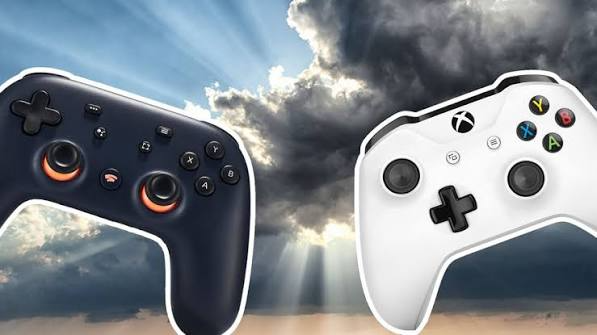
The future of cloud gaming may depend on something players rarely see: the technology that allows games to move smoothly between different streaming platforms. A news summary dated October 31, 2026, reports that international game developers and hardware manufacturers have launched a unified streaming architecture standard intended to reduce exclusivity barriers across cloud gaming services. However, an official announcement confirming this specific industry agreement and its participating companies has not been independently verified. The broader effort toward cloud gaming interoperability is real, with international standards organizations already working to improve compatibility, performance and infrastructure across the industry.
Why Cloud Gaming Needs Greater Compatibility
Cloud gaming allows players to enjoy demanding video games without installing or running the full software on their own computers or consoles. Instead, the game operates on powerful remote servers, while video and audio are streamed to the player’s device. The player’s controls are sent back through the internet, allowing the experience to continue almost in real time.
This model can make high quality gaming accessible to people who do not own expensive gaming hardware. Someone using an ordinary laptop, tablet or compatible television may be able to play a demanding title that would otherwise require a powerful computer. For players with limited storage or older devices, streaming can also reduce the need for large downloads and frequent hardware upgrades.
Despite these advantages, cloud gaming remains divided among different services, subscription models, supported devices and game libraries. A title available through one provider may not be accessible through another. Some services also operate with different technical requirements, meaning developers must consider several platforms when preparing their games for streaming.
A unified architecture could help reduce these differences. Rather than requiring every company to build separate systems for every cloud gaming provider, common technical standards could make it easier for platforms, developers and hardware manufacturers to work together.
What a Unified Cloud Gaming Standard Could Change
The reported initiative describes a shared streaming architecture designed to reduce platform exclusivity barriers. If such an agreement is formally established and widely adopted, its impact could reach several parts of the gaming business.
More consistent streaming technology
Cloud gaming depends on several technical components working together. Remote servers must run the game, process player inputs, encode video and transmit the resulting stream across a network. The receiving device must then decode that stream quickly enough to maintain a responsive experience.
Different providers may use different infrastructure designs and communication methods. Common technical requirements could make these systems easier to integrate, helping developers prepare games for multiple services without rebuilding every part of the streaming process.
Greater access across devices
One of cloud gaming’s strongest promises is the ability to play without being tied to a particular console or computer. A player might begin a game on a television, continue on a laptop and later use a mobile device. Achieving that experience requires more than video streaming. Services must also address controller support, account authentication, saved progress, game licensing and device compatibility.
Shared standards could help improve these connections, although they would not automatically make every game available on every platform. Publishers would still need to negotiate licensing agreements and decide where their titles can be distributed.
Lower development complexity
For independent studios and smaller publishers, supporting several cloud gaming platforms can require additional engineering, testing and maintenance. Each service may have its own technical specifications and development requirements.
A common architecture could reduce duplicated work and allow studios to focus more resources on game design, performance and player experience. This could be particularly useful for developers who want to reach audiences across different devices without maintaining separate versions of their streaming infrastructure.
International Standards Are Already Supporting Cloud Gaming
Although the specific October 31 announcement remains unconfirmed, international organizations have already recognized the need for common cloud gaming requirements.
The International Telecommunication Union adopted Recommendation ITU T J.1312 in March 2025. The recommendation describes infrastructure architecture requirements for cloud gaming services, including hardware resources, resource management and game instances. It provides a technical foundation for understanding how the main parts of a cloud gaming system interact.
This work matters because cloud gaming quality depends on more than the speed of an internet connection. Server capacity, resource allocation, network conditions and game execution all influence whether a player experiences smooth movement or frustrating delays. The recommendation is available through the ITU cloud gaming infrastructure standard.
The IEEE Computer Society also has an Online Gaming Standards Committee that develops standards for cloud gaming and other online gaming systems. Its Cloud Gaming Working Group is working on IEEE P2948, which addresses the framework and definitions for cloud gaming, and IEEE P2949, which focuses on evaluating the user experience.
These projects cover important areas such as system functionality, technical terminology, audio and video quality, stability and interaction delays. Their existence demonstrates that standardization is an ongoing process rather than a single agreement that has already resolved every compatibility problem.
The Biggest Technical Challenge Is Still Latency
Even with shared architecture, cloud gaming faces a fundamental technical challenge: latency. Unlike traditional gaming, where much of the processing happens directly on a player’s device, cloud gaming depends on communication between a remote server and the user.
When a player presses a button, the command must travel to the server, be processed by the game and return as updated video. Every stage takes time. A small delay may be barely noticeable in a slower adventure game, but it can make a significant difference in competitive shooters, racing games and fighting titles.
Network congestion, physical distance from data centers, server performance and wireless connection quality can all affect responsiveness. A unified streaming standard may help establish consistent technical expectations, but it cannot remove the physical limitations of internet infrastructure.
For cloud gaming to become more dependable, providers will need to invest in strategically located data centers, efficient video encoding, improved network routing and reliable server management. The experience must remain stable even when thousands of players are connected at the same time.
Why Game Publishers May Be Cautious About Removing Exclusivity
Technical compatibility is only one part of the issue. Game publishers also have commercial reasons for maintaining platform restrictions. Exclusive titles can attract subscribers, strengthen relationships with hardware manufacturers and encourage players to remain within a particular gaming ecosystem.
Removing these restrictions could create wider distribution opportunities, but it may also change how companies compete. Publishers would need to consider licensing revenue, subscription agreements, platform fees and the financial value of exclusive releases.
Hardware manufacturers face a similar challenge. Companies that have invested heavily in gaming consoles and proprietary services may be reluctant to support arrangements that reduce the importance of their own ecosystems. A shared technical standard does not necessarily require companies to abandon their business models, but it could make it easier for players and developers to move between services.
For this reason, meaningful interoperability will probably require cooperation on commercial matters as well as engineering. Without agreements covering game rights, subscriptions and account systems, technical compatibility alone will have limited influence on what players can actually access.
What Gamers Could Gain From Cross Platform Streaming
If broader interoperability becomes a practical reality, players could benefit from greater choice and fewer technical restrictions. They may find it easier to access compatible games on devices they already own rather than purchasing additional hardware for a particular title.
Developers could also reach audiences across more services, while smaller studios might face fewer technical barriers when entering the cloud gaming market. Competition could shift toward service quality, pricing, game libraries and customer support rather than relying entirely on exclusive access.
However, consumers should not assume that a unified streaming architecture would immediately provide free access to every game. Publishers would still control distribution rights, and subscription costs would remain dependent on individual service providers. Internet requirements and regional availability would also continue to influence the experience.
What the Gaming Industry Should Focus on Next
For a cross platform cloud gaming standard to deliver meaningful results, participating companies would need to establish clear technical requirements and demonstrate that their systems can work together in practice. A successful framework should address several important areas:
- Consistent methods for communication between cloud gaming services and compatible devices.
- Reliable support for different controllers, operating systems and screen formats.
- Secure account authentication and protection of player information.
- Clear requirements for streaming quality, responsiveness and service reliability.
- Practical arrangements for game licensing, subscriptions and saved progress.
- Transparent testing procedures that allow independent developers to evaluate compatibility.
Companies should also consider how smaller studios can participate. If implementing the standard requires expensive infrastructure or complicated licensing, its benefits may remain limited to the largest publishers and hardware manufacturers. Open documentation and accessible development tools could help make interoperability more widely available.
Cloud Gaming’s Future Will Depend on Cooperation
The reported October 31 announcement reflects a major question facing the gaming industry: can cloud gaming become a connected ecosystem rather than a collection of separate services? A shared streaming architecture could help reduce technical fragmentation, create more opportunities for developers and give players greater flexibility in how they access games.
Still, the reported joint agreement should not be treated as an established industry wide policy without confirmation from the organizations involved. Existing work by the ITU and IEEE provides a more reliable picture of the progress already being made toward common cloud gaming standards.
Ultimately, the success of cross platform gaming will depend on more than faster servers or compatible streaming software. Publishers must be willing to reconsider restrictive distribution arrangements, hardware companies must support practical interoperability, and service providers must deliver reliable performance at reasonable prices.
For players, the most meaningful outcome would be simple: spending less time worrying about which platform supports a game and more time actually playing it. Reaching that point will take sustained technical development and cooperation, but shared standards could provide an important foundation for a more accessible cloud gaming future.