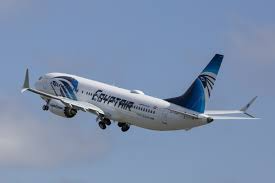
Under the intense desert sun at Cairo International Airport, a gleaming 737‑8 MAX touched down on May 3, 2026, marking the moment EgyptAir took delivery of its first Boeing 737 MAX jet and set a course to modernize the national carrier. The arrival of the aircraft—painted in the airline’s signature green and white livery, nose‑down against the backdrop of sand and sky—carried more than the weight of a new lease agreement. For passengers, pilots, and ground crews, it signaled a quiet transformation: a shift from older, fuel‑hungry planes to a more efficient, long‑range fleet that will reshape how Egyptians and travelers from across Africa and the Middle East move through the skies.
EgyptAir’s 737 MAX Milestone
The first 737‑8 MAX joins EgyptAir as the opening chapter in a plan to add 18 leased MAX aircraft to the fleet, all intended to bolster short‑ to mid‑haul operations across the region. The 737‑8 MAX, part of Boeing’s MAX family, is designed to seat roughly 160 to 180 passengers in a typical two‑class configuration, depending on the airline’s layout choices.
For EgyptAir, this first delivery is not just a technical upgrade but a symbolic one. The national carrier, founded by decree in 1932 and long identified with the Egyptian crescent and star on its tail, is now tying its image to the smooth lines and quieter engines of a next‑generation jet. The aircraft’s larger wingspan, more powerful engines, and improved wing design promise a more stable ride, especially on routes that cross turbulent thermal zones over the Sahara and Red Sea.
Modernization and the Push for Efficiency
Modernizing the fleet has long been a priority for EgyptAir, particularly as the airline contends with rising fuel costs, tighter competition, and the expectations of a growing middle‑class travel market. Older narrow‑body jets, some of which have been in the fleet for well over a decade, are less efficient and more expensive to maintain. The 737‑8 MAX is designed to burn less fuel per mile, reducing both operating costs and the airline’s carbon footprint.
For passengers, the efficiency gains often translate into smoother, more reliable service, including more on‑time departures and fewer last‑minute swaps when older planes require maintenance. The MAX’s range and payload efficiency also make it particularly attractive for regional routes that connect Cairo, Sharm El‑Sheikh, Luxor, and Aswan with secondary hubs across the Middle East and the Horn of Africa, where demand for both business and leisure travel is growing.
African and Middle Eastern Routes: What the MAX Enables
One of the core goals of the 737 MAX rollout is to expand EgyptAir’s reach across African and Middle Eastern networks. The aircraft’s design supports routes that are too long for smaller regional jets but may not justify the use of larger wide‑bodies. This makes it ideal for connecting Cairo with secondary cities in East Africa, West Africa, and the Arabian Peninsula, where demand has grown as trade, tourism, and remittance corridors strengthen.
Imagine the experience of flying from Cairo to Juba, Addis Ababa, or Khartoum on a 737‑MAX–equipped route: the flight may feel a bit smoother, thanks to the updated flight control software and the more aerodynamic wingtips, while the cabin refreshed with new overhead bins, LED lighting, and possibly updated in‑seat entertainment offers a more contemporary environment for business travelers, visiting students, and families visiting relatives abroad.
Safety, Trust, and the Legacy of the MAX
For many passengers, the word “737 MAX” carries echoes of the aircraft’s troubled safety history, marked by two fatal crashes in 2018 and 2019 that led to a global grounding and a years‑long re‑evaluation of design and training protocols. Boeing’s response included software updates, revised pilot training programs, and new oversight processes, but the shadow of those events remains for travelers who remember the fear of flying during the grounding.
For EgyptAir, incorporating the 737‑8 MAX into its fleet is an act of both technological faith and public communication. The airline’s leaders have emphasized that the aircraft they are receiving have undergone the full suite of safety upgrades mandated by international regulators, and that their pilots are following the updated training regime. The hope is that, over time, the MAX’s safety record and the experience of riding in a quiet, efficient jet will outweigh the lingering anxiety for most passengers.
On the Ground: Employees, Engineers, and Airport Life
For the people who work at the airport, the arrival of the first 737‑8 MAX brings a quiet set of changes. Ramp crews train on new ground‑handling procedures. Maintenance engineers refresh their skills on the MAX’s specific systems, from the slightly different engine cowling to updated avionics layouts. For cabin crew, there may be new safety briefings, updated emergency equipment locations, and subtle changes in how the galley and cabin layout feel during long‑day operations.
On the tarmac, the sound of the MAX’s engines quieter, by design, than many older jets offers a different kind of background noise to the usual airport symphony. The aircraft’s lighter weight and improved fuel management also mean fewer ground‑support vehicles waiting at the gate, which can streamline the rhythm of departures and arrivals for both passengers and staff.
Passenger Experience: What Travelers Will Notice
Though the 737‑8 MAX looks broadly similar to previous 737 generations from the outside, passengers often feel the differences more than they see them. The cabin tends to feel more modern, with larger windows, updated lighting, and improved airflow that can make long flights across the desert more bearable. The redesigned wingtips and more efficient engines also reduce noise, making the cabin feel quieter during takeoff and cruise.
For those who fly EgyptAir often students shuttling between Cairo and regional universities, diaspora families visiting relatives, or business travelers crisscrossing the Middle East the MAX may feel like a small but welcome step forward. The plane’s typical range and capacity make it a natural fit for time‑sensitive, mid‑day flights, where being on time and comfortable matters as much as the destination.
Economic and Tourism Implications for Egypt
For Egypt’s economy, the arrival of more efficient aircraft like the 737‑8 MAX can indirectly support tourism and trade. Easier, more frequent connections between Cairo and regional hubs make it simpler for tourists to visit multiple countries on a single trip, and for business travelers to build commercial networks across the region. The lower operating costs can also translate into more competitively priced fares, which may help attract price‑sensitive travelers looking to explore Egypt’s archaeological sites, Red Sea resorts, and Nile‑valley cities.
At the same time, the broader context of Egypt’s tourism industry shaped by global security concerns, currency fluctuations, and shifting travel patterns means that a single new fleet decision will not solve all challenges. The 737‑MAX project is one part of a larger mosaic of investments in infrastructure, marketing, and hospitality that the country’s tourism sector will need to sustain long‑term growth.
The Bigger Picture: EgyptAir in a Competitive Sky
In the crowded skies over the Middle East and Africa, EgyptAir operates in a space defined by intense competition. Rival carriers, with backing from wealthier national airlines or private investors, have expanded fleets, upgraded lounges, and built dense route networks focused on long‑haul hubs. For EgyptAir, the 737‑MAX rollout is a way to strengthen its core regional business without trying to match those rivals dollar‑for‑dollar on long‑haul capacity.
By focusing on point‑to‑point regional routes and short‑ to mid‑haul connections, EgyptAir can position itself as a convenient bridge between North Africa, the Middle East, and emerging markets in East and West Africa. The MAX’s efficiency and reliability fit that strategy well, particularly as the airline seeks to improve punctuality and reduce the costs that have long constrained its growth.
A Note on Hope, Caution, and the Future of Flying
As the first 737‑8 MAX taxied to its gate in Cairo on May 3, 2026, the moment felt like both a quiet celebration and a quiet test. For many passengers, it symbolized progress new planes, better routes, and a more modern travel experience. For others, the 737‑MAX name carried the weight of past failures, a reminder that safety in the sky must never be taken for granted.
Looking ahead, EgyptAir’s broader plan to add 17 more leased MAX jets offers a glimpse of the kind of incremental change that may define the next decade of air travel across the region. It is a change built on efficiency, not spectacle; on reliability, not glamour. For the people who fly these routes students, entrepreneurs, families, and tourists—the hope is that this new chapter of EgyptAir’s story will feel like a smoother, safer, and more connected journey through some of the world’s most vibrant and diverse skies.