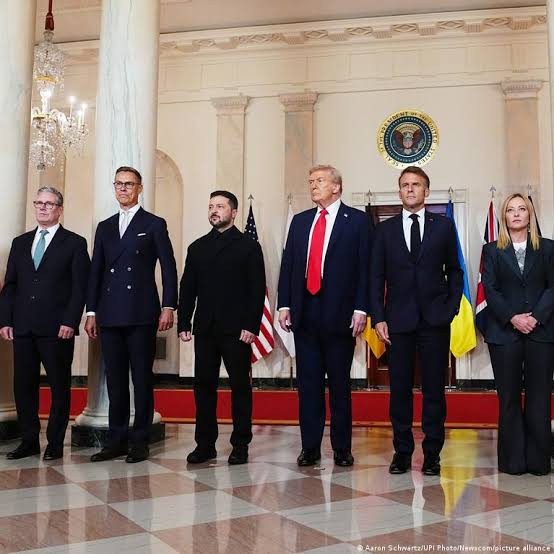
European leaders are preparing for an emergency summit in Washington with Ukrainian leadership, placing sovereignty, territorial integrity and the future of European security at the center of an increasingly urgent diplomatic effort. Announced on August 17, 2026, the meeting reflects a growing recognition that any lasting settlement involving Ukraine will have consequences far beyond its borders, shaping the security architecture of Europe for years to come.
Washington Meeting Puts Ukraine at the Heart of Europe’s Security Debate
The planned Washington summit comes at a moment when European governments are facing difficult questions about how to protect their borders, support Ukraine and establish a durable framework for peace. Rather than treating the war as an isolated regional conflict, European officials increasingly view Ukraine’s security as closely connected to the safety of neighboring states and the credibility of wider European defense arrangements.
The central concern is sovereignty. For Ukraine, sovereignty means the ability to determine its own political future, defend its internationally recognized territory and negotiate without being forced to surrender fundamental national interests. For European governments, the issue carries an additional dimension because any precedent involving the forced alteration of borders could affect perceptions of security across the continent.
We should therefore view the Washington gathering as more than another diplomatic meeting. The discussions are expected to address the principles that could shape a future settlement, including security guarantees, territorial integrity, military preparedness and the responsibilities of European states in protecting the continent’s eastern flank.
Why Eastern European Borders Matter Beyond Ukraine
The security debate reaches well beyond Kyiv. Eastern European countries have spent years strengthening air defenses, military infrastructure and border security in response to the wider conflict. European institutions have also identified repeated incidents involving airspace violations, drones and hybrid threats as serious challenges to the security of member states.
At its June 2026 meeting, the European Council stressed the need to strengthen protection of European land, air and maritime borders and highlighted threats affecting the eastern flank. European leaders also called for stronger defenses against drones, better early warning capabilities and greater resilience against attacks on critical infrastructure. These priorities provide important context for the Washington summit.
The European Council has increasingly linked support for Ukraine with broader European defense planning. That connection matters because the outcome of the conflict could influence military spending, defense production, border protection and strategic planning across the European Union for many years.
Ukraine Seeks Long Term Security Rather Than a Temporary Pause
For Ukrainian leadership, the challenge is not simply reaching an agreement that stops fighting for a period of time. The deeper question is whether a future peace can prevent another major conflict and provide credible protection against renewed aggression.
That makes security guarantees one of the most sensitive subjects surrounding the Washington discussions. A guarantee has value only if the parties involved believe it can be implemented when a crisis occurs. Ukraine and its European partners therefore face the difficult task of determining what practical commitments could provide meaningful deterrence while remaining acceptable to the United States and European governments.
The debate also touches on military assistance. Ukraine has gained extensive battlefield experience during the war, particularly in the use of drones, electronic systems and rapidly developing defense technologies. European governments have increasingly looked to Ukraine not only as a country receiving military support, but also as a source of practical knowledge for improving European defense capabilities.
Europe’s Own Defense Capacity Is Becoming a Central Issue
The Washington summit also arrives as Europe reassesses how much responsibility it should carry for its own security. European governments have increased defense spending and are discussing ways to expand weapons production, improve military mobility and develop joint capabilities.
Those efforts are closely connected to the future of the transatlantic relationship. NATO remains central to collective defense for its members, but European capitals have also been debating how to ensure that the continent can respond effectively when American priorities or resources are focused elsewhere.
The European Council has called for faster development of capabilities including air defense, counter drone systems, early warning technology and space based assets. It has also highlighted the need for a stronger European defense industrial base capable of producing equipment at greater speed and scale.
The NATO relationship with Ukraine has likewise expanded over decades, covering defense cooperation, military interoperability and security sector reform. This long standing relationship means that Ukraine’s future security arrangements will remain closely connected to broader European and transatlantic defense planning.
Diplomacy Will Have to Balance Security With the Search for Peace
The leaders gathering in Washington face an unusually difficult diplomatic balance. European governments want a sustainable peace, but they also want to avoid an agreement that leaves Ukraine vulnerable to another attack. Ukraine wants negotiations that protect its sovereignty, while the United States has its own strategic interests and calculations regarding the conflict.
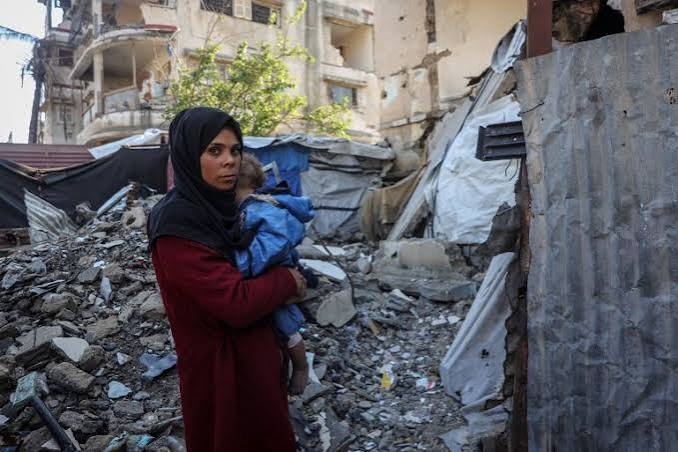
That tension makes the language surrounding borders particularly significant. Any discussion of territorial arrangements can carry enormous consequences for Ukrainians who have lost homes, communities and family members during the war. Behind diplomatic terminology such as territorial integrity are millions of personal stories involving displacement, destroyed neighborhoods and uncertainty about whether people will ever return home.
For European leaders, the humanitarian dimension cannot easily be separated from strategic calculations. A settlement that fails to provide credible security could leave civilians exposed to renewed instability. At the same time, prolonged conflict carries its own human and economic costs, placing pressure on governments and societies across Europe.
What Could Come From the Washington Summit
The immediate outcome may not be a complete peace agreement. More realistically, the meeting could establish political principles and negotiating priorities that shape subsequent discussions.
- European and Ukrainian leaders could seek stronger commitments to Ukraine’s sovereignty and territorial integrity.
- Participants could discuss practical security guarantees designed to deter renewed aggression.
- European governments could coordinate their positions on defense spending, weapons production and support for Ukraine.
- The United States and European partners could examine how future diplomatic negotiations should be structured.
- Leaders could seek greater coordination between European defense initiatives and NATO planning.
The effectiveness of these measures will depend on whether governments can translate political statements into concrete commitments. Security arrangements require resources, military capabilities, political unity and a willingness to maintain those commitments beyond the immediate news cycle.
A Defining Test for European Unity
Perhaps the most consequential element of the Washington meeting is the question of European unity. Governments across the continent do not always agree on the pace of military spending, the shape of negotiations or the degree of long term involvement in Ukraine. Yet the war has created a shared strategic concern that crosses national borders.
For countries closer to Russia, the question is particularly direct. Their governments have watched military activity, airspace incidents and hybrid threats unfold nearby. For countries farther west, the challenge is how to contribute to European security while managing domestic political pressures and competing economic priorities.
A united position would give European leaders greater influence in negotiations. Fragmentation, by contrast, could weaken their ability to shape the terms of any settlement and create uncertainty about the continent’s willingness to defend its own security interests.
The Stakes Extend Beyond the Negotiating Room
The significance of the Washington summit will ultimately be measured not only by what leaders say during their meetings, but by what happens afterward. If the participants can establish a credible framework for Ukraine’s security while strengthening European defense cooperation, the gathering could become an important step toward a more stable European security system.
If disagreements dominate, however, the meeting could expose the difficult choices that still separate European capitals and their partners. The pressure will remain especially intense because any settlement involving Ukraine will need to address both the immediate desire for peace and the longer term requirement for security.
As European leaders head toward Washington, the underlying question is therefore larger than the future of one country. It concerns whether international borders can remain protected by political commitments, whether aggression can be deterred without perpetual war and whether Europe can build enough collective strength to safeguard its eastern frontier.
For Ukrainians, the stakes are deeply personal. For European governments, they are strategic. And for the wider international community, the outcome could influence how sovereignty and territorial integrity are treated in future conflicts. The Washington summit offers an opportunity to address those questions directly, but turning diplomatic resolve into lasting security will require sustained cooperation long after the meeting ends.