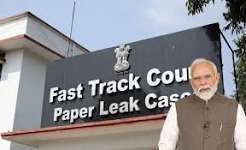
Authorities have announced strict legislative action and dedicated fast track courts to tackle exam paper leaks and protect student credentials nationwide. The move arrives at a moment when trust in testing systems has become as fragile as a thin sheet of carbon copy paper in a damp room, and officials are signaling that the era of slow responses may be ending.
A harder line on leaks
The new measures are aimed at one of the most damaging failures in public education: the theft, sharing, or sale of examination papers before a test begins. When a paper leaks, the harm spreads far beyond the classroom. Students who studied honestly feel betrayed, parents lose confidence, teachers face suspicion, and the value of credentials begins to erode in public view.
By pairing stronger laws with special courts, the government is trying to send a clear message that exam fraud will no longer be treated as a routine administrative problem. Instead, it is being framed as a serious breach of public trust that can damage merit based selection, university admissions, and future employment prospects for thousands of young people.
Why speed matters
Fast track courts matter because paper leak cases often lose momentum in the ordinary legal system. Evidence can go stale, witnesses can become reluctant, and the academic calendar moves on while the case drags through repeated hearings. That delay leaves students trapped in uncertainty, sometimes retaking exams, sometimes waiting months for results, and often losing confidence in the fairness of the system.
A dedicated court process can reduce that damage if it is properly funded and staffed. The idea is simple: investigate quickly, charge quickly, and decide quickly. In a case involving a leaked paper, time is not just money. It is fairness, and for many students it is the difference between a normal academic year and one defined by chaos.
What students face
For students, paper leaks can feel like a quiet theft committed in broad daylight. A candidate who wakes before sunrise, revises notes for hours, and sits down in a silent exam hall deserves a fair contest. When the paper has already circulated in advance, that student is forced into a contest that was never equal.
The emotional damage is not limited to disappointment. Many students report anxiety, anger, and exhaustion after leak scandals because they begin to question whether hard work still matters. Families feel that same strain, especially in households where exam results are tied closely to scholarships, jobs, or financial mobility.
Protecting credentials
Officials say the broader goal is to safeguard student credentials nationwide. That phrase may sound technical, but the meaning is deeply human. A certificate or transcript should represent real effort, not access to a hidden network of brokers, middlemen, or corrupt insiders. Once that trust is broken, every honest student pays part of the price.
The new legislative push appears designed to protect the credibility of examination boards, universities, and public recruitment systems. In practice, that means stricter penalties for those who leak papers, leak answers, circulate stolen content, or profit from exam fraud. It also means more pressure on institutions to improve security before the paper ever reaches a classroom.
How the system can improve
Strong laws alone will not solve the problem if the chain of custody remains weak. Security has to begin with paper preparation and continue through printing, storage, transport, and distribution. Every extra hand that touches a live exam paper creates a new risk point, and every weak lock or untracked file becomes an invitation to abuse.
That is why reform should not stop at punishment. Authorities also need digital tracking, sealed transport protocols, staff vetting, and rapid incident reporting systems. A leak prevention strategy that only reacts after damage is done is too late for the students who have already prepared in good faith.
The public stakes
Education is one of the few public systems that almost every family depends on, regardless of income or background. When examination integrity fails, the damage is spread widely and unfairly. Wealthier families can sometimes absorb the disruption by hiring tutors or shifting schools, while poorer families are left with fewer options and greater stress.
That inequality is one reason the new courts matter. If they can resolve cases quickly and visibly, they may help restore confidence that the system still rewards effort. They may also deter future leaks by making the consequences immediate rather than abstract. For many communities, that would be a welcome change after years of hearing promises without results.
Need for oversight
Still, the success of this policy will depend on implementation. Fast track courts can become symbolic if they are overloaded, under resourced, or unable to secure convictions in complicated cases. The same is true for new laws if enforcement remains uneven across regions or if powerful offenders find ways around the rules.
That is why public oversight will be essential. Parents, teachers, students, and civil society groups should watch closely to see whether cases are actually being filed, whether hearings are moving quickly, and whether institutions are improving prevention rather than merely reacting after each scandal. A credible system is built through repeated proof, not press statements.
Why this matters now
The timing of the announcement suggests a recognition that confidence in exams cannot be repaired later, after another generation has been shaken by scandal. Students prepare for years for a single paper. They deserve a process that is sealed, fair, and worthy of that effort. When governments act decisively to stop leaks, they are not only punishing wrongdoing. They are defending the idea that merit still has meaning.
For a nation that depends on education as a ladder of social mobility, that is no small task. The new fast track courts and tougher laws may not solve every breach overnight, but they offer a clearer promise than silence ever could: that academic honesty will be protected, and that those who try to profit from stolen papers will face consequences quickly.