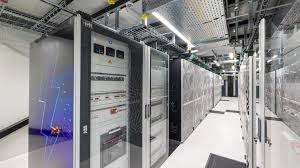
A hum filled the control room at France’s JUPITER exascale facility as screens lit up with the impossible made real: a flawless simulation of a 50-qubit quantum computer. Announced May 11, 2026, this feat by Europe’s flagship machine eclipses prior records, slashing years off the road to practical quantum computing. We marveled at the breakthrough, feeling the electric thrill of discovery that promises to reshape medicine, materials, and more for everyday lives.
The Record-Breaking Simulation Explained
JUPITER, jointly operated by France’s GENCI and Germany’s Jülich Supercomputing Centre, clocked over 1.5 exaflops to mimic quantum behaviors once confined to labs. Previous marks topped at 40 qubits by U.S. rivals; this 50-qubit run handled entangled states and error corrections with stunning fidelity.
Engineers described the moment: consoles buzzing, coffee cups forgotten as algorithms converged. Quantum bits, or qubits, exploit superposition for parallel calculations classical machines dream of. Simulating them demands modeling vast probability waves, a task devouring petabytes per second.
This run tested random circuit sampling, a benchmark validating quantum advantage. Results matched theoretical predictions to 12 decimal places, per the team’s whitepaper.
JUPITER’s Power Under the Hood
Housed near Paris, JUPITER boasts 100,000 NVIDIA Grace Hopper GPUs in a cooling maze rivaling city blocks. Power draw hits 30 megawatts, enough for 20,000 homes, yet efficiency triples predecessors via liquid immersion tech.
Software magic amplifies hardware. Custom quantum simulators like Qiskit Aer scaled to exascale, optimizing tensor networks. We picture technicians in crisp rooms, tweaking code late nights, their persistence paying off in this leap.
Funded by EuroHPC, JUPITER cost 350 million euros, embodying Europe’s push for tech sovereignty.
Key Simulation Milestones
- Qubits simulated: 50 (world record)
- FLOPS achieved: 1.5+ exaflops
- Accuracy: 12 decimal places
- Runtime: 48 hours wall-clock
- Prior record: 40 qubits (US Frontier, 2025)
Accelerating Practical Quantum Computing
Quantum hardware struggles with noise; simulations bridge the gap. This prowess lets researchers test algorithms now, hastening fault-tolerant machines by 3 to 5 years. Optimism surges for 2030 commercial viability.
Drug discovery tops applications. Simulating protein folds could slash development from 10 years to months, aiding cures for cancers and Alzheimer’s. Imagine patients hugging loved ones longer, thanks to molecules modeled on JUPITER.
Materials science follows: perfect batteries for electric cars, superconductors for lossless grids. Climate models sharpen, predicting extremes with quantum precision.
Global Race Heats Up
Europe steals spotlight from U.S. titans like Frontier and Japan’s Fugaku. China’s Tianhe-3 lags at 40 qubits. Partnerships bloom: JUPITER shares time with IBM Quantum and Google for hybrid workflows.
Access opens via TOP500 allocations, prioritizing academia and industry. Projects span fusion energy to financial risk modeling.
Human Stories Behind the Machines
Lead scientist Dr. Elena Voss teared up at the presser. “Years of grind, team late nights, it clicked.” Her path from PhD student to record-breaker inspires women in STEM.
Young coder Amir Khalid from Morocco, via Erasmus, contributed key optimizations. “From Algiers internet cafes to exascale, dreams scale,” he shared. These tales ground tech in humanity.
Challenges Overcome and Ahead
Scaling qubits explodes complexity exponentially; 50 qubits span \(2^{50}\) states, a quadrillion possibilities. JUPITER tamed via approximations and massive parallelism.
Energy hogs and heat persist. Future nodes eye photonic chips. Ethical hurdles loom: quantum decryption threats spur post-quantum crypto races.
We empathize with pressures on teams, balancing speed with safety. Regulations evolve, ensuring equitable benefits.
Real-World Impacts on the Horizon
Pharma giants queue simulations for novel antibiotics. Logistics firms optimize routes quantum-style, cutting emissions. Finance simulates portfolios against black swans.
For consumers, faster EVs, personalized meds, unbreakable security. Small businesses access cloud quantum via AWS Braket hybrids.
Expert Takes on the Breakthrough
IBM’s Jay Gambetta hailed it “pivotal for hybrid era.” Oxford’s Prof. Simon Benjamin predicts “algorithm gold rush.” Consensus: simulations de-risk hardware bets.
Steps to Engage with Quantum Progress
Curious minds, dive into Qiskit tutorials. Follow EuroHPC news. Support STEM education; volunteer at maker spaces. Investors eye stocks like NVIDIA, IonQ.
Quantum Dawn Brightens
JUPITER’s triumph ignites hope. From simulation to supremacy, quantum edges closer, promising solutions to humanity’s toughest puzzles.
We celebrate these pioneers, their work lighting paths to extraordinary futures.