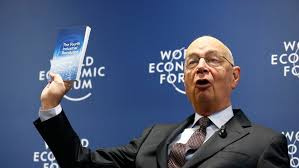
Professor Klaus Schwab, founder of the World Economic Forum, delivered a pointed message on May 29, 2026 that shook an audience of academics, policymakers, and students: higher education as it exists is structurally unequipped to meet the speed and scale of change driven by artificial intelligence, quantum computing, and mounting economic disruption. His lecture was part diagnosis, part call to action, and part moral appeal to preserve education as a public good while making it fit for an uncertain future.
What Professor Schwab said and why it matters
Schwab framed his argument around a simple but uncomfortable observation. Universities were built in an era when knowledge accumulated relatively slowly and degrees signaled durable career readiness. That compact no longer holds. He warned that curricula, tenure structures, assessment models, and institutional incentives have not kept pace with technologies that rewrite which skills matter week by week rather than decade by decade. The implication is stark. If higher education does not change, whole cohorts of graduates may emerge credentialed but poorly prepared for actual labor markets.
The lecture resonated because it stitched policy critique to ethical urgency. Schwab described classrooms where students still take passive notes in courses with century old syllabi while the algorithms that will shape markets and public life evolve at breakneck speed. He urged universities to preserve humanistic learning while reinventing methods for continuous reskilling, interdisciplinary study, and public accountability.
Where institutions are falling short
There are concrete structural failures that Schwab highlighted. First, rigid degree timelines prevent lifelong learning. Most universities operate on a model that treats education as a front loaded investment rather than an ongoing relationship with learners. Second, disciplinary silos blunt the cross functional fluency required to apply AI and quantum tools ethically and effectively. Third, incentive systems reward scholarship that advances academic prestige more than teaching that prepares students for fast changing workplaces. Finally, governance and funding patterns often make radical curricular change slow and costly.
Those shortcomings are not abstract. Employers report skill gaps in areas like data literacy, model interpretation, and systems thinking. Students voice anxiety about debt and employability. Policymakers face rising expectations that public investment in higher learning must produce social and economic returns. Schwab argued that these pressures are converging to demand a new social contract for higher education.
What meaningful reform could look like
Schwab did not offer a blue print for reform so much as a set of directional principles intended to guide universities through difficult trade offs. Core elements include
- Modular credentials that allow learners to stack short course achievements into recognized qualifications, enabling continual skill renewal.
- Interdisciplinary degree designs that combine technical fluency with ethical reasoning, communication, and civic literacy.
- Stronger partnerships between universities and industry that preserve academic independence while ensuring curricula respond to real world needs.
- New faculty incentives and training that reward pedagogical innovation and lifelong mentorship as much as publications.
- Public funding mechanisms that support accessibility and experimentation without turning institutions into vocational factories.
These reforms require governance imagination and sustained investment. They also require cultural change inside universities so faculty and administrators see themselves as stewards of learning pathways rather than guardians of fixed degrees.
Voices from campuses and classrooms
I spoke with a dean at a major research university who said Schwab had captured an uneasy consensus. She described corridors where tenured faculty pride themselves on deep disciplinary advances while younger colleagues push for courses on algorithmic risk, data governance, and teamwork with engineers. A doctoral student in philosophy relayed how seminars on ethics now brim with students from computer science and business schools seeking frameworks to guide technical work toward socially desirable outcomes. Those encounters underline a painful gap between aspiration and structure.
Students themselves expressed urgency mixed with fatigue. One recent graduate recalled the sensory contrast between the electric hum of an AI lab and the dusty weight of a lecture hall built a century earlier. The graduate said she wanted frameworks to translate coding experience into public policy conversations, not only resumes. That sentiment is telling. Learners want agency and applicability, not merely credentials.
Risks of inaction and equity concerns
Schwab warned that if reform stalls the effects will deepen social divides. Those with access to private reskilling, networks, and wealth will navigate the transition more easily while already marginalized communities fall further behind. The danger is a bifurcated education system where elite institutions become accelerators for privilege and underresourced colleges are left to teach obsolete skills. That would exacerbate inequality and undermine the democratic legitimacy of higher education.
Public finance choices matter. Governments can cushion transition costs through targeted subsidies for lifelong learning, portable credit frameworks, and incentives for collaborations between research institutions and community colleges. Without those policy levers the pace of change risks outstripping the capacity of ordinary citizens to adapt.
Obstacles to rapid change
Even with political will there are practical obstacles. Accreditation regimes are often slow moving and based on established degree models. Faculty unions and institutional governance can resist rapid curricular overhaul that threatens established roles. Endowment structures and donor expectations can tie resources to traditional programs. Schwab acknowledged these constraints and recommended incremental pilots that can be scaled, creating proof points that recalibrate stakeholder expectations.
International perspectives and comparative models
Schwab pointed to comparative experiments that offer useful lessons. Countries that have invested in national lifelong learning frameworks and credit portability show faster adaptation. Some universities in Europe and Asia have introduced microcredential systems, hybrid doctoral programs, and industry sponsored applied research units that shorten the pathway from discovery to practical use. Those models are not perfect but they demonstrate that alternative configurations are feasible and can be tailored to local labor markets.
For readers seeking authoritative policy frameworks the Organisation for Economic Co operation and Development publishes research on skills policies and tertiary education that can inform national strategies. The OECD site offers comparative data on participation, funding, and outcomes that help policymakers design responsive systems.
Practical actions universities can take now
There are immediate, actionable steps institutions can pursue while deeper reforms take shape. Universities can expand modular course offerings tied to recognized competencies. They can invest in teaching fellowships that train faculty in agile pedagogy and interdisciplinary instruction. Career services can move from episodic job fairs to lifelong career advising that maps out potential skill pathways over decades. Finally, institutions can run transparent pilot projects with industry and community partners so successes and failures are public goods that others can learn from.
What this means for students and families
For students and families the takeaway is clear but not deterministic. A degree still matters, but its value will increasingly depend on the adaptability and relevance of what is learned. Families should ask about institutions role in lifelong learning, the availability of modular upskilling, and how career services support continued advancement. Students should seek cross disciplinary exposure, opportunities to work on real world projects, and credentials that are portable beyond a single job or employer.
Professor Schwab closed his lecture with a moral note. The purpose of higher education is not only to prepare workers but to form citizens who can think critically, deliberate about values, and steward democratic institutions. That purpose, he argued, must be preserved even as universities remake their structures to meet technological upheaval. The challenge is to be both nimble and principled, to innovate without losing sight of the broader social mission that justifies public trust and investment in higher learning.
Readers interested in policy research and comparative data can consult the Organisation for Economic Co operation and Development at oecd.org for studies on skills and tertiary education reforms.