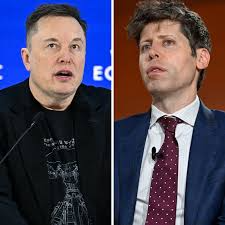
Jury selection has begun in the closely watched legal battle between Elon Musk and Sam Altman, setting the stage for a trial that could expose the internal power struggles behind OpenAI and shape the future debate over who should control advanced artificial intelligence. The case has drawn unusual attention because it is not just about money or contracts. It is also about influence, mission, governance, and the question of whether the most powerful AI systems should be steered by founders, investors, or public accountability.
A fight with consequences beyond court
We are watching a conflict that reaches far beyond two prominent tech executives. What happens in this courtroom may help define how the public understands the origins of OpenAI, how its leadership evolved, and whether its structure was built to serve a stated mission or to consolidate power. That makes this trial more than a private dispute. It is a rare legal window into the inner workings of one of the most consequential companies in the world.
For months, the dispute has fed speculation across Silicon Valley, legal circles, and policy forums. Supporters of Musk argue that he has raised legitimate concerns about the direction of the organization he helped create. Supporters of Altman say the lawsuit is an attempt to rewrite history after a split that became increasingly bitter as OpenAI grew in scale, visibility, and commercial importance. A jury will now be asked to sort through competing claims, competing memories, and years of intense public and private friction.
What the trial may reveal
The courtroom process is expected to bring internal documents, emails, board decisions, and testimony into public view. That could shed light on how OpenAI moved from a research oriented nonprofit style project into a far more complex organization balancing innovation, funding, safety claims, and market pressure. For observers of the artificial intelligence industry, that alone makes the case significant.
The legal fight also raises broader questions about governance in the AI sector. Who gets to decide what counts as responsible development? How should power be distributed when an organization’s technology becomes central to global business, education, creative work, and national policy? Those questions have hovered around AI for years. This trial may make them impossible to ignore.
Why the jury matters
Jury selection is often treated as a procedural step, but in a case like this it matters because the facts are complicated and the personalities are larger than life. Jurors will need to listen carefully to arguments about founding intentions, later decisions, and alleged betrayals without being swept away by the reputations of the men involved. That is no small task when both names carry enormous weight in the public imagination.
The process will also test how ordinary citizens view the tech industry’s claims about mission driven development. Many people know AI mostly through products, headlines, or workplace changes. Few have seen the legal and structural conflicts that shape the tools behind those products. This trial could make those hidden dynamics much more visible.
The origins of the dispute
At the center of the case is a familiar Silicon Valley story: a company founded around bold ideals that later became far more commercially valuable than anyone expected. Musk and Altman were once aligned in their public ambition to build artificial intelligence with safeguards and broad benefit in mind. Over time, however, their paths diverged sharply, and the question of who remained faithful to the original mission became a source of deep conflict.
That conflict has now been translated into legal language, where intent, duty, governance, and control can be tested against the record. Even so, the emotional undercurrent is difficult to miss. This is not simply a dispute over business terms. It is also a clash over identity, legacy, and who gets credit for shaping one of the defining technologies of the era.
The stakes are heightened by the fact that AI development has become a geopolitical and economic issue. Governments are trying to regulate it. Companies are racing to deploy it. Workers are worrying about its impact on jobs. In that environment, disputes over who controls a leading AI lab are not minor internal matters. They are part of the larger struggle over the direction of the technology itself.
Public interest is growing
For the public, the case offers a rare chance to see behind the polished announcements and product launches that usually define the AI conversation. The testimony may reveal how decisions were made, what tensions existed inside the company, and how leadership interpreted the responsibilities that came with rapid growth. That transparency, even if partial, could shape the public conversation in important ways.
Legal and policy experts will also be watching for clues about how courts may treat disputes involving mission driven tech organizations. If this case clarifies the obligations of founders, boards, and executives in a company built around public benefit claims, the ripple effects could reach far beyond OpenAI. Future AI ventures may be forced to think more carefully about how they structure power from the beginning.
There is also a human story inside the headlines. Founders who begin with shared conviction often discover that success changes the terms of friendship, trust, and control. That pattern is not unique to technology, but in this sector the consequences can be unusually large. A disagreement that might once have stayed private now unfolds in a domain that could influence medicine, education, finance, art, and defense.
What to watch next
As testimony begins and evidence is introduced, several issues are likely to draw the most attention. The first is whether the jury sees the case as a principled fight over mission or a strategic battle for leverage. The second is how clearly the internal history can be reconstructed from documents and witnesses. The third is whether the broader theme of AI control becomes more important than the personal conflict itself.
There is also a larger question hanging over the proceedings: can any single company or small group of leaders fairly claim stewardship over a technology with such broad societal impact? That question has no easy answer, but the trial may push it into the center of public discussion in a way that press releases and product announcements never could.
For now, the opening of jury selection marks the beginning of a trial that could become one of the most closely followed technology legal battles of the decade. It brings together wealth, ego, ambition, and the future of artificial intelligence in a single courtroom narrative. However the case ends, it is already revealing something important: the fight over AI is no longer only about code. It is also about power, trust, and who gets to define the rules.