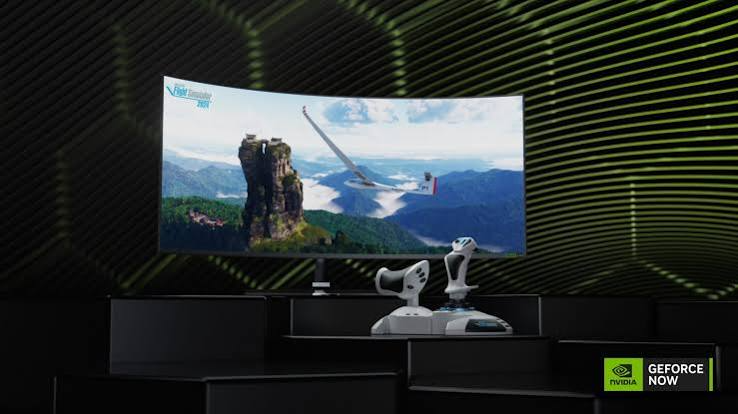
NVIDIA is expanding the reach of GeForce NOW with a native Linux platform and cloud optimization updates designed to improve access to high quality PC gaming across international markets. Announced on August 17, 2026, the changes reflect a broader shift in how gamers access demanding titles, allowing more players to rely on remote computing power rather than expensive local gaming hardware.
GeForce NOW Pushes Cloud Gaming Further Across Global Markets
Cloud gaming has always promised a simple idea: the game runs on powerful remote servers while the player receives the resulting video and sends controls back through an internet connection. The practical experience, however, depends heavily on infrastructure, network quality and software support.
NVIDIA’s latest GeForce NOW developments focus on those underlying challenges. By expanding its platform support and optimizing its cloud infrastructure, the company is positioning the service for players who may have capable internet connections but lack a powerful gaming PC. That distinction matters in markets where high end graphics cards and gaming desktops can be significantly more expensive than they are in larger technology markets.
For a player sitting at home with a modest computer, the experience can be striking. Instead of hearing a powerful graphics card’s cooling fans accelerate during a demanding game, the local device may simply stream the gameplay while NVIDIA’s remote systems handle the heavy processing. The result depends on the network, but the concept removes one of the traditional barriers to PC gaming.
Why Native Linux Support Matters
Linux has developed a strong community among developers, technical users and gaming enthusiasts, but mainstream commercial software support has historically varied across distributions and applications. Native platform support can therefore make a meaningful difference for users who prefer Linux but do not want to maintain a separate operating system simply to access cloud gaming services.
The arrival of a native Linux platform for GeForce NOW broadens the range of devices and operating environments that can participate in NVIDIA’s cloud gaming ecosystem. It also signals recognition that the future gaming audience is not limited to conventional Windows based gaming PCs.
Linux users often value control over their computing environment, including software configuration, privacy settings and system customization. Giving these users a more direct route into cloud gaming could help make GeForce NOW more appealing to an audience that has historically relied on workarounds or alternative compatibility solutions.
Accessibility Goes Beyond Operating Systems
Platform availability is only one part of accessibility. A cloud gaming service also needs to work reliably across different internet conditions, hardware configurations and geographical locations. This is where cloud infrastructure becomes particularly important.
A gamer may own an inexpensive laptop that would struggle to render a modern game locally, yet that same machine could potentially stream a demanding title when the processing takes place remotely. This creates a different definition of gaming hardware. The most important local component may increasingly be the quality of the network connection rather than the strength of the graphics processor.
Cloud Optimization Can Affect the Gaming Experience
Cloud gaming is extremely sensitive to latency. When a player moves a mouse, presses a controller button or uses a keyboard command, the action has to travel to a remote server, be processed and return as an updated image. Even small delays can be noticeable in competitive games.
Cloud optimization therefore involves much more than increasing server capacity. Providers must manage data centers, network routes, video encoding, server workloads and the distribution of computing resources across regions.
NVIDIA’s infrastructure updates are intended to improve that overall process. Better optimization can help the service deliver a more consistent experience as demand grows, particularly when large numbers of users connect during evenings, weekends or major game launches.
For players, the technical work may be invisible when it succeeds. A stable stream, responsive controls and fewer interruptions are the practical signs that the underlying infrastructure is working effectively.
Global Infrastructure Is Critical to International Gaming Access
Cloud gaming becomes more difficult as the physical distance between a player and a data center increases. A powerful server located thousands of kilometers away may technically be capable of running a game at high settings, but network latency can still affect the experience.
This is why geographically distributed cloud infrastructure matters. Placing computing resources closer to users can reduce network travel time and improve responsiveness. Regional capacity can also help prevent a popular game or major release from creating excessive demand on a limited number of servers.
For international users, infrastructure expansion can therefore be just as important as software development. A new feature available globally has limited value if the local network path cannot provide a stable connection. Cloud gaming companies must balance these two challenges by improving both platform software and the physical systems supporting it.
What This Means for Players With Older Computers
One of the strongest arguments for GeForce NOW is that it can extend the useful life of existing hardware. A computer does not necessarily need a current generation graphics card if the demanding rendering workload is performed remotely.
This can be particularly relevant for students, families and casual players who cannot justify spending large amounts of money on a new gaming computer. Instead of replacing an entire system every few years, users can potentially continue using an older device for everyday computing while accessing newer games through the cloud.
There are practical limitations. A reliable broadband connection remains essential, and users with restrictive data caps may need to monitor how much bandwidth cloud gaming consumes. Image quality can also vary with network conditions. These factors mean cloud gaming is not a universal replacement for local hardware, but it provides an alternative that can be attractive to a growing number of players.
Game Developers Also Have a Stake in Cloud Gaming
The expansion of cloud gaming infrastructure can affect the wider gaming industry. Developers benefit when their titles can reach players who would otherwise be unable to run them locally.
A demanding game can require substantial investment in graphics hardware, memory and processing power. Cloud services reduce some of those hardware barriers by moving the computational workload to centralized systems.
That could broaden the potential audience for graphically intensive games. A player may be interested in a major release but lack the hardware necessary to install it locally. If the title is supported by a cloud gaming service, the purchasing decision becomes less dependent on the specifications of the user’s personal computer.
Competition Is Driving Cloud Gaming Infrastructure Forward
NVIDIA is operating in a competitive cloud gaming market that includes technology companies, gaming platforms and subscription services. Each provider is attempting to solve the same basic problem: how to deliver powerful gaming experiences through an internet connection without making users feel that the technology is getting in the way.
Competition is likely to push providers toward better latency, broader regional coverage, more supported devices and improved streaming quality. Users ultimately benefit when companies invest in infrastructure rather than treating cloud gaming as merely a software feature.
NVIDIA’s position is strengthened by its long standing role in graphics processing. The company’s expertise in GPUs and artificial intelligence hardware gives it a direct connection between the technology used inside data centers and the gaming experiences delivered to consumers.
Security, Privacy and Reliability Still Matter
As more gaming activity moves into cloud environments, reliability and account security become increasingly important. Players are trusting service providers not only with game sessions but also with account information, subscriptions and purchasing data.
Cloud infrastructure must therefore be protected against outages, cyberattacks and unexpected demand. A major service interruption can affect thousands of players simultaneously, unlike a problem limited to one person’s local computer.
For consumers, the most useful approach is straightforward: maintain secure account credentials, enable available security protections and understand the requirements of the service before relying on it as the primary gaming platform.
What Gamers Should Expect From the Expansion
The latest GeForce NOW developments point toward a cloud gaming model that is increasingly focused on accessibility across devices and regions. Several developments will be particularly relevant to users:
- Broader Linux support for gamers using native Linux environments.
- Cloud infrastructure improvements designed to support international users.
- Greater dependence on regional computing capacity and network optimization.
- More opportunities to play demanding PC games without high end local hardware.
- Continued competition around streaming quality, latency and platform availability.
The significance of these changes will ultimately be determined by the experience users receive in their own locations. A feature that performs well in one market may face different network conditions in another, which makes continued regional infrastructure investment essential.
The Bigger Shift From Gaming Hardware to Gaming Access
GeForce NOW’s expansion illustrates a broader change in the way we think about gaming hardware. For decades, the central question was whether a player’s computer was powerful enough to run a game. Cloud gaming introduces another question: whether the player’s internet connection is good enough to access the computing power elsewhere.
That change has major implications for affordability and accessibility. Instead of requiring every player to own a powerful graphics card, cloud services can concentrate expensive hardware in professional data centers and distribute access to it through software.
The model will not eliminate local gaming computers. Enthusiasts will continue to value high refresh rate displays, powerful graphics cards, customization and offline access. But cloud gaming can serve another group of users who prioritize convenience, flexibility and access over ownership of the most powerful hardware.
NVIDIA’s Global Push Could Shape the Next Phase of Cloud Gaming
The rollout of a native Linux platform alongside cloud optimization updates gives NVIDIA an opportunity to make GeForce NOW more accessible to users who have traditionally sat outside the mainstream PC gaming ecosystem. The technical achievement is not simply about allowing a new operating system to run games. It is about building a service capable of delivering demanding interactive experiences across different hardware, networks and geographic regions.
For players, the promise is relatively simple. A modest computer should not necessarily prevent someone from experiencing a modern PC game. If the infrastructure is close enough, the connection is stable enough and the service is optimized effectively, much of the computing power can exist somewhere else.
That vision still faces challenges involving latency, bandwidth, server availability, pricing and game compatibility. Yet the continued expansion of cloud infrastructure suggests that gaming is becoming less tightly tied to the physical specifications of an individual machine.
As NVIDIA expands GeForce NOW globally, the real test will be measured in ordinary moments: a player launching a demanding game on an older laptop, a Linux user accessing a title without complicated workarounds, or a gamer in a distant market receiving a smooth stream from a nearby cloud region. When those experiences become reliable and routine, cloud gaming will have moved another step closer to becoming a genuine alternative to traditional PC hardware ownership.