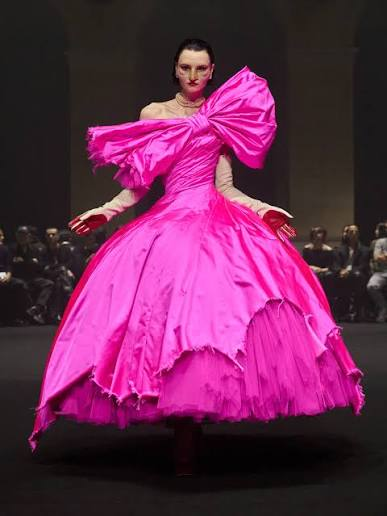
Paris Fashion Week is giving the global fashion industry a clear signal for the next chapter of luxury design: environmental responsibility and digital creativity are increasingly being developed side by side. As the Spring Summer 2027 collections arrive in Paris, major fashion houses are presenting materials derived from biological sources, recycled textiles and alternatives to conventional animal based materials while digital presentation and wardrobe experiences become more closely connected to physical clothing. The result is a fashion conversation that reaches beyond the runway and into how clothes are produced, experienced, stored and eventually reused.
Paris Fashion Week Places Sustainability Closer to the Main Stage
The official Paris Fashion Week calendar runs from September 28 through October 6, 2026, with dozens of fashion houses presenting their Spring Summer 2027 collections. The schedule includes established names such as Dior, Balenciaga, Saint Laurent, Stella McCartney, Balmain, Courrèges and Maison Margiela. The Fédération de la Haute Couture et de la Mode continues to coordinate the official calendar while supporting both physical and digital forms of fashion presentation.
This season’s environmental conversation is particularly visible through Stella McCartney, whose work has long placed material choices at the center of luxury fashion. Her September 30 show used ocean conservation as a central theme and presented clothing made without wool. The collection included recycled and organic fabrics as well as newer material approaches, including Brewed Protein developed with Japanese biotechnology company Spiber.
For viewers sitting beside the runway or watching from another country, the difference is striking. Environmental messaging is no longer limited to a small sustainability section hidden inside a brand report. It can now be part of the collection itself, visible in the fabric, silhouette, color and story presented to the public.
Bio Based Textiles Move From Experiment to Fashion Statement
One of the most significant developments in sustainable fashion is the growing range of materials designed to reduce reliance on conventional resources. Designers and material companies are exploring fibers and alternatives made from agricultural byproducts, fungi, algae, plant sources and biotechnology processes.
Stella McCartney’s Paris collection offered a particularly visible example. The designer has worked with Spiber on Brewed Protein, a material developed through biotechnology that can be used as an alternative to conventional animal derived fibers. The collection also featured an algae based black pigment, showing that sustainability can extend beyond the main textile itself into the coloring process.
These developments matter because luxury fashion has traditionally depended on materials whose production can carry significant environmental costs. Leather, wool, cashmere and synthetic fibers each have different environmental considerations. Replacing one material with another does not automatically solve every problem, but a wider material portfolio gives designers more options when evaluating durability, sourcing, production and end of life use.
Why Material Innovation Matters to Consumers
For shoppers, the conversation around sustainable textiles is becoming more practical. A consumer may want a garment that looks luxurious while also asking where its materials came from, how it was manufactured and whether it can remain useful for years.
That creates pressure on luxury houses to provide clearer information. A material described simply as sustainable tells a consumer very little. More useful information includes the source of the fiber, the manufacturing process, recycled content, expected durability, care requirements and what happens when the garment is no longer wanted.
Those details can help customers distinguish between genuine material innovation and broad environmental marketing language.
The Runway Itself Is Becoming More Environmentally Conscious
The sustainability discussion at Paris Fashion Week does not stop with the garments. The Fédération de la Haute Couture et de la Mode has been working on the environmental impact of fashion events themselves.
The organization introduced an eco design tool for fashion shows and presentations in 2019 and later developed a common framework for event scenography. The framework includes criteria covering areas such as transportation, venue use, waste management, reuse and materials. Its purpose is to encourage production teams to consider environmental effects throughout the creation of a fashion event.
This shift is easy to overlook because audiences primarily see the finished runway. Behind the scenes, however, a fashion show can require temporary structures, lighting, furniture, printed materials, transportation, catering and large amounts of construction material. A more responsible approach considers what happens to those resources after the final model leaves the runway.
The official framework is available through the FHCM news and sustainability resources, where the organization documents its continuing work on responsible fashion events.
Digital Fashion Is Becoming Part of the Physical Wardrobe
Paris Fashion Week is also showing how physical and digital fashion experiences are becoming increasingly connected. The official calendar has maintained a dual physical and digital dimension since the launch of Paris Fashion Week Online in 2020. Shows and presentations can reach audiences beyond those physically present in Paris, while digital platforms provide fashion houses with additional ways to communicate their collections.
The idea of a digital wardrobe takes that development a step further. Instead of thinking of clothing as an item that exists only inside a closet, consumers can increasingly encounter garments through digital representations, online collections, virtual styling environments and social platforms.
This does not mean that physical clothing is disappearing. Quite the opposite. The strongest digital fashion experiences often depend on physical garments as their starting point. A designer can present a jacket on a runway, show it through high resolution digital imagery, place it inside an online wardrobe and allow customers to explore how it might work with other pieces before making a purchase.
Hybrid Fashion Could Change How People Shop
A hybrid wardrobe can also make fashion discovery less dependent on traditional retail. A customer might first see a collection through a digital runway, explore individual pieces online, compare styling possibilities and then visit a store to experience the fabric and fit in person.
For luxury brands, that creates a more continuous relationship between the physical and digital sides of a collection. For consumers, it can reduce some of the uncertainty that comes with purchasing expensive clothing online.
Digital wardrobes may also support more responsible consumption if they are used to help customers make better decisions before purchasing. Better visualization can help a shopper understand whether a garment fits an existing wardrobe rather than becoming another rarely worn item.
Digital Does Not Automatically Mean Sustainable
There is also a reason for caution. Digital fashion requires data centers, devices, software development and energy. A digital presentation should not automatically be described as environmentally harmless simply because it replaces some physical activity.
The more useful question is whether a digital experience reduces unnecessary production, travel, sampling or returns while providing genuine value to consumers. Measuring that impact requires attention to the complete system rather than focusing on one visible technology.
Luxury Fashion Faces a More Demanding Consumer
The luxury market is experiencing a period in which consumers are asking difficult questions about price, quality and purpose. A high price alone no longer explains why a garment deserves a place in someone’s wardrobe. Buyers increasingly want evidence of exceptional materials, strong construction, responsible sourcing and lasting relevance.
That creates an unusual opportunity for luxury fashion. Premium clothing has traditionally been associated with longevity. If that promise is combined with better materials and more transparent production, a luxury garment can be positioned around durability rather than constant replacement.
The challenge is making those claims measurable. Consumers need more than attractive language. They need information that allows them to compare materials and production choices in a meaningful way.
Paris Remains a Laboratory for Fashion’s Next Direction
Paris Fashion Week has always been about more than individual garments. It is a meeting point for designers, manufacturers, buyers, journalists, artists, technology companies and consumers from around the world. That makes the runway an unusually powerful place to test ideas before they reach the wider market.
The Spring Summer 2027 season is showing that environmental design and digital presentation are no longer separate conversations. Material science can influence the fabric of a garment while digital technology changes how that garment is discovered. Event design can reduce waste while digital broadcasting expands access to collections beyond the physical audience in Paris.
We are also seeing a broader definition of what innovation means in fashion. It is not only about a dramatic silhouette or a new visual effect. It can mean finding a different source for a textile, developing a new production method, reducing waste at a runway show or giving a consumer more information before buying a garment.
What the New Fashion Model Could Mean for Shoppers
For consumers, the most meaningful result may be greater choice. A shopper looking for responsible fashion can increasingly ask specific questions about materials, sourcing, durability and production instead of relying on vague environmental claims.
When considering a garment, useful questions include whether the material is recycled or bio based, whether the product is designed to last, whether the company provides information about its supply chain and whether the garment can be repaired or reused. Digital wardrobe tools may eventually make some of those decisions easier by showing how a new purchase fits with clothing a person already owns.
That approach also brings fashion closer to the idea of buying fewer pieces with greater purpose. A beautifully made garment that remains useful for years can have a very different environmental profile from clothing purchased frequently and discarded quickly.
A New Definition of Luxury Is Taking Shape
The message emerging from Paris in 2026 is not that fashion must choose between beauty and environmental responsibility. Designers are testing whether the two can exist together without sacrificing creativity.
Bio based textiles, recycled materials, alternative fibers, responsible event production and digital wardrobe experiences are all pieces of a much larger transition. None of them provides a complete answer by itself, and every material or technology still needs to be judged on its full environmental and social impact.
What has changed is the visibility of the conversation. Sustainability is appearing directly on the runway, while digital tools are becoming part of how collections are presented and experienced. For luxury fashion, that combination could shape not only what people wear next season but also how they think about ownership, production and the lifetime of a garment.
Paris Fashion Week’s 2026 season therefore offers a glimpse of a fashion industry trying to reconcile tradition with a rapidly changing material and technological landscape. The most lasting innovation may not be a single futuristic fabric or digital feature. It may be the growing expectation that exceptional design should also answer difficult questions about where materials come from, how products are made and what happens after the spotlight moves on.