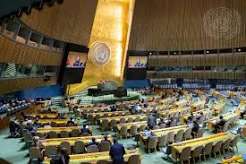
The United Nations General Assembly closed its High Level Meeting on HIV AIDS on June 25 with a new political declaration that sets bold targets to avert 3.2 million new infections and steer the world toward ending the epidemic by 2030. Delegates, activists and people living with HIV gathered in New York for a tense but ultimately hopeful week of negotiations that married science based goals with renewed political commitment and human stories that refuse to be ignored.
What the declaration commits to and why it matters
The new declaration lays out a comprehensive framework of targets for the remainder of the decade. It calls for scaled up prevention, universal access to testing and antiretroviral treatment, expanded use of pre exposure prophylaxis and voluntary male medical procedures where relevant, and strengthened services for adolescents and key populations. The centerpiece numerical goal is the prevention of 3.2 million new infections through targeted interventions and accelerated funding.
This matters because progress stalled in many regions after earlier gains. Global health experts say that without renewed political will and consistent financing the 2030 end point would slip out of reach. The declaration is an attempt to convert scientific advances and programmatic lessons into sustained policy action and resources that reach communities most affected by HIV.
Voices from the assembly
I sat in the visitor gallery as activist delegates recounted lives altered by HIV and by stigma. One community leader from southern Africa described the tactile relief of seeing a neighbor return to work after starting treatment. A youth delegate spoke about the daily arithmetic young people make between clinic visits and school fees. Those personal moments echoed into the formal text, producing commitments that are both practical and moral. Many delegates framed the declaration as an act of accountability toward people whose futures are at stake.
Targets, finance and the delivery gap
The declaration links new targets to a financing roadmap that urges donor countries and multilateral institutions to close persistent funding gaps. It asks high income nations to reaffirm existing pledges and for middle income and regional donors to increase contributions. The financial annex highlights the cost effectiveness of prevention versus long term treatment and stresses investments in primary health care systems that can integrate HIV services with maternal care, sexual and reproductive health, and mental health support.
Advocates welcomed the language but cautioned that declaratory commitments must quickly convert into predictable budgets. Civil society groups will demand transparent reporting on disbursements and measurable metrics for how funds reach frontline clinics and community led organizations that deliver peer based outreach and harm reduction services.
Key interventions prioritized
Several interventions take priority in the declaration because evidence shows they reduce infections and improve outcomes. These include immediate linkage to antiretroviral therapy for people who test positive, expanded availability of pre exposure prophylaxis for people at substantial risk, and integrated sexual and reproductive health services for adolescent girls and young women. The text also foregrounds the need to scale up diagnostics so that treatment can begin early and viral suppression can be achieved more consistently.
Programs targeting key populations are emphasized with an explicit call to remove punitive laws and policies that block access to prevention and treatment. The declaration urges countries to implement stigma reduction campaigns and to protect the human rights of sex workers, people who inject drugs, men who have sex with men, and transgender people.
Science, data and monitoring
To hold signatories to account the declaration requires strengthened data systems and routine monitoring of core indicators. That includes better age disaggregated data, more granular geographic tracking, and community led monitoring so that people who use services can report on quality and availability. The United Nations will publish regular progress reports and the declaration sets timelines for interim targets leading up to 2030.
Human stories that drive urgency
Numbers alone do not convey the daily reality of living with HIV or trying to prevent it. I met a nurse from a coastal clinic who described an early morning where three young women arrived together seeking family planning and HIV testing. She described the small acts that matter most a gentle conversation, a free test, a timely prescription which together alter life trajectories. Those scenes were a through line at the assembly and the declaration seeks to translate them into systems that make such encounters universal rather than exceptional.
Potential obstacles and political fault lines
The declaration was agreed amid visible tensions. Some countries resisted language on decriminalization and protective legal reforms, while others pressed for stronger commitments on intellectual property flexibilities to expand access to newer prevention tools. Negotiators also negotiated over precise financing formulas and the role of the private sector in service delivery.
These fault lines matter because legal and policy environments determine whether people will come forward for testing and care. Where punitive laws remain, marginalized communities will stay hidden and the epidemic will persist. The promise of the declaration depends on national level reforms that reduce barriers and expand access.
What success will look like on the ground
Success is measurable and deeply human. It will show up as sharply fewer new infections reported in high burden districts, higher rates of viral suppression among people on treatment, and clinics that offer youth friendly services without judgment. It will mean community health workers who are paid reliably, supply chains that do not run dry, and laws that protect rather than punish vulnerable people.
For families it will mean fewer funerals, for young people it will mean planning futures without the shadow of avoidable illness. The declaration sets the scaffolding for that future but the work must be carried out locally and funded sustainably.
Where to follow implementation and learn more
Readers who want reliable updates on global HIV policy and epidemiology can consult United Nations reporting and specialized agencies that track progress. The UN AIDS program provides consolidated data and policy briefs and will publish monitoring documents tracking the declaration s targets. For implementation guidance and programmatic tools, global health agencies and country ministries will roll out operational plans in coming months.
For authoritative data and technical guidance visit unaids.org and the World Health Organization at who.int where updates and implementation resources will appear as countries translate the declaration into action.
Closing reflection
The political declaration adopted on June 25 is not a promise kept but a commitment renewed. It crystallizes an ethical and technical pathway to avert millions of infections and to end the epidemic by 2030 if nations follow through. The true test will be whether the words convened in New York are reflected in budgets, laws and clinic doors across cities towns and rural districts. We will be watching and reporting as that transition from pledge to practice unfolds and as the people most affected by HIV continue to demand the services dignity and justice they deserve.