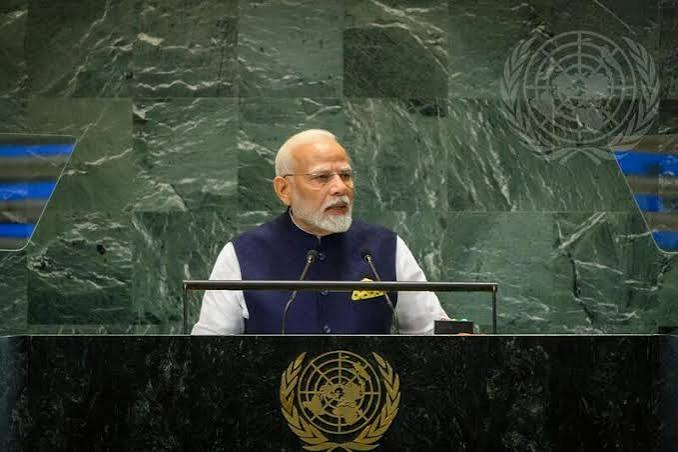
Prime Minister Narendra Modi used his June 18, 2026 VivaTech keynote in Paris to argue that the future of global progress depends on making technology accessible to everyone, not just a few. Speaking to an audience of entrepreneurs, investors, and policymakers, he held up India’s sprawling digital public infrastructure as a working example of what widespread access can deliver, from financial inclusion to public health services.
A clear case for public digital goods
Modi described systems such as digital identity, universal payments rails, and interoperable public platforms as the scaffolding on which inclusive innovation can grow. He painted a sensory picture of rural government offices where bright screens now replace piles of forms and of micro entrepreneurs tapping phones to accept digital payments under neon shop signs. Those details underlined his central argument that technology democratization is not merely a slogan but a practical policy route to raise living standards.
The prime minister framed these public assets as neutral infrastructure that lowers the cost of experimentation for startups, reduces friction for small businesses, and expands market access. For many in the audience that included venture capitalists and European ministers, the pitch was both moral and economic. If more people can participate in market systems, the argument goes, the quality and quantity of demand for digital services will expand as well.
How India’s model works in practice
India’s approach rests on several building blocks. A federated digital identity enables verified access to services. A national payments interface connects banks with simple APIs so developers can build commerce around a common rail. Open application program interfaces allow private firms to plug into public data or services without replicating core infrastructure. Together those components create an ecosystem where private innovation sits atop public primitives.
That model is not a template to be copied without adaptation. Modi acknowledged cultural, legal, and governance differences between countries and urged that sovereign sensitivities guide any adoption. He suggested a modular mindset so nations could adopt pieces that fit their institutional design rather than attempting a full scale replication overnight.
Privacy, trust, and governance challenges
Democratizing technology raises complex questions about privacy and control. Critics of large public digital systems warn of surveillance risks, mission creep, and unequal power between citizens and state. Modi responded by insisting on privacy protections, consent frameworks, and legal guardrails, while also arguing that practical benefits like targeted subsidies and easier tax compliance have lifted millions out of administrative exclusion.
Experts in the audience noted that establishing trust requires transparent governance, independent oversight, and accessible redress mechanisms. Without those, digitization can deepen exclusion rather than alleviate it. The prime minister’s speech acknowledged these tensions indirectly by emphasizing cooperative arrangements with private industry and international partners to improve standards and interoperability.
Geopolitics, standards, and competition
VivaTech gathered leaders from around the world who are acutely conscious that technology standards and data governance will shape geopolitical influence for decades. Modi’s advocacy for a commons approach hints at a soft power play: if more countries adopt interoperable public platforms, influence over global rules may shift toward those who built practical implementations.
At the same time, Europe and other democracies worry about dependence on systems designed elsewhere. Modi addressed this by proposing collaborative frameworks for technology sharing and capacity building rather than one way transfers. He pitched India as both a contributor and partner in multilateral tech governance conversations, inviting joint work on standards for identity, payments, and digital public goods.
What this means for startups and investors
- Startups can expect larger potential markets where public rails lower customer acquisition costs and simplify regulatory compliance.
- Investors may find new classes of opportunity in companies that build on or interoperate with public infrastructure, particularly in fintech, health tech, and agri tech.
- European and global firms should plan for regulatory and interoperability risks when entering markets that use different public platform models.
Civic technology and human centered design
Modi stressed that technology must be human centered and locally relevant. He recounted instances where well intentioned services failed because they ignored literacy, language, or local practice. Those anecdotes served as a reminder that access alone does not guarantee adoption. Good policy combines infrastructure with user experience, outreach, and support services that make new tools usable for the least connected citizens.
Designers and product teams heard a call to invest in multilingual interfaces, offline modes, and community level training so that digital public goods meet people where they are, not where the designer assumes they should be.
International collaboration and knowledge exchange
Modi proposed structured collaboration with other nations on interoperable APIs, standards for consent and privacy, and shared capacity building programs for government tech teams. That invitation resonates with existing efforts such as the Digital Public Goods Alliance and aligns with technical guidance from institutions like the OECD on digital government best practices. Readers seeking technical frameworks can review OECD material and the Digital Public Goods Alliance for practical precedent and governance models.
Those resources offer roadmaps for countries that want to pilot modular digital primitives while retaining regulatory control and citizen protections. International collaboration can accelerate learning, reduce redundant investment, and increase resilience by diversifying implementations across jurisdictions.
Voices of dissent and domestic critics
Not everyone welcomed the prime minister’s message. Civil society groups in India remain vigilant about data protection and the balance of power between state and citizen. Opposition voices argue that deploying public technology without robust independent oversight risks expanding executive authority in ways that are difficult to reverse. Modi’s speech did not fully silence those concerns, but it did attempt to position India as responsive to skepticism while offering practical benefits that have already reached large populations.
Practical takeaways for policymakers
Policymakers listening at VivaTech should weigh several pragmatic steps if they consider adopting elements of India’s model. First, pilot projects that focus on a single public good such as digital payments or identity can reveal governance challenges early. Second, legal frameworks that embed privacy by design and independent oversight can build public trust. Third, investing in human centered design and local language support increases adoption and equity.
Conclusion
Prime Minister Modi’s VivaTech address reframed a policy debate into a concrete proposal for widening access to technological infrastructure. His argument carries emotional weight for officials who witness tangible gains from digital inclusion and for citizens who experience smoother, faster public services. At the same time the speech raises hard questions about governance, privacy, and international influence that will shape follow up discussions between governments, civil society, and private industry.
Would you like a short briefing that contrasts India’s digital infrastructure with specific European public projects and lists the governance questions each model must answer?