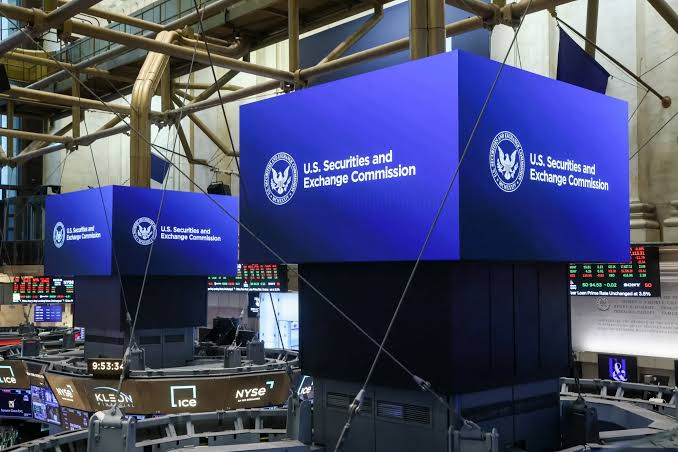
The Securities and Exchange Commission on June 18, 2026 proposed eliminating the decades old trade through rule that required brokers to route orders to venues offering the best displayed stock price. The agency says the change would modernize market structure, while market participants and analysts warn it could upend the speed driven plumbing of equity trading and open a clear runway for crypto platforms offering tokenized equities to gain market share.
What the trade through rule does and why it matters
The trade through rule created a duty for trading venues to respect the best displayed price across the national market system. That obligation underpinned the fragmented, millisecond era of equities trading where exchanges and internalizers competed on latency and routing algorithms. For investors and brokers the rule served as a safeguard against overlooking superior prices and helped enforce a form of price priority that supported liquidity aggregation across many venues.
Removing that rule changes incentive structures. Brokers and smart order routers would gain broader discretion to route orders based on factors other than the single best visible quote. That can reduce the premium placed on microsecond speed, reshaping costs and tactics for high frequency trading firms and market makers. For retail traders the practical effect could vary from marginally different execution quality to materially different access to price improvement depending on how new routing economics develop.
Why crypto platforms see a huge opportunity
Crypto exchanges that list tokenized equities welcome the proposal. Tokenized stocks are blockchain based representations of shares that can be traded continuously and settled in near real time. Without the trade through constraint, tokenized venues need not compete in the same microstructure as traditional exchanges to attract order flow. They can offer alternative value propositions such as continuous trading hours, atomic settlement, and integrated custody at lower operational cost.
Those advantages become especially meaningful for cross border trading and fractional ownership, where blockchains lower frictions for settlement and custody. Institutional clients that prize settlement finality and reduced counterparty exposure may see tokenized markets as complementary execution venues, particularly for off hour liquidity or niche instruments that legacy venues do not support cost effectively.
Market structure winners and losers
Winners could include crypto native platforms, brokerages that partner with tokenized markets, and custodians offering blockchain custody services. They might attract retail and institutional order flow seeking new execution models and settlement guarantees. Traditional exchanges will face pressure to respond with their own token offerings or by improving service economics.
Conversely, firms that built businesses around ultra low latency order flow may lose relative advantage. Market makers that rely on speed rebates and fee tiers may find profit pools compressed if routing decisions emphasize settlement efficiency or bundled custody services over microsecond best price access.
Regulatory and legal questions that remain
The SEC proposal triggers a cascade of questions about investor protection, market integrity, and regulatory parity. Key issues include whether tokenized equities will be subject to the same disclosure and custody rules as conventional shares, who is accountable when on chain settlement mechanisms fail, and how cross jurisdictional claims will be resolved when tokens move across ledgers.
Lawmakers and regulators in other jurisdictions may also push back. Harmonizing rules across markets is essential for tokenized products to scale without regulatory arbitrage. The proposal raises questions about the extent to which existing trade surveillance and market abuse frameworks can adapt to blockchain native trading, and whether new monitoring tools will be required to detect manipulative behavior that exploits asynchronous settlement windows.
Immediate market reactions
- Shares in major crypto exchanges and custody providers rose in extended trading as investors priced in increased adoption of tokenized trading rails.
- Traditional exchange operators issued measured statements warning that any modernization must protect price discovery and investor safeguards.
- Broker dealers announced rapid reviews of routing policies to weigh partnerships with tokenized venues or to expand settlement offerings.
What investors and institutions should watch
Institutions considering exposure to tokenized securities should perform careful due diligence on custody arrangements, legal recourse, and operational resilience. Technical audits of smart contracts, contingency plans for chain outages, and clarity about who holds voting rights for tokenized shares are practical starting points. Retail platforms will need to explain settlement mechanics clearly so users understand when trades are final and what protections apply.
Regulated entities should also monitor rulemakings from the Financial Industry Regulatory Authority and state regulators that could impose parallel requirements affecting tokenized offerings. Legal essays and guidance from established authorities such as the SEC website and published rule texts will be essential reading for compliance teams navigating the transition.
Broader implications for market liquidity and price discovery
Critics argue removing the trade through rule could fragment liquidity and impair unified price discovery if multiple disparate venues display different prices without a binding duty to honor the best visible quote. Proponents counter that innovation in settlement and custody could create new sources of liquidity, especially for off hour trading and fractionalized assets, ultimately improving access for retail investors and global participants.
How liquidity reallocates will depend on transaction costs, settlement risk premium, and how exchanges and venues adapt fee schedules. If tokenized platforms can reliably provide faster settlement at lower net cost, traditional venues will need to compete on other attributes such as depth of order books, market surveillance, and institutional trust.
Expert perspectives from trading desks
Traders I spoke with described the trading floor atmosphere as electric and cautious. Senior quant heads noted that removing the trade through rule forces a redesign of execution algorithms tuned to minimize opportunity cost rather than simply chasing displayed price. Compliance officers emphasized the added burden of ensuring best execution obligations are met in a more complex routing environment where non price factors carry weight.
Risk managers highlighted the operational benefits tokenized markets offer in reducing settlement counterparty exposure, but they also warned that smart contract risks and custody failures introduce new, less familiar hazards. The consensus was that the transition will be gradual but consequential, reshaping how firms think about execution quality metrics and settlement analytics.
Practical next steps for market participants
Firms should begin by stress testing order routing systems under scenarios where multiple venues offer varied tradeoffs between price, settlement speed, and custody integration. Legal teams must map tokenized products to existing securities law frameworks and identify regulatory gaps. Technology leaders should accelerate custody hardening, smart contract audits, and interoperability testing across ledgers.
Where to follow developments
Readers can monitor the SEC docket for the formal proposal text and public comment period and review analysis published by market regulators such as the Depository Trust Company for settlement guidance. For technical background on tokenization and custody best practices, resources from established industry bodies will help decode the operational mechanics and standardization efforts that will shape the coming months.
The SEC proposal marks a potential inflection point where market structure modernization and blockchain based trading converge. Whether the change yields broader inclusion or creates new complexities will depend on regulatory design, market responses, and the prudence with which institutions adopt tokenized rails.